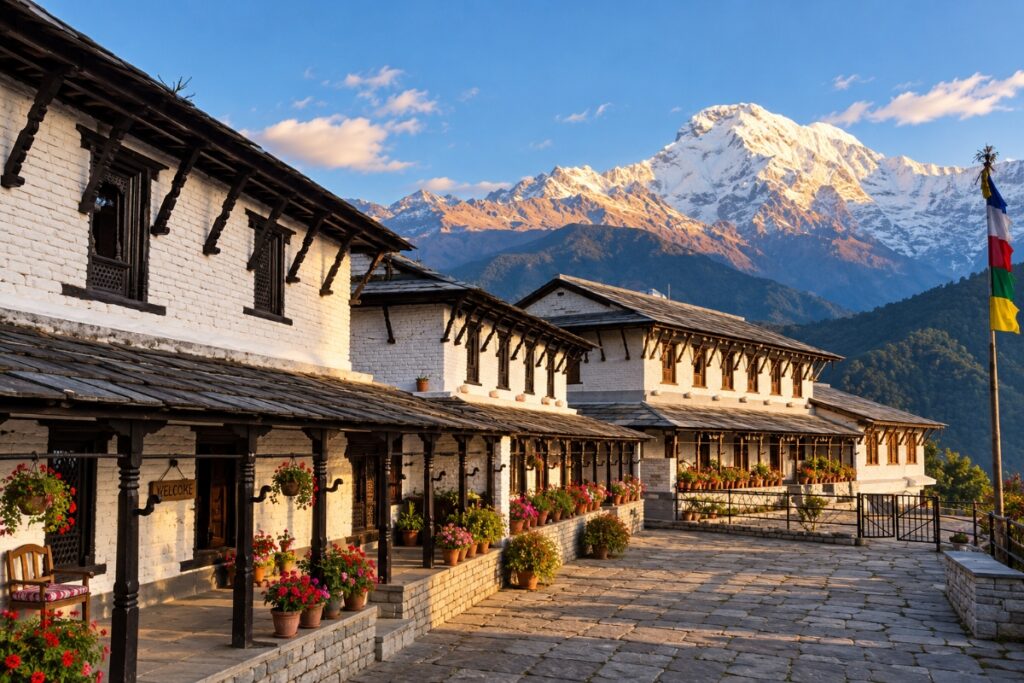
The Poon Hill Ghorepani Trek is a 5-day trek from Kathmandu to Pokhara, priced from $379 to $549 per person. It runs through Ulleri, Ghorepani (2,874m), Tadapani, and Ghandruk (2,012m), with a sunrise hike to Poon Hill (3,210m) as the highlight. Difficulty: easy to moderate.
Most of the trail runs through rhododendron and oak forest, with stone steps out of Ulleri that catch out anyone expecting an easy walk. Nights from Ghorepani onward are spent in tea houses, not tents. The pre-dawn climb to Poon Hill takes under ninety minutes but is cold and dark, so bring a headlamp.
Because the highest overnight stop is Ghorepani at 2,874m, altitude sickness risk stays low here compared to Nepal’s higher routes. The same Ghorepani-Poon Hill-Tadapani stretch also runs through our Annapurna Circuit Trek and the 9-day Poon Hill add-on on our Mardi Himal Trek.
Mountain Hike Nepal is a Kathmandu-based, government-registered operator handling the guide, permits, porter, accommodation, and transport. See full pricing below, or message us on WhatsApp with questions.
| Trip Details | Information |
|---|---|
| Trip Name | Poon Hill Ghorepani Trek |
| Duration | 4 Nights / 5 Days |
| Maximum Altitude | 3,210m — Poon Hill |
| Major Highlights | Poon Hill Sunrise, Ghorepani Village, Ghandruk, Rhododendron Forests |
| Trek Difficulty | Easy to Moderate |
| Trek Start | Kathmandu |
| Trek End | Pokhara |
| Best Season | Spring (March–May) and Autumn (September–November) |
| Low Season | Winter — cold mornings, clear mountain views |
| Avoid | Monsoon (June–August) |
| Accommodation | Hotel in Pokhara / Teahouse lodges on trek |
| Meals Included | Breakfast, Lunch and Dinner during the trek |
| Permits Required | ACAP and TIMS |
| Region | Annapurna Conservation Area, Nepal |
Kathmandu → Pokhara → Ulleri → Ghorepani → Poon Hill → Tadapani → Ghandruk → Pokhara
Most Annapurna treks are built around a base camp or a high pass, and both take a week or more to reach. Poon Hill doesn’t try to compete with that. It’s built around one specific payoff: a sunrise view most trekkers reach on their third morning in Nepal, not their tenth.
The trail stays under 3,210m the whole way, so there’s no acclimatisation day built into the schedule and no altitude planning required. That makes it one of the few Nepal treks a first-timer can book without months of hill-walking beforehand.
If five days isn’t quite enough and you want to go further into the region, the same trail network connects into our Annapurna Base Camp Trek — worth a look if you have the extra time.
The route is rated easy to moderate, not easy on its own. The stone steps out of Ulleri are steep, and Day 3, from Ghorepani over Poon Hill to Tadapani, runs 6–7 hours. There’s no technical climbing and no altitude risk, but a base level of fitness makes those longer days more enjoyable than a struggle.
per person
per person
per person
per person
Altitude: 820m | Drive: 6–8 hrs (tourist bus) | Meals: Not included | Stay: Hotel, Pokhara
The drive west out of Kathmandu follows the Trishuli and Marsyangdi valleys before Pokhara opens up on the shore of Phewa Lake, with the Annapurna range visible behind it on a clear day. This is kept as a travel day on purpose, so the trek itself starts tomorrow rested rather than road-worn. The rest of the afternoon is free to walk around Lakeside or rest before an early start.
Altitude: 2,874m | Drive: 3–4 hrs (jeep) | Trek: 4–5 hrs | Meals: Breakfast, Lunch, Dinner | Stay: Teahouse, Ghorepani
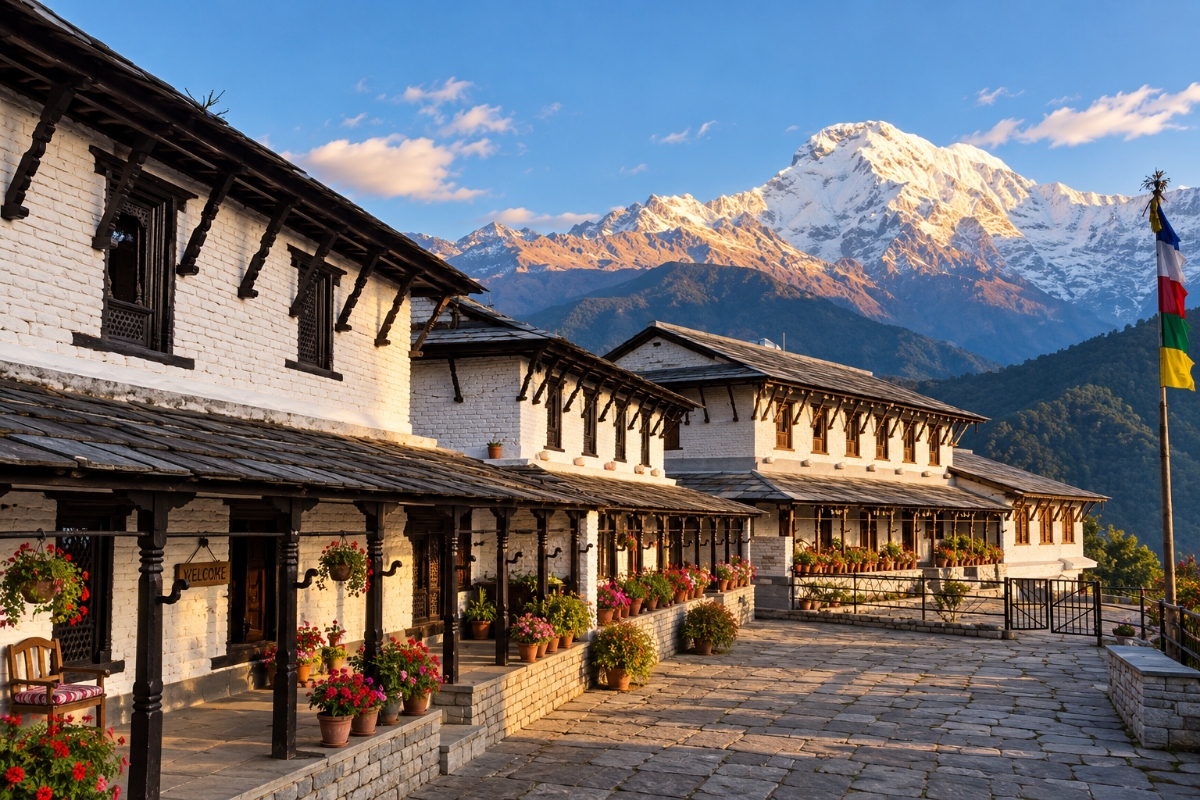
A jeep ride from Pokhara through Nayapul and Birethanti reaches Ulleri, where the trek itself begins. The trail climbs through stone steps and forest, passing Banthanti and Nangethanti, with the landscape shifting into rhododendron and oak as the altitude increases. Ghorepani sits at the top of this climb, a settlement originally built around a water stop for pack horses, now the gateway to Poon Hill.
Altitude: 3,210m high point / 2,630m overnight | Hike: under 90 mins to Poon Hill | Trek: 6–7 hrs total | Meals: Breakfast, Lunch, Dinner | Stay: Teahouse, Tadapani
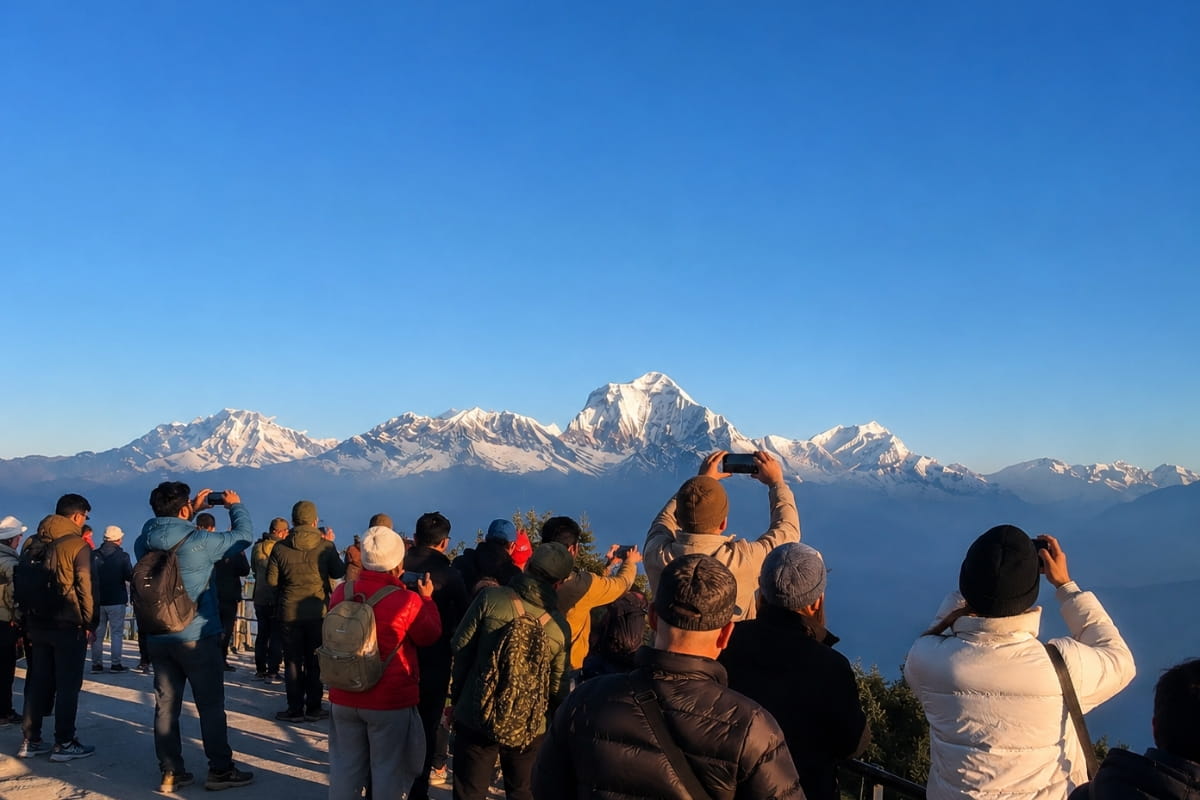
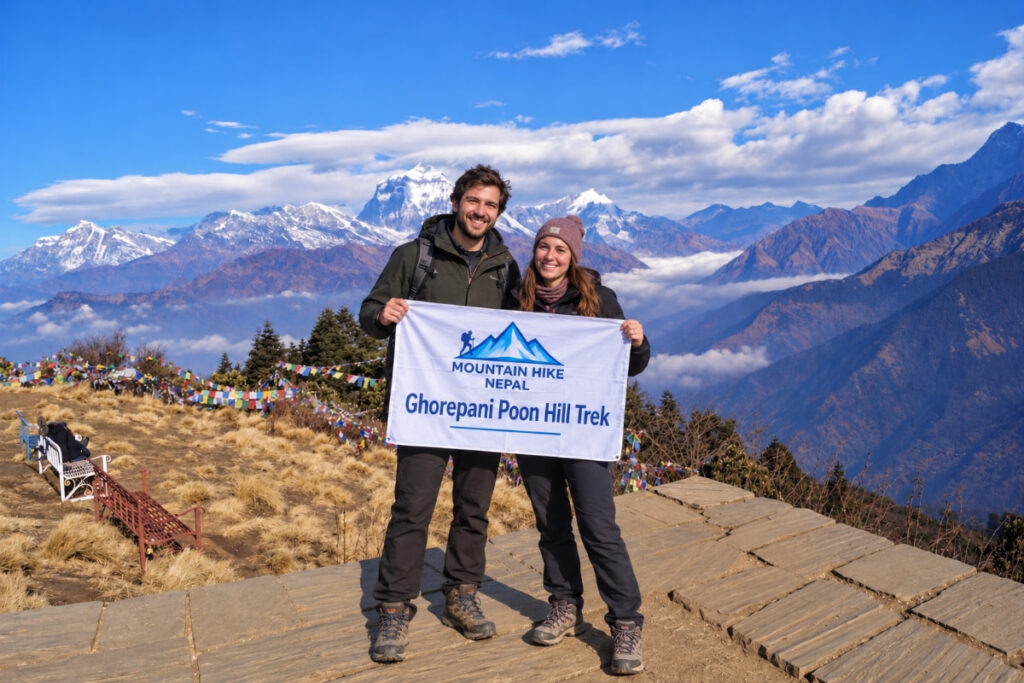
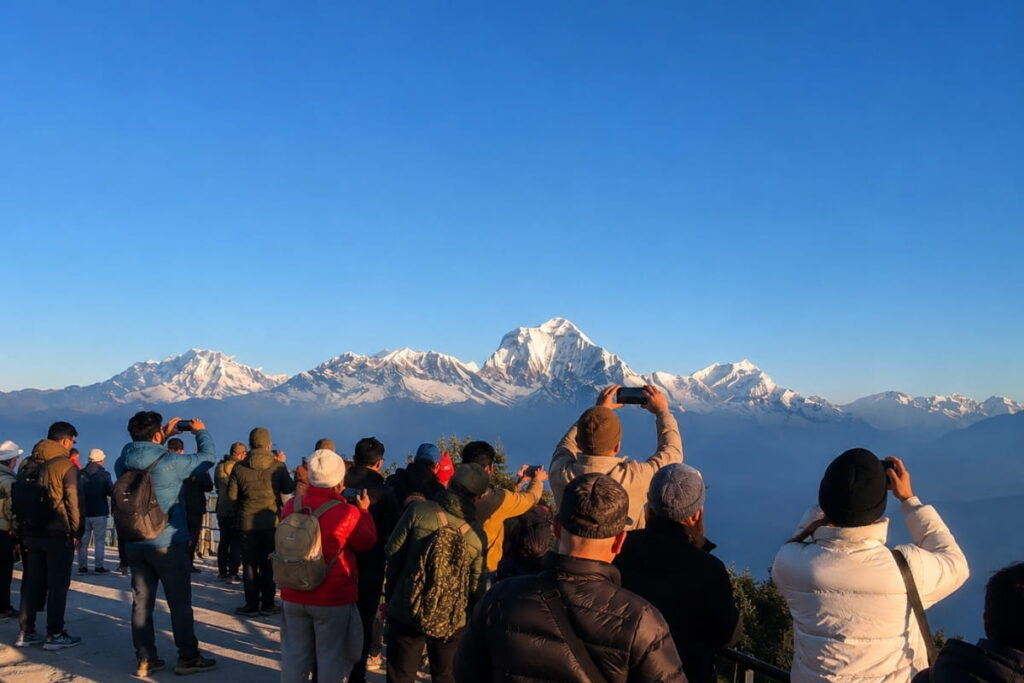
A pre-dawn walk from Ghorepani reaches Poon Hill in under an hour and a half, in time for sunrise over the Annapurna and Dhaulagiri ranges. After returning to Ghorepani for breakfast, the trail continues through forest toward Tadapani, a quieter ridge stop with its own views back toward Annapurna South and Machapuchare.
Altitude: 2,012m | Trek: 3–4 hrs | Meals: Breakfast, Lunch, Dinner | Stay: Teahouse, Ghandruk
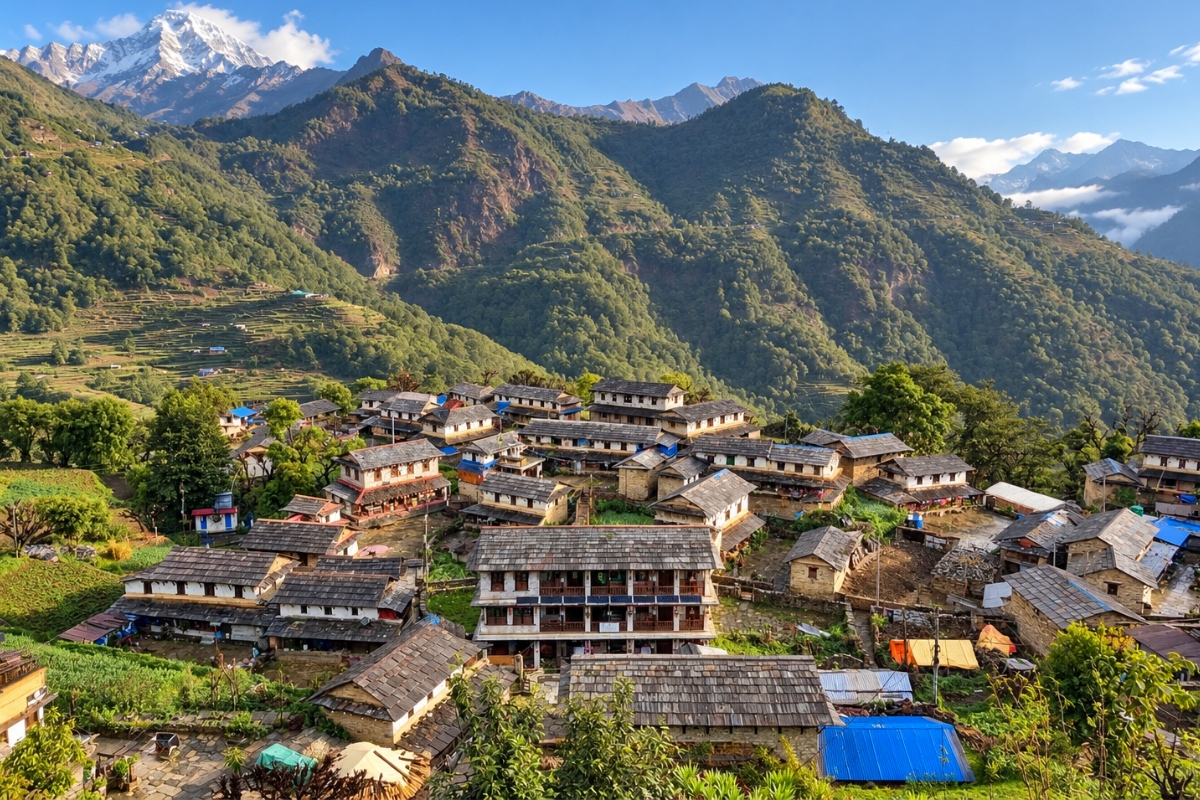
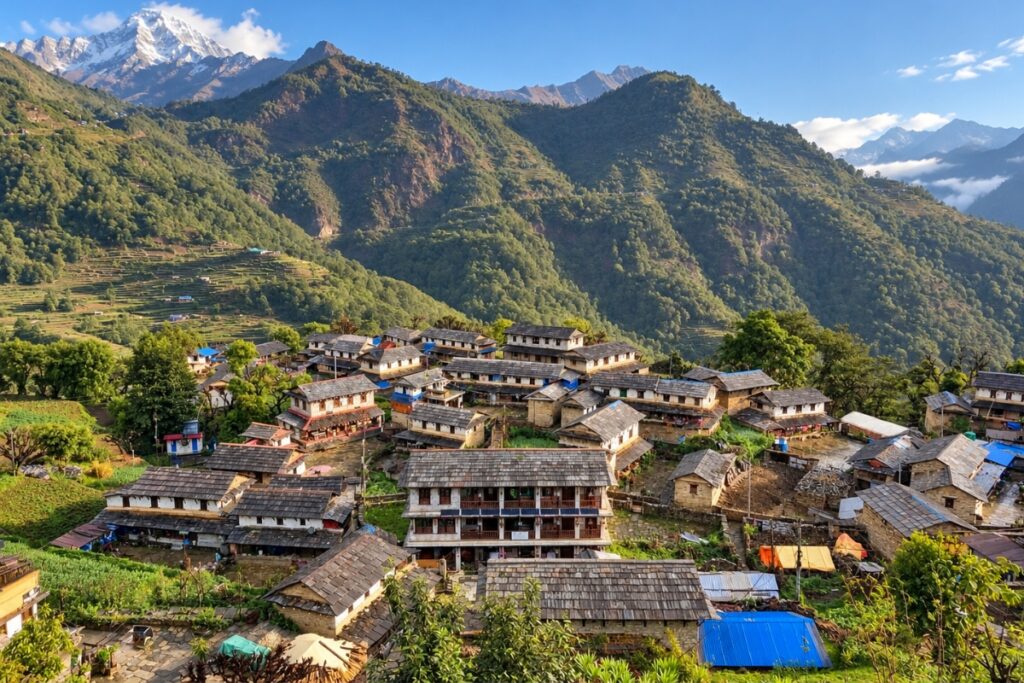
A shorter day, deliberately so. The trail descends through rhododendron and oak forest before opening onto the terraced hillsides around Ghandruk, one of the larger Gurung villages in the Annapurna region. There’s time in the afternoon to walk through the village, visit the Gurung Museum, or just sit with the view of Annapurna South and Machapuchare from the teahouse.
Drive: 3–4 hrs (jeep) | Meals: Breakfast, Lunch | Stay: Hotel, Pokhara
A jeep from Ghandruk winds back down through terraced villages to Pokhara, closing the loop from where the trek began three days earlier. The package ends here in Pokhara — travelers can rest lakeside, continue on to Chitwan or Kathmandu, or extend into another trek, depending on the plan from here.
Drive: 6–8 hrs (tourist bus, if returning to Kathmandu) | Meals: Breakfast | Stay: Not included — this day sits outside the standard 5-day package
This day is left open and isn’t part of the core package. If you’d like to head back to Kathmandu the same day, Mountain Hike Nepal provides a complimentary tourist bus ticket for the return leg. Otherwise, it’s a good point to extend into Chitwan National Park, Lumbini, Bandipur, another night in Pokhara, or a further Nepal trek — let us know what you’d like to add and we’ll arrange the extra hotel nights, transport, or activities.
The Poon Hill Ghorepani Trek is a 5-day trek from Kathmandu to Pokhara reaching 3,210m at Poon Hill, priced from $379 to $549 per person. The route runs through Ulleri, Ghorepani, Tadapani, and Ghandruk, with a pre-dawn sunrise viewpoint over the Annapurna and Dhaulagiri ranges as its main highlight.
Easy to moderate. There’s no altitude risk and no technical climbing, but the stone steps out of Ulleri are steep, and Day 3, from Ghorepani over Poon Hill to Tadapani, runs 6 to 7 hours. A reasonable level of fitness makes those longer stretches easier, though this trek is beginner-friendly overall.
Poon Hill itself, at 3,210 metres, reached on a short pre-dawn climb from Ghorepani. The highest overnight stop is Ghorepani at 2,874 metres, well below the altitude where sickness becomes a real concern.
Two permits — the Annapurna Conservation Area Permit (ACAP) and the TIMS card, both included in our package price and arranged before you arrive. Your guide handles checkpoint documentation along the route.
Yes — Nepal’s trekking regulations require all foreign trekkers in the Annapurna region to use a licensed guide from a registered agency. We include a licensed local guide on every departure as standard, not as an optional extra.
Spring (March to May) and autumn (September to November) offer the clearest skies and best rhododendron bloom in season. Winter brings cold mornings but exceptional visibility and fewer trekkers on the trail. The monsoon months of June through August bring cloud cover that blocks most of the views this trek is built around.
Our 5-day package runs from $379 per person for groups of 8 to 12 up to $549 for solo trekkers, with $498 and $425 for 2 to 4 and 5 to 7 trekkers respectively — guide, permits, teahouse and hotel accommodation, and ground transport all included.
The package ends in Pokhara on Day 5. If you’d like to return to Kathmandu the same day, we provide a complimentary tourist bus ticket for that leg. Otherwise, Day 6 is left open to extend into Chitwan, Lumbini, Bandipur, or another Nepal trek.
Yes. The same Ghorepani-Poon Hill-Tadapani stretch runs through our longer Annapurna Circuit Trek and the 9-day Poon Hill extension on our Mardi Himal Trek, so it’s worth considering either if five days isn’t quite enough.
Want more detail before you book the Poon Hill Ghorepani Trek? These guides cover the questions that come up most, each written to stand on its own: