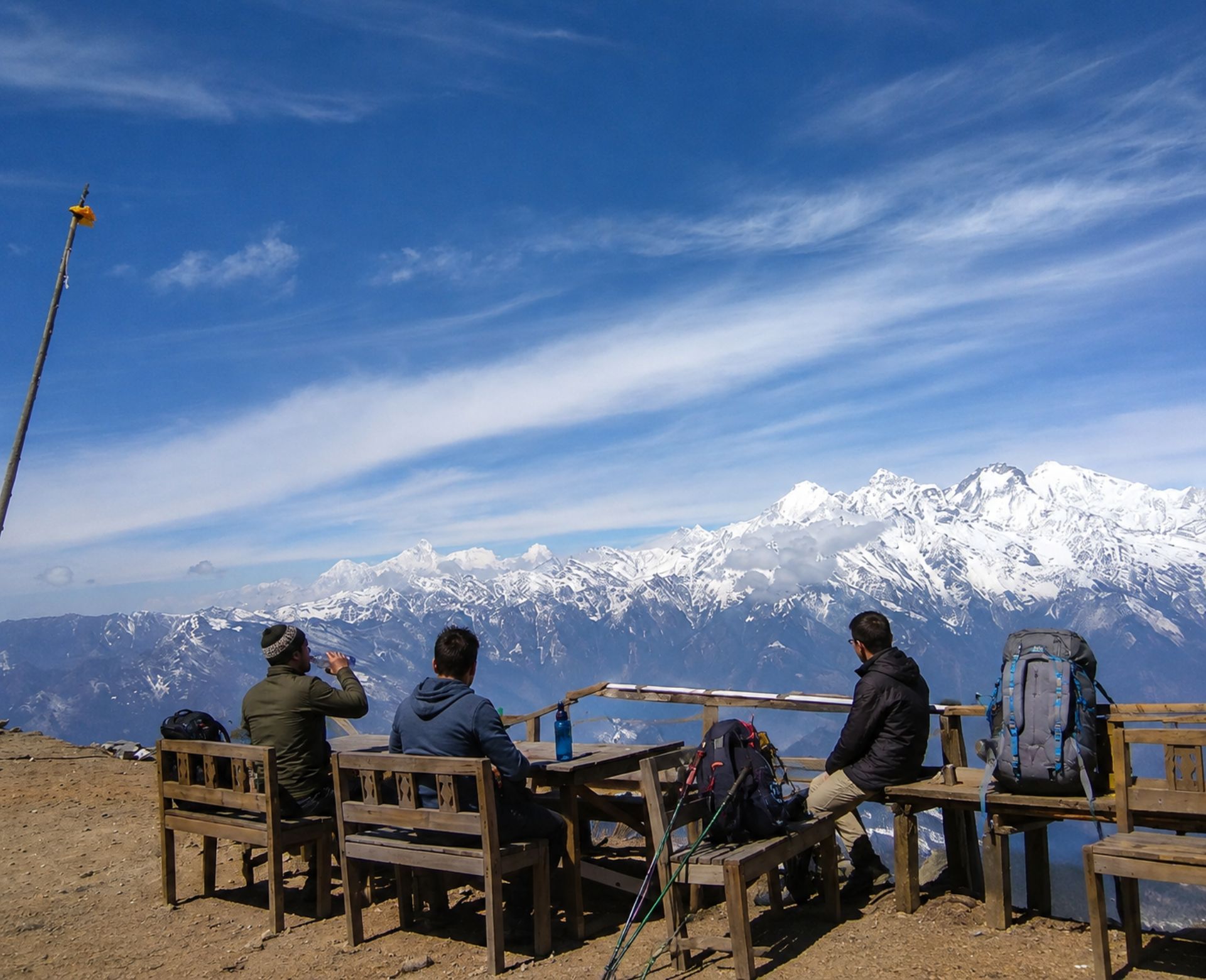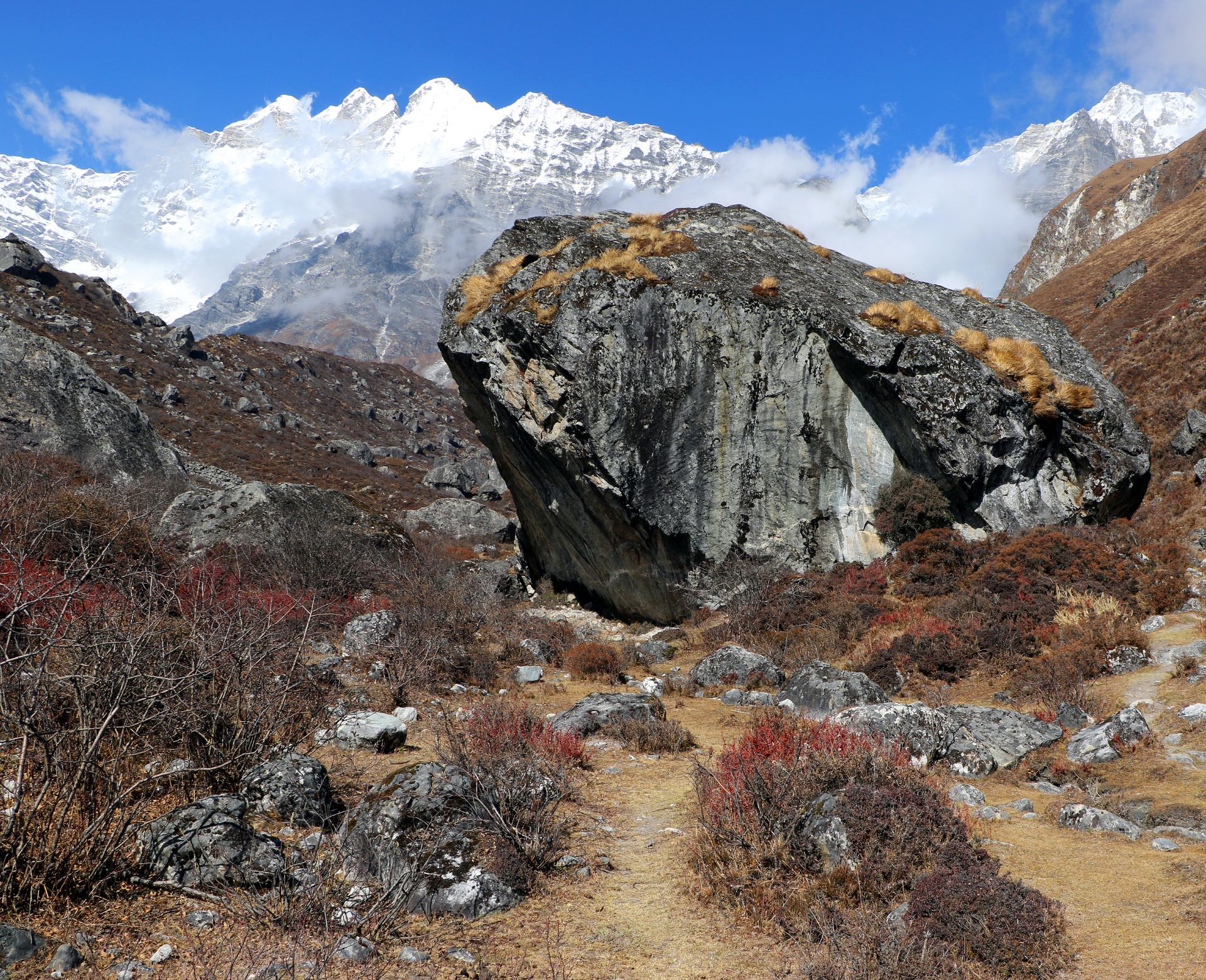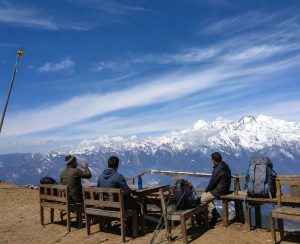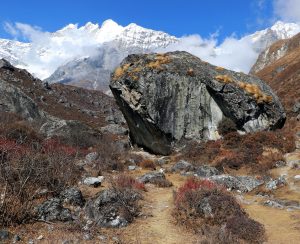
The Langtang Helambu Circuit Trek is a 14-day guided trek from Syabrubesi to Melamchi Pul Bazaar, crossing through Kyanjin Gompa (3,870m), the sacred Gosaikunda Lake (4,380m), and the Laurebina Pass (4,610m) into the Helambu region, with an optional summit to Tserko Ri (4,984m), priced from $699 per person.
This is the longest and most complete route in Mountain Hike Nepal’s Langtang cluster — three distinct regions in one continuous trek, with no repeated ground and no domestic flight anywhere on the route. It starts the same way as the Langtang Valley Trek, climbing to the same optional Tserko Ri summit. From there it continues east through Gosaikunda and over the Laurebina Pass into Helambu’s Sherpa and Hyolmo villages, ending the trek by road at Melamchi Pul Bazaar. Customise your itinerary here.
| Item | Information |
|---|---|
| Trip Name | Langtang Helambu Circuit Trek |
| Duration | 13 Nights / 14 Days |
| Maximum Altitude | 4,984m — Tserko Ri Summit (optional) |
| Highest Overnight | 4,380m — Gosaikunda Lake |
| Major Highlights | Kyanjin Gompa, Tserko Ri, Gosaikunda Lake, Laurebina Pass, Tarkeghyang, Sermathang |
| Trek Difficulty | Moderate to Challenging |
| Trek Start / End | Syabrubesi / Melamchi Pul Bazaar |
| Best Season | Spring (March–May) and Autumn (September–November) |
| Low Season | Winter — cold conditions, quieter trails |
| Avoid | Monsoon — June, July, August |
| Accommodation | Teahouse lodges throughout |
| Meals Included | Breakfast, Lunch and Dinner (all trekking days) |
| Permits Required | Langtang National Park Entrance Permit, TIMS Card |
| Region | Langtang, Gosaikunda & Helambu Region, Nepal |
Kathmandu → Syabrubesi → Lama Hotel → Langtang Village → Kyanjin Gompa → Tserko Ri (optional) → Lama Hotel → Thulo Syabru → Shin Gompa → Gosaikunda Lake → Laurebina Pass → Ghopte → Melamchi Gaun → Tarkeghyang → Sermathang → Melamchi Pul Bazaar → Kathmandu
The Langtang Helambu Circuit Trek is the one route in Mountain Hike Nepal’s Langtang cluster that doesn’t ask you to choose between glacier scenery, a sacred lake, or Himalayan village culture. It gives you all three, in sequence, without retracing a single stretch of trail.
The first five days follow the standard Langtang Valley Trek to Kyanjin Gompa (3,870m), with the same optional summit to Tserko Ri (4,984m). From there the route turns toward Gosaikunda Lake (4,380m) and crosses the Laurebina Pass (4,610m) — the same pass and lake as the standalone Gosaikunda Lake Trek, but continuing deeper into Helambu rather than dropping straight to Sundarijal. Villages like Tarkeghyang and Sermathang are real Hyolmo and Sherpa communities, not a brief pass-through.
Shorter on time? The Langtang Gosaikunda Trek covers the first two-thirds of this route in 12 days. Want just the lake and pass without the full Langtang Valley first? See the Gosaikunda Lake Trek instead.
This is the most demanding trek in the Langtang cluster, not because any single day is extreme, but because of its length. Fourteen consecutive days, two separate high-altitude tests, and a genuine pass crossing at the Laurebina Pass (4,610m) add up to real cumulative fatigue by the second week. Six to eight weeks of uphill fitness preparation matters more here than on any of the shorter Langtang-cluster treks — this isn’t a trek to start undertrained.
per person
per person
per person
per person
✅ All ground transportation as per the itinerary (Kathmandu–Syabrubesi, Melamchi Pul Bazaar–Kathmandu) by local vehicle
✅ All trekking accommodation in local teahouse lodges (shared basis)
✅ All meals during the trek (Breakfast, Lunch & Dinner), including tea or coffee in the early morning
✅ Licensed, experienced English-speaking trekking guide
✅ One strong, experienced local porter (1 porter for 2 trekkers, maximum load 15 kg)
✅ All required trekking permits for the route (Langtang National Park Entry Permit and TIMS Card)
✅ Guide and porter wages, meals, accommodation, insurance, and local transport
✅ Necessary staff equipment and logistical support
✅ Acclimatization planning and route management
✅ All applicable government taxes and service charges
❌ International airfare to and from Nepal
❌ Nepal entry visa fee
❌ Travel and medical insurance (must cover high-altitude trekking and emergency helicopter evacuation)
❌ Personal trekking gear and equipment, including personal medications
❌ Meals and accommodation in Kathmandu (unless specified in the itinerary)
❌ Hot showers, Wi-Fi, and charging of electronic devices during the trek
❌ Alcoholic beverages, bottled drinks, snacks, and other personal expenses
❌ Tips for guide and porter
❌ Additional accommodation or meals due to early arrival, late departure, or itinerary changes
❌ Costs arising from delays, landslides, road closures, or circumstances beyond our control
Altitude: 1,460m | Drive: 6–7 hours | Distance: 122km | Accommodation: Teahouse, Syabrubesi | Meals: Lunch, Dinner
The Langtang Helambu Circuit Trek begins the same way as every Langtang route — north through Trishuli Bazaar and Dhunche to Syabrubesi. Fourteen days from now, you’ll arrive back in Kathmandu from a completely different direction.
Charge devices and confirm gear tonight. This is the last reliable electricity and Wi-Fi until Kyanjin Gompa, five days from now.
Altitude: 2,470m | Trek: 6–7 hours | Ascent: +1,010m | Accommodation: Teahouse | Meals: Breakfast, Lunch, Dinner
The steepest single day of the entire trek. The trail crosses the Langtang Khola suspension bridge and climbs continuously through rhododendron and oak forest, with no real flat stretches.
Lama Hotel is a small cluster of teahouses — the last reliable charging point before Kyanjin Gompa.
Altitude: 3,430m | Trek: 5–6 hours | Ascent: +960m | Accommodation: Teahouse | Meals: Breakfast, Lunch, Dinner
The trail climbs through Ghoda Tabela before the valley opens up. Langtang Village was rebuilt after the 2015 earthquake and avalanche — a memorial marks what was lost. Drink 3–4 litres of water today; mild altitude effects are normal here.
Altitude: 3,870m | Trek: 3–4 hours | Ascent: +440m | Accommodation: Teahouse | Meals: Breakfast, Lunch, Dinner
A shorter day through open yak pasture, with Langtang Lirung’s north face growing larger with every hour. Kyanjin Gompa is your base for the next two nights — monastery, yak cheese factory, and the start of the trek’s high-altitude section.
Altitude: 4,984m high point — return overnight to 3,870m | Trek: 6–8 hours | Accommodation: Teahouse | Meals: Breakfast, Lunch, Dinner
An early climb toward Kyanjin Ri (4,773m) and, for those who feel strong, on to Tserko Ri (4,984m) — the highest point of the entire trip. No technical sections; the difficulty is altitude and gradient. Both summits are optional — attempt them only if you feel strong and have no AMS symptoms this morning.
Altitude: 2,470m | Trek: 6–7 hours | Descent: -1,400m | Accommodation: Teahouse | Meals: Breakfast, Lunch, Dinner
The descent begins. This is the last night on the standard Langtang Valley route — from tomorrow, the trail turns east toward Gosaikunda instead of back to Syabrubesi.
Altitude: 2,210m | Trek: 5–6 hours | Accommodation: Teahouse | Meals: Breakfast, Lunch, Dinner
The trail diverts off the Langtang Valley route onto a ridge trail. Thulo Syabru is a Tamang village with views back toward Langtang and Ganesh Himal.
Altitude: 3,330m | Trek: 5–6 hours | Ascent: +1,120m | Accommodation: Teahouse | Meals: Breakfast, Lunch, Dinner
A steady climb back above 3,000m through forest. Shin Gompa has a small monastery and its own yak cheese factory. Keep pace steady — the next two days are the highest-stakes altitude stretch of the entire trip.
Altitude: 4,380m | Trek: 4–5 hours | Ascent: +1,050m | Accommodation: Teahouse | Meals: Breakfast, Lunch, Dinner
Worth being direct about this one: over 1,000m of gain in a single day is a genuine altitude test, and this is the highest overnight of the trip. Move at a deliberately slow pace, drink more than feels necessary, and tell your guide about any headache the moment it starts.
Gosaikunda is a sacred alpine lake, revered in both Hindu and Buddhist tradition. Lodges here are basic and cold — dress for a genuinely cold night.
Altitude: 4,610m pass, 3,430m overnight | Trek: 6–7 hours | Accommodation: Teahouse | Meals: Breakfast, Lunch, Dinner
An early start crosses the Laurebina Pass (4,610m) — the highest point on the trail itself, though lower than the optional Tserko Ri summit. The trail then descends over 1,000m into changing terrain, from alpine ridge to rhododendron and bamboo forest, entering the Helambu region.
Altitude: 2,530m | Trek: 4–5 hours (estimated) | Accommodation: Teahouse | Meals: Breakfast, Lunch, Dinner
The trail continues descending through forest into Helambu proper. Melamchi Gaun sits along the Melamchi River, the first proper Helambu village on the route.
Altitude: 2,600m | Trek: 3–4 hours | Accommodation: Teahouse | Meals: Breakfast, Lunch, Dinner
A shorter day crossing the Melamchi Khola before climbing to Tarkeghyang — one of Helambu’s largest and oldest Hyolmo villages, home to a centuries-old monastery damaged in the 2015 earthquake and since rebuilt.
Altitude: 2,600m | Trek: 4–5 hours | Accommodation: Teahouse | Meals: Breakfast, Lunch, Dinner
An easier day along the ridge to Sermathang, a Sherpa and Hyolmo village known for its quiet atmosphere and wide views back across the Helambu hills.
Trek: 5–6 hours | Drive: 4–5 hours | Meals: Breakfast, Lunch
A long final descent — over 1,000m of altitude loss — through Sherpa villages to the road head at Melamchi Pul Bazaar, then a drive back to Kathmandu.
The Langtang Helambu Circuit Trek ends on arrival in Kathmandu — fourteen days, three regions, no repeated ground.
The Langtang Helambu Circuit Trek is a 14-day guided trek from Syabrubesi to Melamchi Pul Bazaar, covering the Langtang Valley, the sacred Gosaikunda Lake (4,380m), the Laurebina Pass (4,610m), and the Helambu region — three distinct regions in one continuous route.
Moderate to challenging. There is no technical climbing, but the trek includes two genuine altitude tests — the optional Tserko Ri summit near 5,000m, and a second push to Gosaikunda’s 4,380m overnight later in the trip — plus 14 consecutive trekking days, which adds real cumulative fatigue.
Yes — a licensed guide is required for this route and is included as standard on every departure, for navigation, permit handling, and altitude safety across all three regions.
Two permits cover the full route — the Langtang National Park Entry Permit and the TIMS Card. Both are included in Mountain Hike Nepal’s package price.
4,984m at the optional Tserko Ri summit on Day 5. The trek also crosses the Laurebina Pass at 4,610m on Day 10. The highest overnight is Gosaikunda Lake at 4,380m on Day 9.
The Langtang Gosaikunda Trek is 12 days and ends at Dhunche after reaching Gosaikunda Lake, without crossing the Laurebina Pass. The Langtang Helambu Circuit Trek continues past Gosaikunda over the pass into the Helambu region, adding 2 more days and ending at Melamchi Pul Bazaar instead.
The Gosaikunda Lake Trek is a standalone 8-day trek starting at Dhunche, without the Langtang Valley or Kyanjin Gompa. The Langtang Helambu Circuit Trek begins at Syabrubesi and includes the full Langtang Valley, with an optional Tserko Ri summit, before reaching Gosaikunda and continuing into Helambu.
October and November are the finest months — post-monsoon clarity and stable weather. April is the best spring month, with rhododendron forests in bloom on the lower trail. Avoid June, July, and August — monsoon rain makes the trail slippery and obscures mountain views.
The trek starts from USD 699 per person for groups of 8–12, up to USD 990 for solo trekkers — guide, permits, all meals, teahouse accommodation, and ground transport at both ends included.
Porter support is included for groups of 2 or more. Solo trekkers can add a porter for an extra cost. One porter carries a maximum load of 15kg, shared between two trekkers.
It is the most demanding single day of the trek — over 1,000m of altitude gain in one day to the highest overnight of the trip. The itinerary is paced to manage this, but trekkers should move slowly, hydrate well, and report any AMS symptoms to their guide immediately.
Tarkeghyang and Sermathang are two of Helambu’s largest traditional villages, home to Hyolmo and Sherpa communities. Tarkeghyang has a centuries-old monastery, while Sermathang offers wide views across the Helambu ridgelines. Both are visited on the trek’s final two days.
Yes. Travel insurance is mandatory and must cover high-altitude trekking above 4,600m and emergency helicopter evacuation, given the Laurebina Pass crossing at 4,610m.