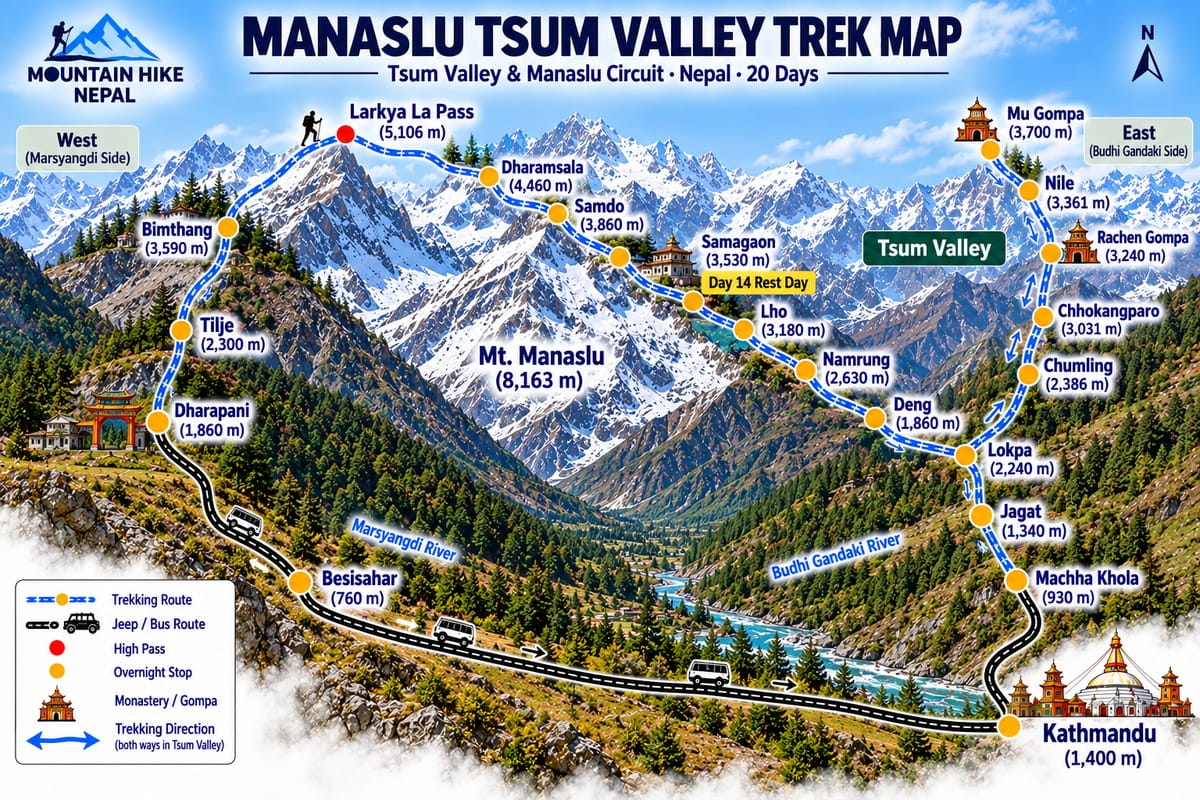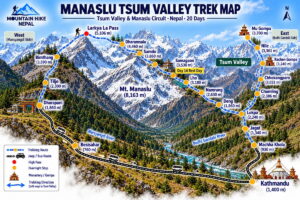
The Manaslu Tsum Valley Trek joins the full Manaslu Circuit with a week in the Tsum Valley. It takes 20 days and costs $1,199 to $1,899 per person. After Jagat, the route turns east at Lokpa and climbs through Chumling, Chhokangparo and Nile to Mu Gompa (3,700m). It then rejoins the circuit at Deng, crosses Larkya La Pass (5,106m) and finishes at Dharapani.
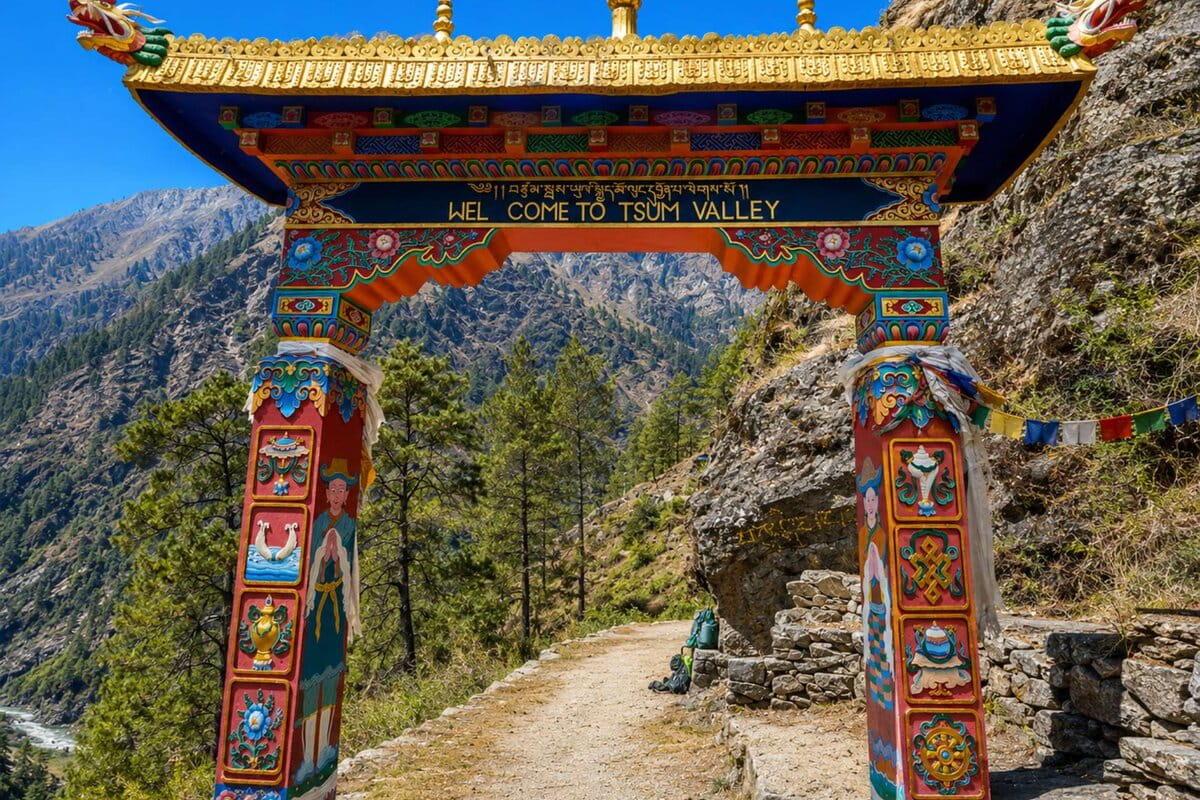
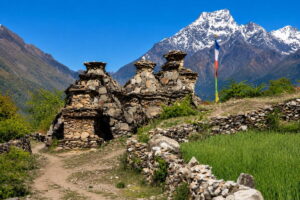
Tsum opened to foreign trekkers in 2008 and sees far fewer visitors than the main circuit. Its villages are Tibetan Buddhist, with old monasteries and long mani walls. Lodges are simpler than on the main circuit.
The week in Tsum, spent between 2,400m and 3,700m, also helps you adjust before Samagaon and the pass. Read our Tsum Valley guide for more.
We’re a Kathmandu-based local trekking company. We arrange both restricted area permits, and every trekker walks with a licensed guide, as the law requires. Short on time? Take the 13-day Manaslu Circuit. Want Tsum Valley only, without the pass? We run a 13-day trek in and out via Jagat. Message us on WhatsApp with your dates.
| Trip Details | Information |
|---|---|
| Trip Name | Manaslu Tsum Valley Trek in Nepal |
| Duration | 19 Nights / 20 Days (Kathmandu to Kathmandu) |
| Maximum Altitude | 5,106m — Larkya La Pass |
| Highest Point in Tsum | 3,700m — Mu Gompa |
| Major Highlights | Mu Gompa, Rachen Gompa, Tsum villages, Samagaon, Larkya La Pass (5,106m) |
| Trek Difficulty | Hard — Two Restricted Areas, High Pass Crossing |
| Trek Start / End Point | Machha Khola / Dharapani |
| Best Season | Spring (March–May) and Autumn (September–November) |
| Low Season | Winter — quiet trails, cold nights, pass can close after heavy snow |
| Not Recommended | Monsoon Season (June–August) |
| Accommodation | Teahouse Lodges (simpler in Tsum) |
| Meals Included | Breakfast, Lunch and Dinner |
| Trek Style | Guided Restricted Area Trek, Two Valleys |
| Region | Manaslu Conservation Area (including Tsum) and Annapurna Conservation Area, Nepal |
Kathmandu → Machha Khola → Jagat → Lokpa → Chumling → Chhokangparo → Nile → Mu Gompa (3,700m) → Rachen Gompa → Chumling → Deng → Namrung → Lho → Samagaon → Samdo → Dharamsala → Larkya La Pass (5,106m) → Bimthang → Tilje → Dharapani → Kathmandu
This trek gives you the whole Manaslu Circuit plus the valley most circuit trekkers walk straight past. Above Philim, a side trail climbs east along the Shiar Khola into Tsum. You spend a week there, sleeping in its villages and at its two main monasteries. Then you rejoin the circuit at Deng and finish it over Larkya La.
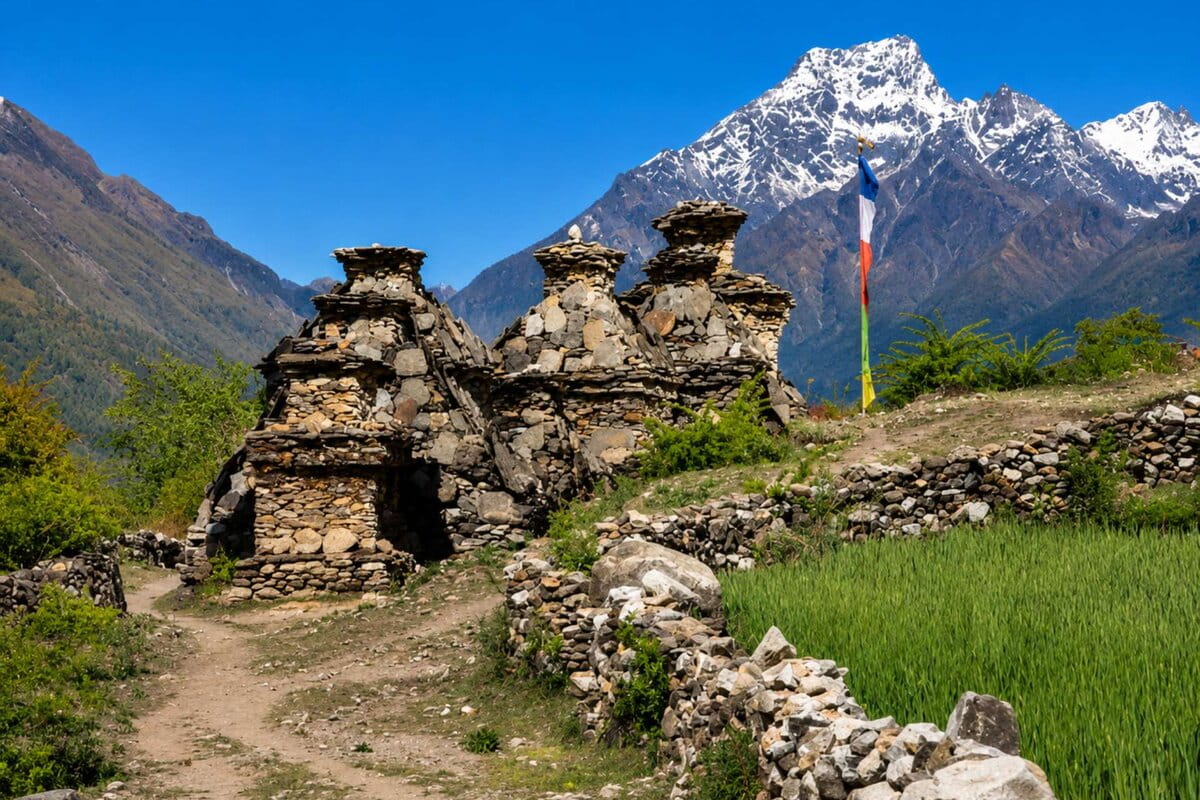
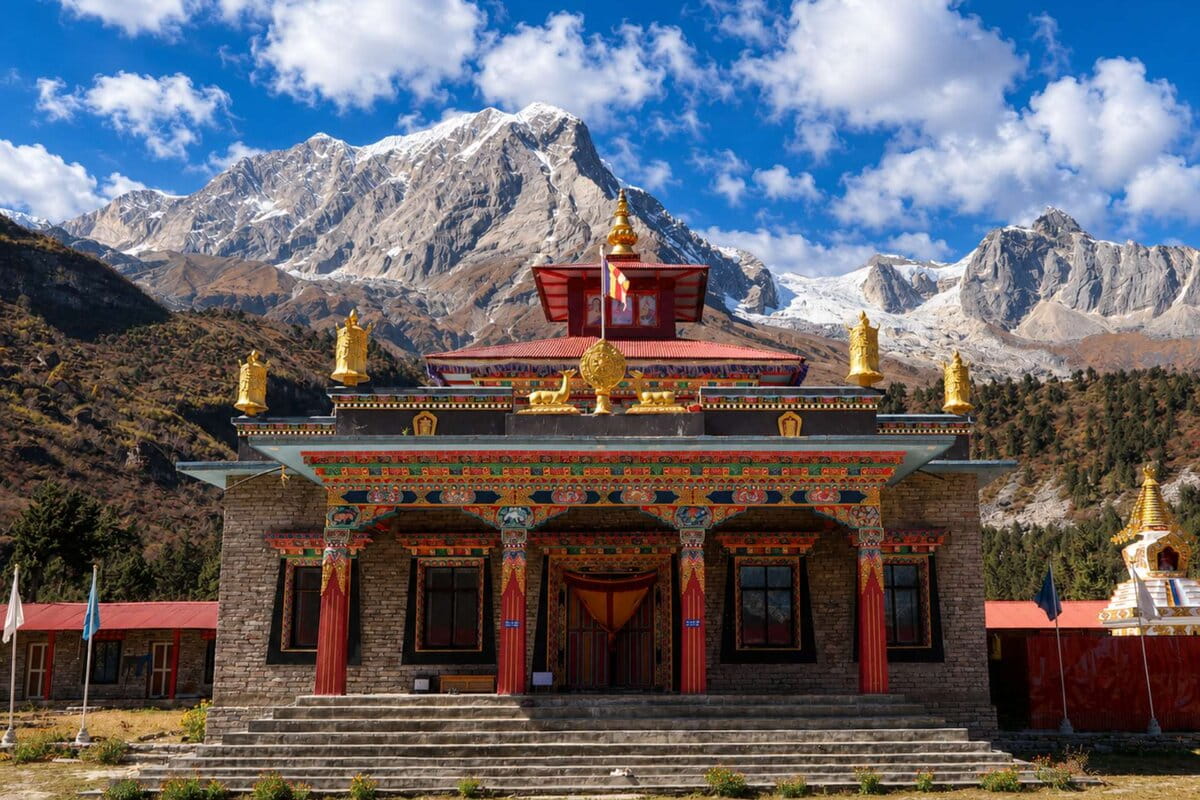
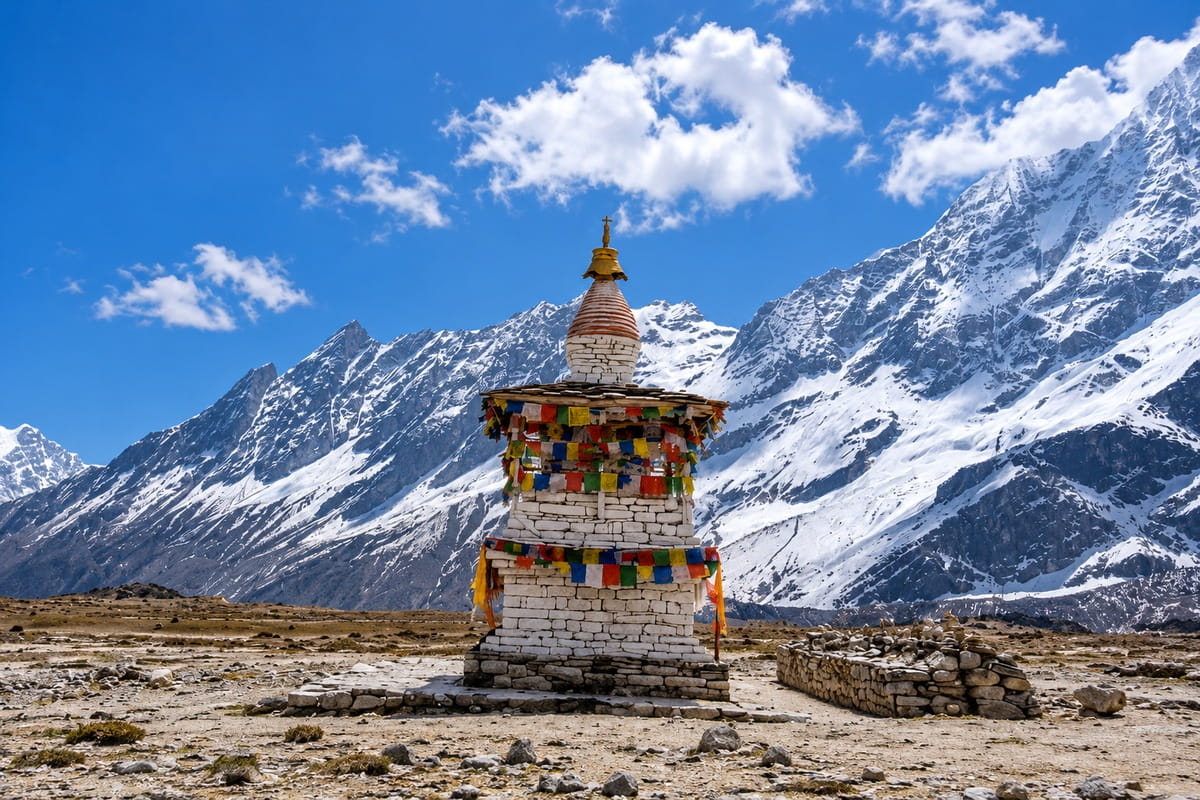
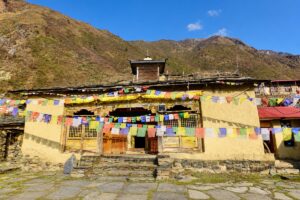
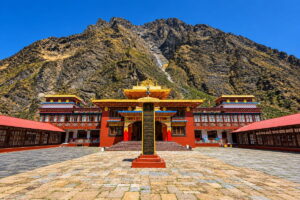
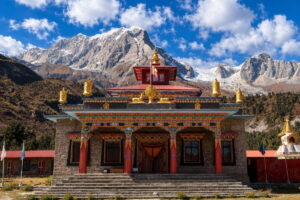
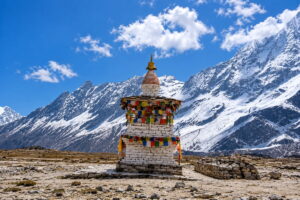
Tsum only opened to foreign trekkers in 2008, and it still sees far fewer visitors than the main trail. Its villages are Tibetan Buddhist, with chortens, prayer wheels and long mani walls. You sleep at Mu Gompa (3,700m) near the head of the valley and at Rachen Gompa, a nunnery lower down. Caves linked to the poet-saint Milarepa sit on the trail between them.
Comparing this with the 13-day Manaslu Circuit? The pass, the rest day at Samagaon and the finish at Dharapani are the same. This version adds seven days, a second restricted area permit and a week in Tsum before the climb to Larkya La. If you want Tsum without the pass, we also run a 13-day trek in and out of the valley.
This is a hard trek, mainly because of its length and the pass at the end. Tsum itself stays below 3,700m, but lodges there are fewer and simpler than on the main circuit. The nights at Mu Gompa and Rachen Gompa are in basic monastery guest rooms. After Tsum, you still face the cold nights at Samdo and Dharamsala and an 8–10 hour pass day. If you have never trekked for more than a week, start with the shorter circuit or the Tsum-only trek. Train on long hill days with a loaded daypack before you come.
per person
Recommended
per person
per person
Value Added
per person
Altitude: 930m | Drive: 8–9 hrs | Meals: Lunch, Dinner | Stay: Teahouse, Machha Khola
An early start out of Kathmandu, west along the highway, then north into Gorkha district past Arughat. After Arughat the road turns rough and slow, and most of the day is spent bouncing along the river. Machha Khola is a small cluster of teahouses beside the Budhi Gandaki. Use the evening to repack your daypack and meet the porters properly. Walking starts tomorrow morning.
Altitude: 1,340m | Trek: 6–7 hrs | Meals: Breakfast, Lunch, Dinner | Stay: Teahouse, Jagat
The trail follows the river upstream, in and out of the gorge, crossing it on suspension bridges. You pass Tatopani, where hot springs run beside the path, and the small village of Dobhan. It is warm at this height, so start early and carry plenty of water. Jagat is where the restricted area begins. Your guide shows the permits at the checkpoint and pays the Chumnubri local fee here.
Altitude: 2,240m | Trek: 6–7 hrs | Ascent: +900m | Meals: Breakfast, Lunch, Dinner | Stay: Teahouse, Lokpa
The trail climbs past Sirdibas to Philim, where your guide shows the permits at the checkpoint. Above Philim, you leave the main Manaslu trail and turn east on the side trail into Tsum. It climbs steeply above the river to Lokpa, the first village of the valley. It is a long day with a lot of uphill, so keep your pace steady.
Altitude: 2,386m | Trek: 5–6 hrs | Meals: Breakfast, Lunch, Dinner | Stay: Teahouse, Chumling
The net height gain today is small, but the trail drops into a side gorge and climbs out again through pine and rhododendron forest. Chumling is a quiet village of stone houses with small gompas. Lodges in Tsum are fewer and simpler than on the main circuit, so expect basic rooms from here on.
Altitude: 3,031m | Trek: 5–6 hrs | Ascent: +645m | Meals: Breakfast, Lunch, Dinner | Stay: Teahouse, Chhokangparo
You cross the Shiar Khola on a suspension bridge and climb past terraced fields into the upper valley. Chhokangparo is made up of two joined villages, Chhekam and Paro, on a wide shelf above the river. The valley opens out here, and on a clear day snow peaks close in at its head. Drink plenty of water, as this is your first night above 3,000m.
Altitude: 3,361m | Trek: 5–6 hrs | Ascent: +330m | Meals: Breakfast, Lunch, Dinner | Stay: Teahouse, Nile
A steady walk up the valley past farmland, chortens and long mani walls. On this stretch, the trail passes caves linked by tradition to the Tibetan poet-saint Milarepa. Nile is the last permanent village in Tsum, facing Chhule across the river. Keep the afternoon easy and walk a little above the village if you feel well.
Altitude: 3,700m | Trek: 3–4 hrs | Ascent: +339m | Meals: Breakfast, Lunch, Dinner | Stay: Monastery guest room, Mu Gompa
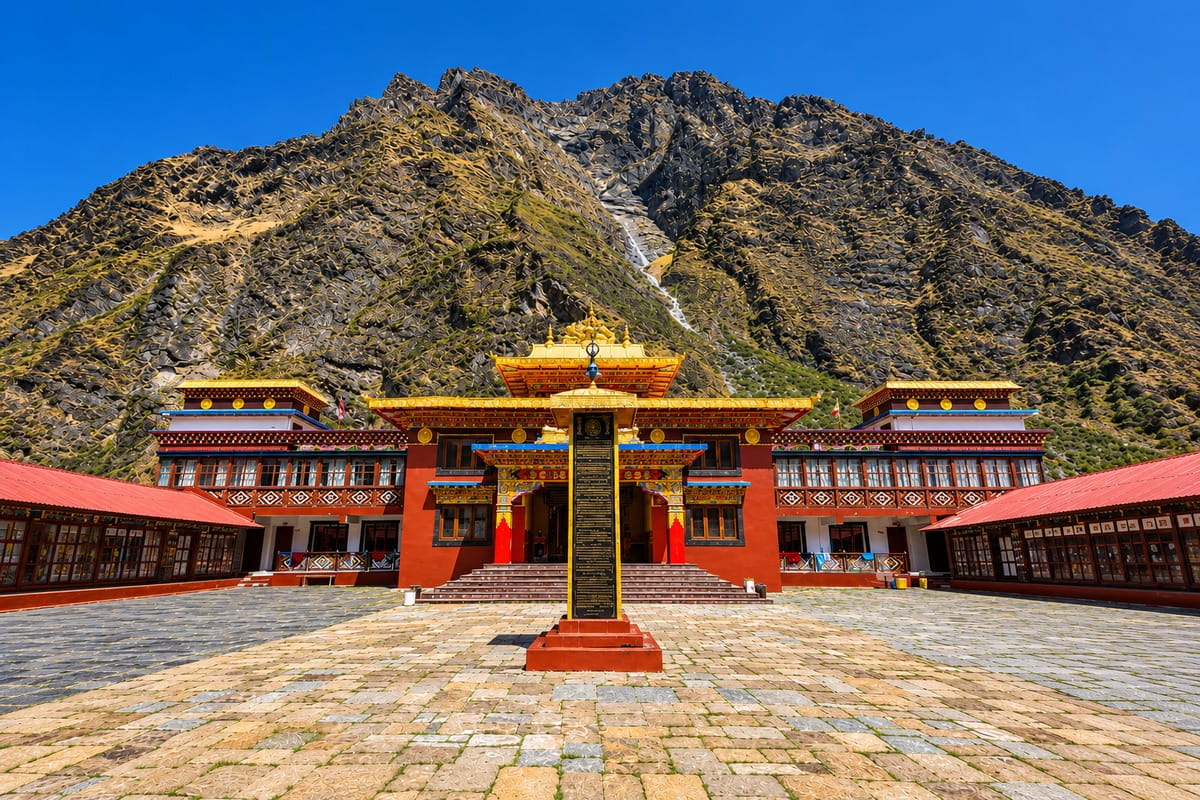
A short climb on open, dry slopes takes you to Mu Gompa, the monastery near the head of the valley. This is the highest night in Tsum, and the Tibetan border lies just to the north. If you feel strong, your guide can take you higher in the afternoon to Dhephyudonma Gompa. Rooms here are basic and cold, so have your warm layers ready. Please follow your guide on where you can walk and take photos.
Altitude: 3,240m | Trek: 4–5 hrs | Descent: −460m | Meals: Breakfast, Lunch, Dinner | Stay: Monastery guest room, Rachen Gompa
You walk back down the valley past Nile and Chhule to Rachen Gompa, a large nunnery in upper Tsum. Splitting the descent here keeps today and tomorrow short. If the timing works, you may be able to sit in quietly on prayers. Ask your guide first, and dress modestly inside the gompa.
Altitude: 2,386m | Trek: 5–6 hrs | Descent: −854m | Meals: Breakfast, Lunch, Dinner | Stay: Teahouse, Chumling
The trail retraces your route through Chhokangparo and down to the Shiar Khola. Much of the day is downhill, so use trekking poles to spare your knees. Back in Chumling, the forest and warmer air feel very different from the open upper valley.
Altitude: 1,860m | Trek: 6–7 hrs | Descent: −526m | Meals: Breakfast, Lunch, Dinner | Stay: Teahouse, Deng
You walk out of Tsum past Lokpa and drop to the Budhi Gandaki, where you rejoin the main circuit trail. From there, the path heads north through the narrow gorge to Deng, a quiet stop in a forested bend of the river. You lose height today, but your body keeps much of the adjustment it made in Tsum. That helps with the climb that starts tomorrow.
Altitude: 2,630m | Trek: 6–7 hrs | Ascent: +770m | Meals: Breakfast, Lunch, Dinner | Stay: Teahouse, Namrung
The biggest climb so far. The trail crosses the river back and forth through Rana and Bihi. Then it climbs through pine forest as the air cools. By Namrung the valley is wider and you get the first proper mountain views. From here on, the villages look and feel Tibetan. Expect stone houses, prayer flags and mani walls.
Altitude: 3,180m | Trek: 5–6 hrs | Ascent: +550m | Meals: Breakfast, Lunch, Dinner | Stay: Teahouse, Lho
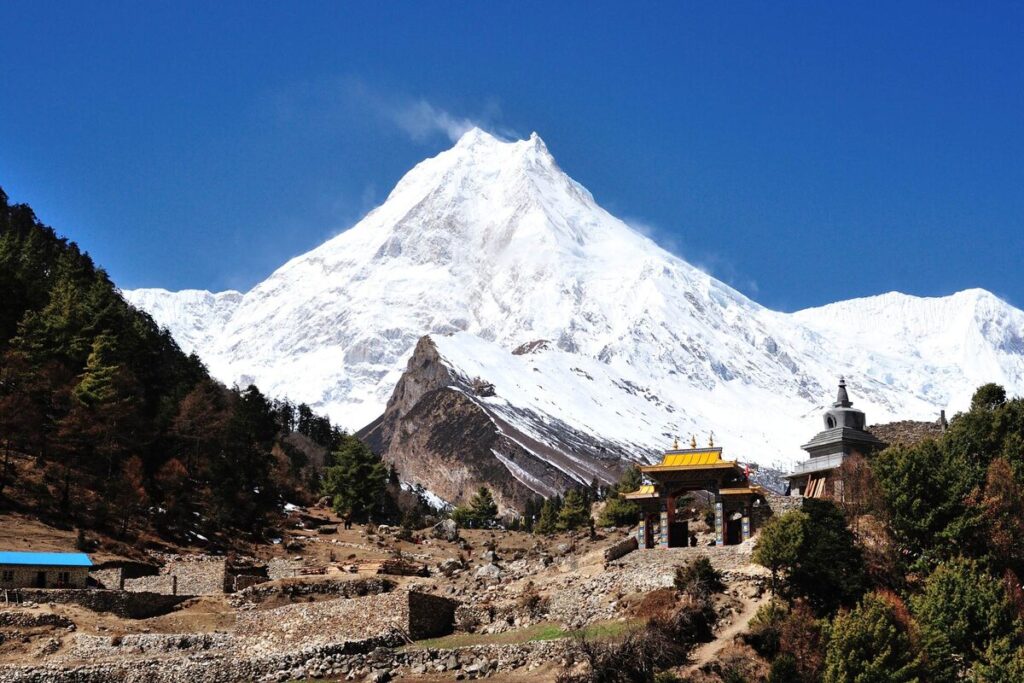
A steady climb through farmland and old Nubri villages such as Lihi and Sho. Long mani walls and chortens line the trail. Lho sits on a shelf above the river, and from the village Manaslu fills the view ahead. Its double summit stands out clearly on a good day. Get to Lho early enough to see the mountain before afternoon cloud builds.
Altitude: 3,530m | Trek: 4–5 hrs | Ascent: +350m | Meals: Breakfast, Lunch, Dinner | Stay: Teahouse, Samagaon
A shorter day through Shyala and across open yak pasture into the wide valley below Manaslu. Samagaon is the largest village on the upper circuit, with a monastery where monks and nuns live. You spend two nights here. Arrive, rest, drink plenty of water and keep the afternoon easy.
Altitude: 3,530m overnight / up to 4,800m hike | Hike: 4–6 hrs | Meals: Breakfast, Lunch, Dinner | Stay: Teahouse, Samagaon
This rest day is what makes the pass safe, so do not skip it. Climb high and sleep low. The hard option is the long hike up glacial moraine toward Manaslu Base Camp, at around 4,800m. Easier choices are Birendra Lake below the glacier, or Pungyen Monastery, rebuilt after an avalanche destroyed the original. Your guide picks the option that suits how you are feeling. Be back in Samagaon by early afternoon.
Altitude: 3,860m | Trek: 3–4 hrs | Ascent: +330m | Meals: Breakfast, Lunch, Dinner | Stay: Teahouse, Samdo
A short walk on purpose, because the goal today is altitude, not distance. The trail passes mani walls and yak pastures on the way to Samdo, the highest village in the valley. The Tibetan border is only a short distance north. In the afternoon, a short walk above the village helps your body adjust before tomorrow’s climb.
Altitude: 4,460m | Trek: 4–5 hrs | Ascent: +600m | Meals: Breakfast, Lunch, Dinner | Stay: Teahouse, Dharamsala
The trail climbs slowly into bare, rocky country with little vegetation. Dharamsala, also called Larkya Phedi, is the last stop before the pass. Teahouses here are basic, rooms are cold and the menu is short. Eat a full dinner even if you are not hungry. Lay out your warm layers and headlamp before you sleep, because tomorrow starts in the dark.
Altitude: 5,106m pass / 3,590m overnight | Trek: 8–10 hrs | Ascent: +646m | Descent: −1,516m | Meals: Breakfast, Lunch, Dinner | Stay: Teahouse, Bimthang
Most groups leave between 3am and 4am, walking by headlamp up the moraine beside the glacier. The climb is long but not technical. Larkya La is a wide, windy saddle. On a clear morning, Himlung Himal, Cheo Himal and Kang Guru are in view. The descent is steep and loose at first, and it goes on for hours. Bimthang sits in a wide meadow, and Manaslu comes back into view behind you.
Altitude: 2,300m | Trek: 6–7 hrs | Descent: −1,290m | Meals: Breakfast, Lunch, Dinner | Stay: Teahouse, Tilje
A long descent from open moraine into rhododendron and pine forest, following the Dudh Khola down the valley. Breathing gets easier with every hour, and the forest feels lush after a week above the trees. This much downhill is hard on the knees, so use trekking poles.
Altitude: 1,860m | Trek: 4–5 hrs | Descent: −440m | Meals: Breakfast, Lunch, Dinner | Stay: Teahouse, Dharapani
An easy last walking day through Thonje to Dharapani. This is where the Manaslu trail meets the Annapurna Circuit, and the loop around Manaslu is complete. Your guide confirms the jeep for the morning. After twenty days, spend the evening with the team you have walked with.
Altitude: 1,400m | Drive: 7–8 hrs | Meals: Breakfast, Lunch | Stay: Not included (trek ends in Kathmandu)
A jeep takes you down the Marsyangdi valley to Besisahar. From there, you continue to Kathmandu by bus. The road is long but much smoother than the drive in on Day 1. The trek ends when you reach Kathmandu in the evening. Book your Kathmandu hotel for that night in advance, and we can suggest options.
It is a 20-day guided trek that combines the full Manaslu Circuit with a week in Tsum Valley. You spend nights at Mu Gompa (3,700m) and Rachen Gompa. Then you rejoin the circuit at Deng and cross Larkya La Pass (5,106m) to Dharapani. Our package costs $1,199 to $1,899 per person, depending on group size.
The pass, the rest day at Samagaon and the finish at Dharapani are the same. This trek adds seven days in Tsum Valley and a second restricted area permit. If you have less time, the 13-day Manaslu Circuit Trek skips Tsum and goes straight up the Budhi Gandaki.
Yes. We run a 13-day trek into Tsum via Jagat, visiting Mu Gompa and Rachen Gompa. You then walk back out the same way. There is no high pass, and the highest point is about 3,700m. Message us on WhatsApp for dates and price.
You need four permits: the Tsum Valley Restricted Area Permit, the Manaslu Restricted Area Permit, MCAP and ACAP. The Tsum permit costs USD 40 for the first 7 days in autumn and USD 30 the rest of the year. Each extra day adds USD 7. Every trekker also pays the Chumnubri fee of NPR 1,000. All of these are included in our price. Full details: Manaslu permits guide →
It is hard but not technical. Tsum itself stays below 3,700m, but the trip is long, with eighteen walking days in a row. The hardest day is still the 8–10 hour crossing of Larkya La at 5,106m. We recommend it to trekkers who have done at least one long high-altitude trek. Full breakdown: difficulty guide →
Yes, with a licensed guide. Since 22 March 2026, one trekker can get the restricted area permits alone, so you no longer need a second person. A licensed guide is still required by law in both restricted areas. Our solo price is $1,899 and includes the guide.
Mostly in small family-run teahouses, which are simpler than those on the main circuit. At Mu Gompa and Rachen Gompa, you sleep in basic monastery guest rooms. Expect shared toilets, cold rooms and limited charging. See our accommodation guide for the circuit stops.
Autumn, from late September to November, gives the most settled weather and clearest views. Spring, from March to May, is the second choice. We don’t recommend the June–August monsoon because of landslides and poor visibility. In winter, heavy snow can close Larkya La. See our best time guide →
It helps. You sleep at 3,361m and 3,700m in Tsum before dropping back to Deng. Your body keeps much of that adjustment for the climb to Samagaon, where we still take a full rest day. It does not replace careful pacing near the pass. Read more: altitude sickness on the Manaslu Circuit →
Yes. Some trekkers add a rest day at Samdo before Dharamsala, which makes the trip 21 days. It gives extra time to adjust before the pass and a buffer for bad weather. Ask us when you book, and we will price it for you.
Tsum Valley and the Manaslu Circuit share most of their planning questions, so these guides cover both. Start with the Tsum guide, then use the Manaslu guides for the pass, permits and gear.