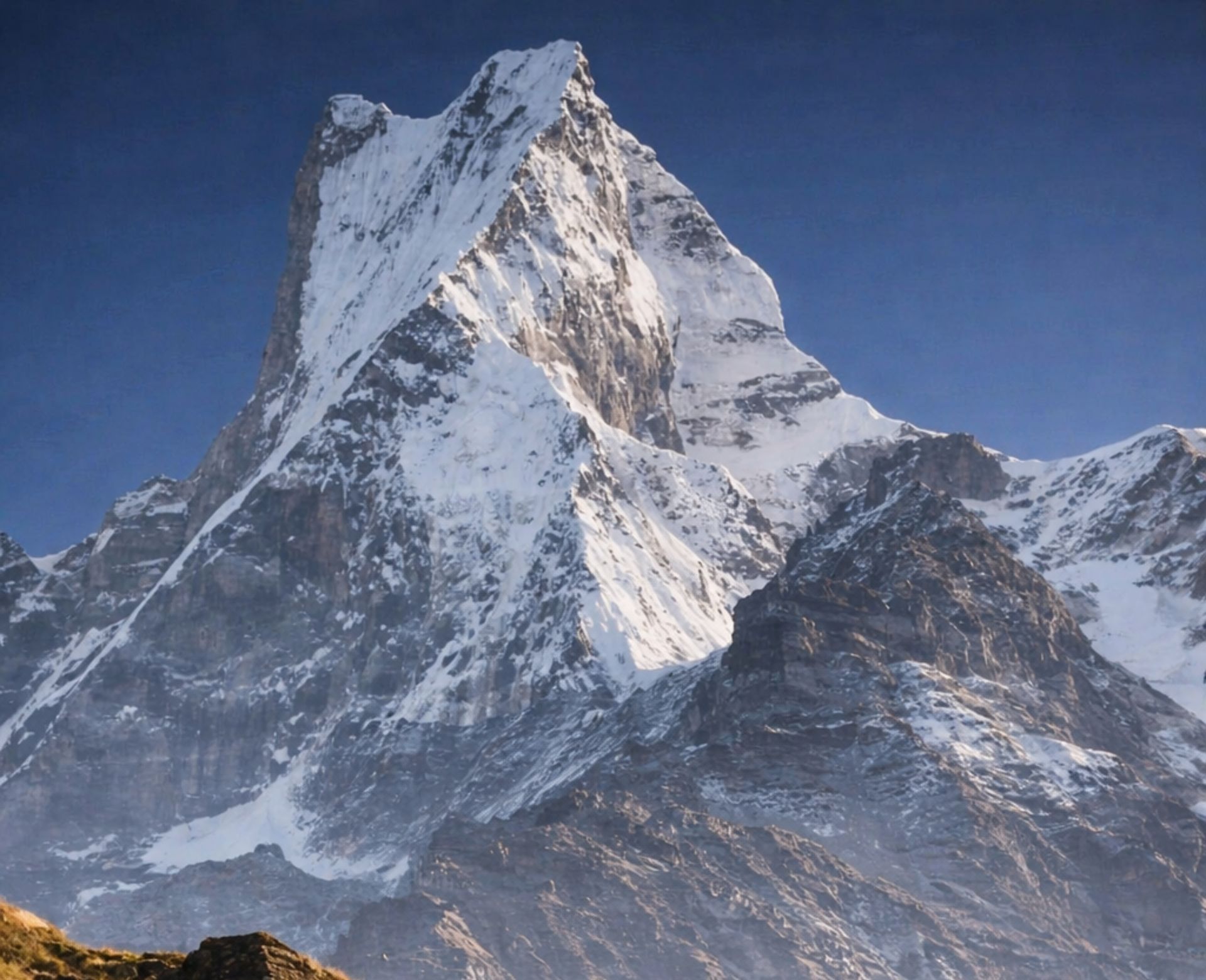
The Mardi Himal Trek is a 7-day route from Pokhara reaching 4,500m at Mardi Himal Base Camp, priced from $398 to $599 per person. The trail climbs through oak, rhododendron, and bamboo forest before breaking onto the Mardi Himal ridge, where Machapuchare’s fishtail summit sits directly overhead alongside Annapurna South and Hiunchuli — closer views than most longer Annapurna routes deliver from this distance.
From High Camp at 3,540m, the final push to the viewpoint and Base Camp puts you underneath the peaks rather than looking at them. No domestic flight, no restricted-area permits.
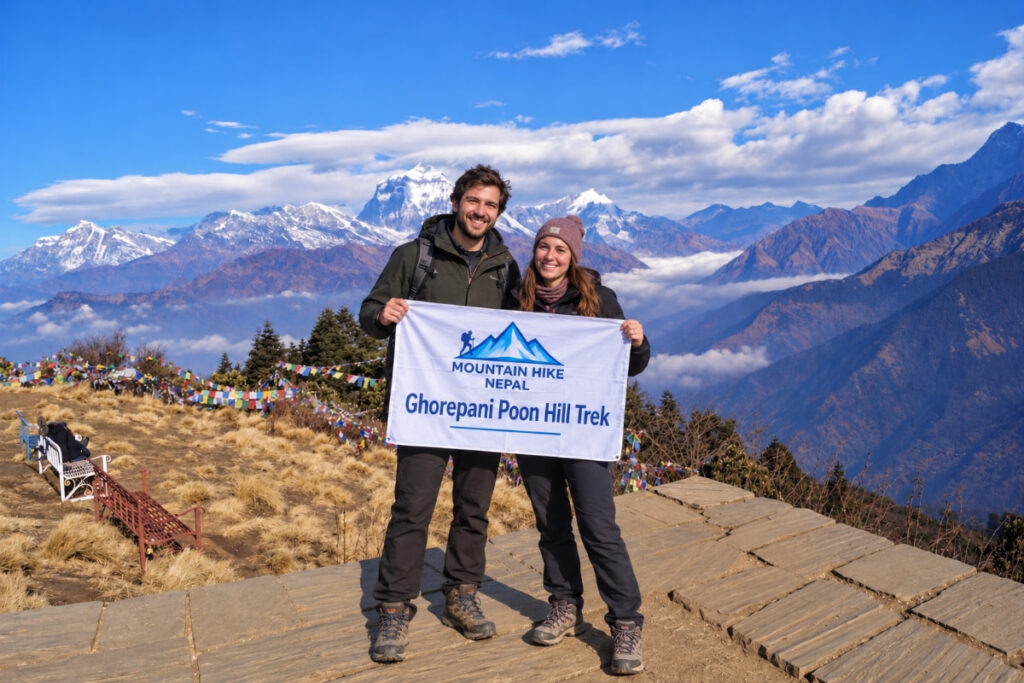
Add the Ghorepani and Poon Hill sunrise for a 9-day version, Pokhara to Pokhara; most trekkers who’ve done both call it the stronger route. We’re a Kathmandu-based trekking company, and a licensed guide is legally required here — every departure includes one, with porter support and both ACAP and TIMS permits arranged before you land. Message us on WhatsApp with your travel dates and group size.
| Trip Details | Information |
|---|---|
| Trip Name | Mardi Himal Trek |
| Standard Duration | 6 Nights / 7 Days (Kathmandu to Kathmandu) |
| With Poon Hill | 8 Nights / 9 Days (Pokhara to Pokhara) |
| Maximum Altitude | 4,500m — Mardi Himal Base Camp |
| Major Highlights | Mardi Himal Base Camp, High Camp, Low Camp, Pothana, Machapuchare, Poon Hill (optional) |
| Trek Difficulty | Moderate |
| Trek Start | Kathmandu → Pokhara → Kande |
| Trek End | Siding → Pokhara → Kathmandu |
| Best Season | Spring (March–May) and Autumn (September–November) |
| Low Season | Winter — cold nights, exceptional clarity, very few trekkers |
| Avoid | Monsoon — June, July, August |
| Accommodation | Hotel in Kathmandu and Pokhara / Teahouse on trail |
| Meals Included | Breakfast, Lunch and Dinner (all trekking days) |
| Permits Required | ACAP and TIMS (both included in package) |
| Region | Annapurna Conservation Area, Nepal |
Kathmandu → Pokhara → Kande → Pothana → Forest Camp → Low Camp → High Camp → Mardi Himal Base Camp → Low Camp → Siding → Pokhara → Kathmandu
Most Annapurna treks route through Chhomrong or cross a high pass. Mardi Himal does neither — it’s its own ridge, running south of Machapuchare, and far fewer people know about it than ABC or the Circuit.
You walk with Machapuchare on one side and the Modi Khola valley dropping away on the other. Forest gives way to rhododendron scrub, then open alpine ground, then the bare rock of High Camp. At the viewpoint, you’re standing directly under the peaks rather than looking at them from a distance — which, oddly, is something the longer treks don’t always deliver.
It’s also one of the few Nepal treks that starts and ends in Pokhara — no domestic flight, no Lukla delays, no restricted area fees. Seven days out from the lakeside, and you’re back for dinner on Day 7. Curious how it stacks up against Annapurna Base Camp? Read our honest comparison: Mardi Himal vs Annapurna Base Camp — which one is right for you?
The route is rated moderate, not easy. There’s no technical climbing, but the final push from High Camp to the viewpoint and Base Camp is steep, often starts before dawn, and is genuinely cold at 4,500 metres. Water is only available at High Camp, so you carry what you need for the summit push and back. A few weeks of regular hill walking beforehand makes the difference between enjoying that last stretch and just enduring it.
per person
per person
per person
per person
Altitude: 820m | Drive: 6–7 hrs (tourist bus) | Meals: Breakfast | Stay: Hotel, Pokhara
The drive west out of Kathmandu follows the Trishuli and Marsyangdi rivers before Pokhara opens up on the shore of Phewa Lake, with the Annapurna range filling the horizon behind it. We keep this a travel day on purpose, so you start the actual trek tomorrow rested rather than road-worn.
Altitude: 2,550m | Drive: 1 hr | Trek: 4–5 hrs | Meals: Breakfast, Lunch, Dinner | Stay: Teahouse, Forest Camp
A short drive from Pokhara to Kande, the trailhead for Mardi Himal. The trail climbs almost immediately through Pothana and into dense oak and rhododendron forest, gaining height steadily. Forest Camp sits well inside the treeline — cool, shaded, and the first proper night on the ridge.
Altitude: 2,970m | Trek: 4–5 hrs | Meals: Breakfast, Lunch, Dinner | Stay: Teahouse, Low Camp
The forest thins gradually as the trail follows the narrow ridge north, rhododendron giving way to smaller shrubs and the first real gaps in the canopy. Machapuchare appears through the trees for the first time today — a preview of what the next two days deliver in full.
Altitude: 3,540m | Trek: 3–4 hrs | Meals: Breakfast, Lunch, Dinner | Stay: Teahouse, High Camp
A shorter day, deliberately so — the trail breaks out of the treeline completely, and the altitude gain from here needs to stay controlled. High Camp sits right at the edge of the alpine zone, with Machapuchare, Annapurna South, and Hiunchuli now filling the skyline with nothing in the way.
Altitude: 4,500m high point / 2,970m overnight | Hike: 6–7 hrs round trip | Meals: Breakfast, Lunch, Dinner | Stay: Teahouse, Low Camp
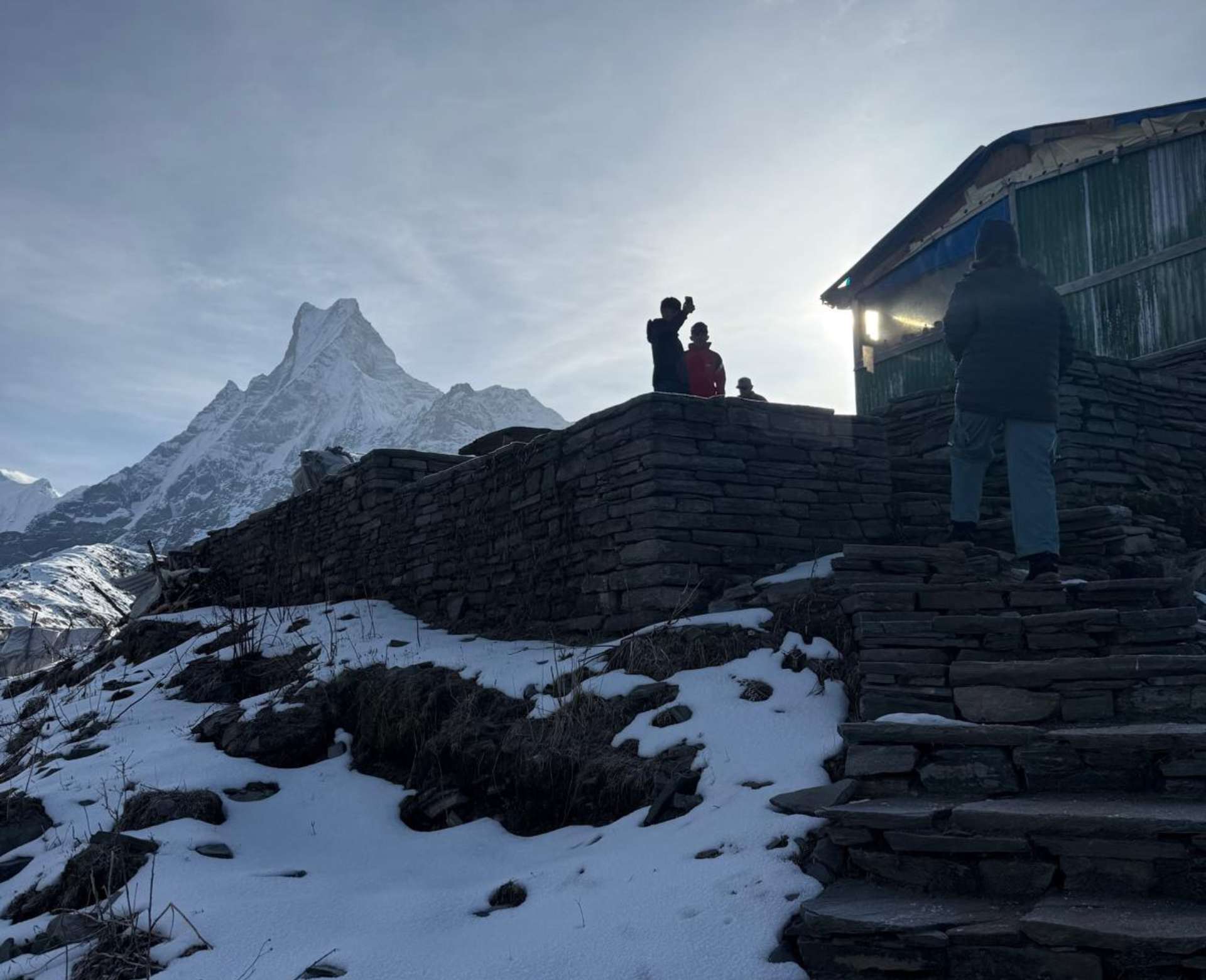
An early start, well before dawn, for the steep push along the exposed ridge to the viewpoint and on to Mardi Himal Base Camp. Water is only available at High Camp, so you carry what you need for the whole push. At 4,500 metres you’re standing directly beneath Machapuchare’s south face — not looking at the mountain from a distance, but underneath it. The same route back down to High Camp, then a further descent to Low Camp for the night.
Altitude: 820m | Trek: 4–5 hrs | Drive: 2 hrs | Meals: Breakfast, Lunch | Stay: Hotel, Pokhara
A long descent through forest down to Siding, a Gurung village at the base of the ridge, followed by a drive back to Pokhara. Hot showers, real beds, and lakeside restaurants after five days on the trail — the first proper rest since Kathmandu.
Drive: 6–7 hrs (tourist bus) | Meals: Breakfast
The return drive to Kathmandu, retracing Day 1 in reverse. Seven days, one genuine close-up ridge experience, and you’re back in the city in time for dinner. Add the Ghorepani and Poon Hill extension here instead if you’ve built the 9-day version.
A 7-day trek from Pokhara to Mardi Himal Base Camp (4,500m) in Nepal’s Annapurna region, following a narrow ridge with close-up views of Machapuchare and Annapurna South. No domestic flight and no restricted-area permit needed, starting from USD 398 per person.
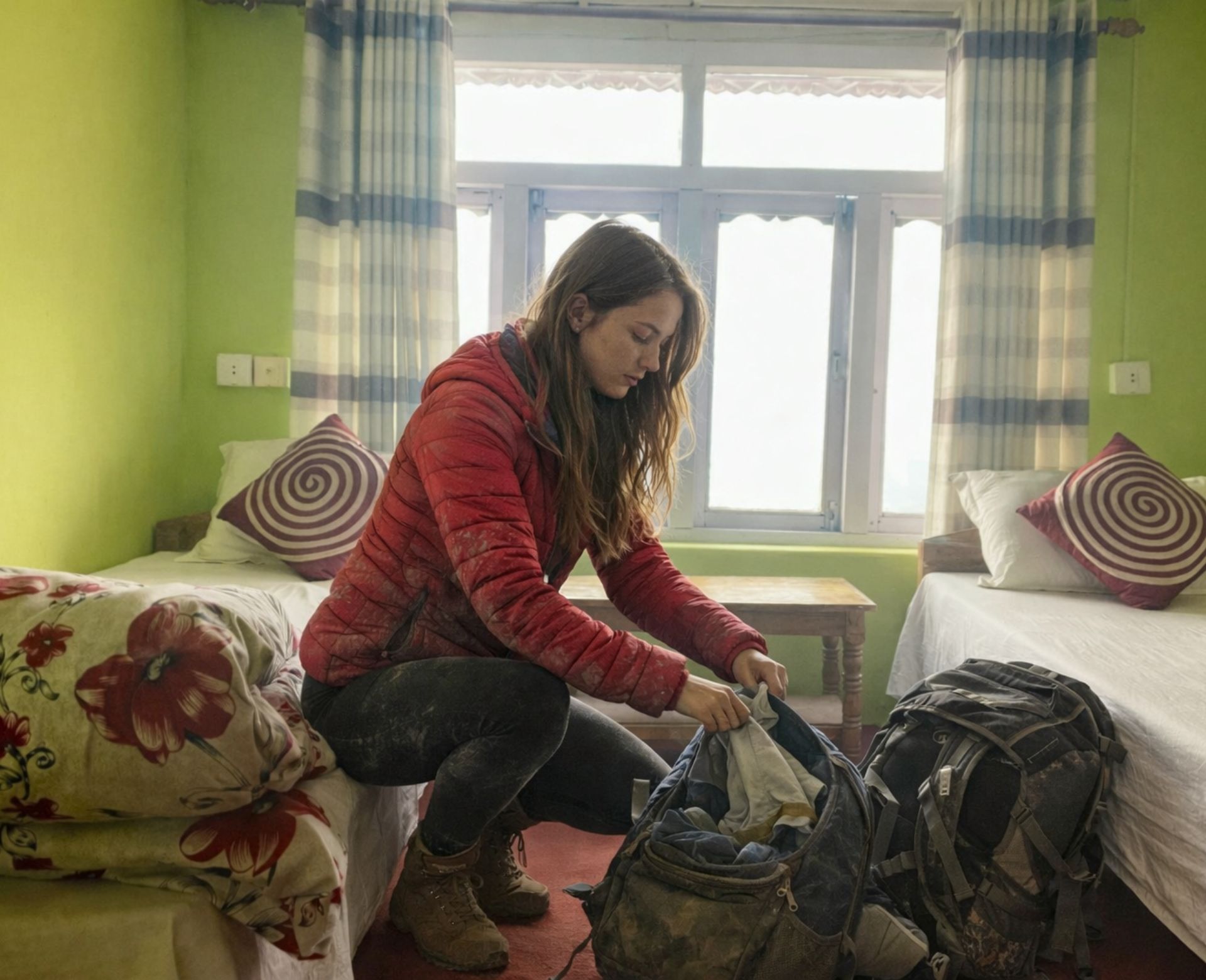
Local teahouses on twin-sharing basis — simple rooms, shared bathrooms below High Camp, and squat or Western-style toilets depending on the lodge. Hot showers and device charging are available at most stops for a small fee, not included in the package. Rooms get basic at High Camp itself — expect a mattress, blankets, and cold nights rather than any comfort beyond that.
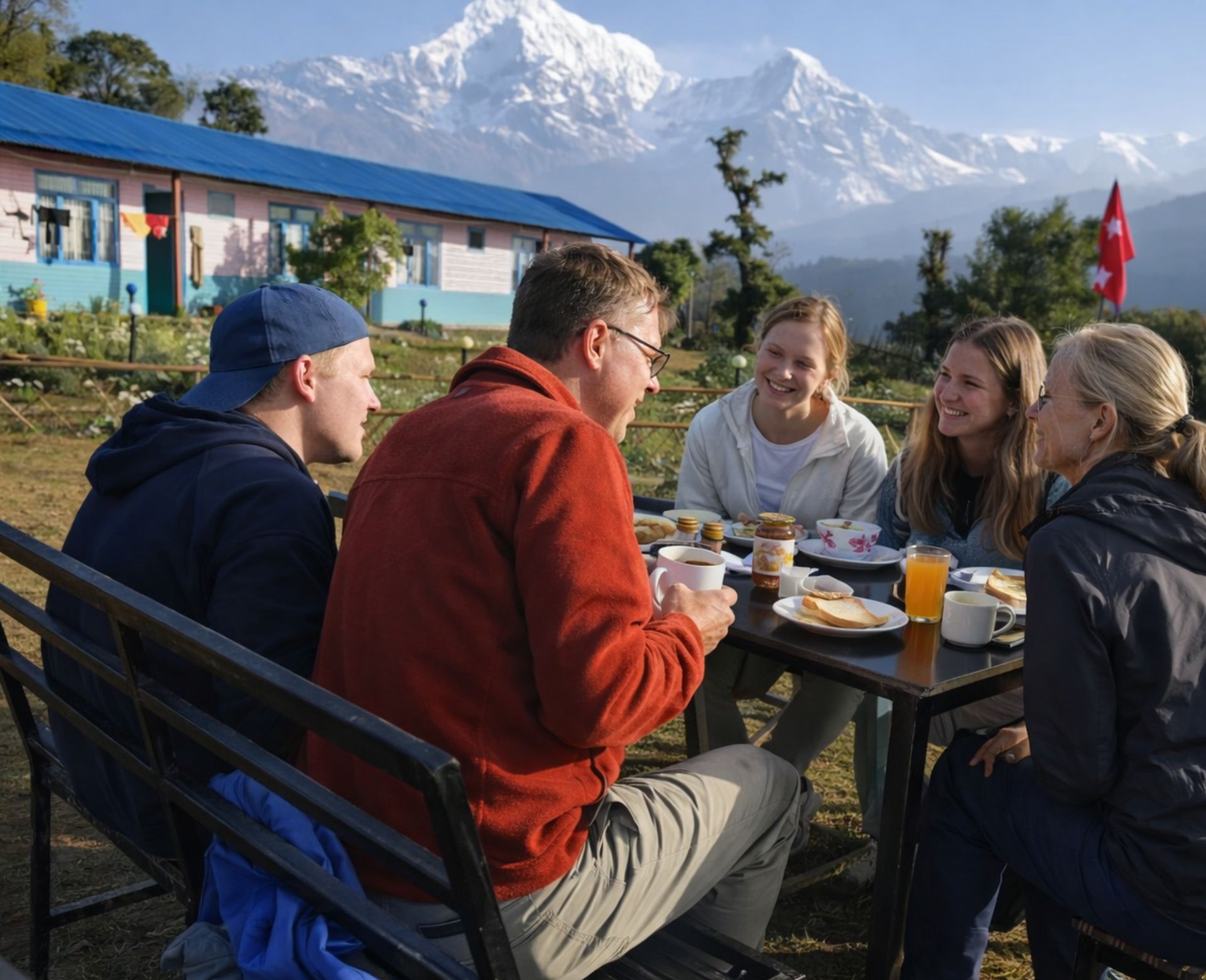
Teahouse menus cover dal bhat, noodles, soup, porridge, and basic Western dishes like pasta and pancakes. Vegetarian is easy to accommodate throughout. Vegan and gluten-free are more limited at higher elevations — tell us when you book and we’ll flag it to your guide, who can help you order accordingly at each stop.
Headache, nausea, and fatigue beyond normal tiredness are the early signs. Your guide monitors everyone from High Camp onward, since that’s where altitude starts to matter on this route. If symptoms are serious, the response is to descend — make sure your travel insurance covers helicopter evacuation, since that’s the actual safety net, not the guide’s judgment alone.
No technical experience required, but you should be comfortable walking 5–6 hours a day on uneven trail with some steep sections. The High Camp to Base Camp push is the hardest stretch — pre-dawn start, steep, cold. A few weeks of regular hill walking or stair training before you travel makes a real difference on that morning specifically.
A down jacket and a sleeping bag rated to at least -10°C are the two non-negotiables — both rentable in Pokhara rather than worth buying new. Trekking poles, a headlamp for the pre-dawn summit push, and layers for a 20°C+ swing between valley and ridge round out the essentials. Buy and break in your boots at home; rent everything else.
Coverage is patchy from Low Camp upward and unreliable at High Camp and Base Camp. Most teahouses offer Wi-Fi for a small fee lower on the route, but don’t count on a signal for the summit push itself.
You can book solo — the guide is included either way, and a porter is available on request. Joining or forming a group of 2 or more brings your per-person rate down significantly, so if your dates are flexible, ask us whether another departure is close to your timing.
Group sizes range from solo up to 12, and pricing is tiered accordingly. If you want a private departure with just your own party — even at 2–4 people — that’s the default setup, not a special request; you’re only grouped with other trekkers if you choose to join an existing departure to lower the cost.
There’s no strict age limit, but the High Camp to Base Camp day is long, steep, and cold before dawn, which is demanding for young children and for anyone with limited hill-walking fitness. Older trekkers in good regular walking condition manage this route well. Message us with ages and fitness level and we’ll give you a straight answer for your group.
Two things specifically: trekking at altitudes above 4,500m, and helicopter evacuation. Many standard travel policies exclude high-altitude trekking by default or cap coverage well below what a rescue actually costs, so check the policy wording rather than assuming a generic travel policy is enough. We can point you to providers other trekkers have used if you’re not sure where to start.
Spring (March–May) and autumn (September–November) offer the clearest skies and most stable conditions. Winter brings cold nights but exceptional visibility and far fewer trekkers on the trail. Avoid the monsoon months of June through August, when cloud cover blocks most of the views this trek is built around.
Mardi Himal is 3 days shorter, costs less per person, reaches a higher maximum altitude at the viewpoint (4,500m vs 4,130m), and carries far fewer trekkers than the ABC route above Chhomrong. ABC delivers the Annapurna Sanctuary — a 360-degree glacial amphitheatre. Mardi Himal delivers the ridge — Machapuchare directly overhead. For the full comparison: Mardi Himal vs Annapurna Base Camp →
Plan every aspect of your Mardi Himal Trek with our detailed guides: