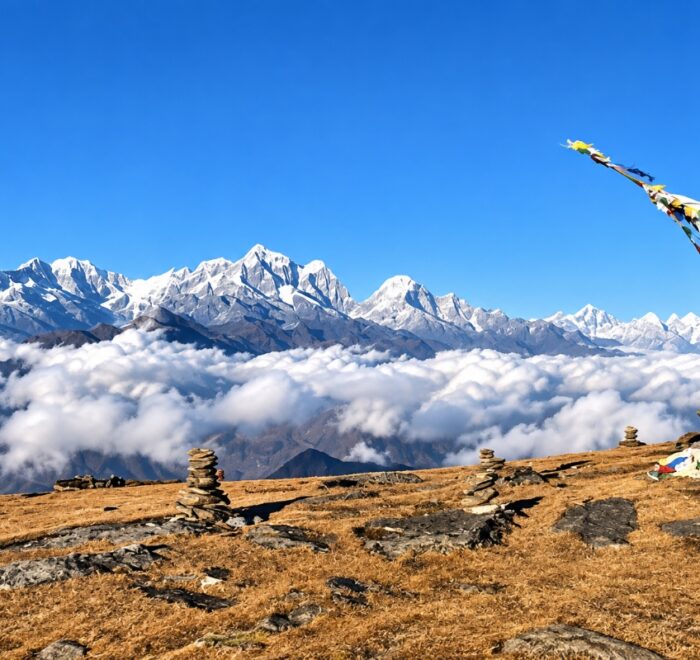
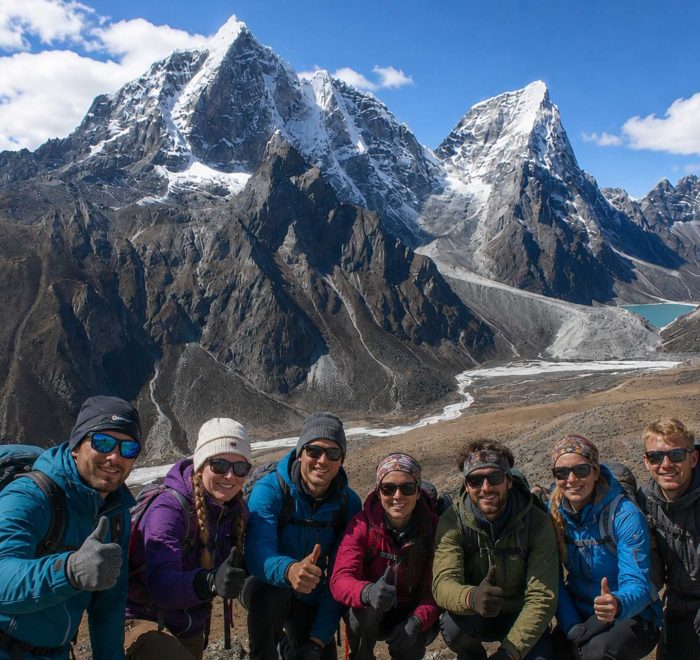
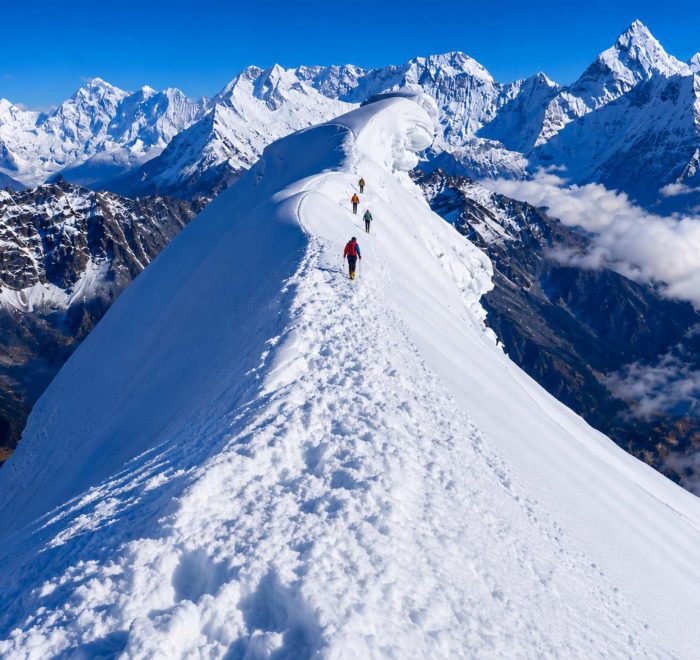
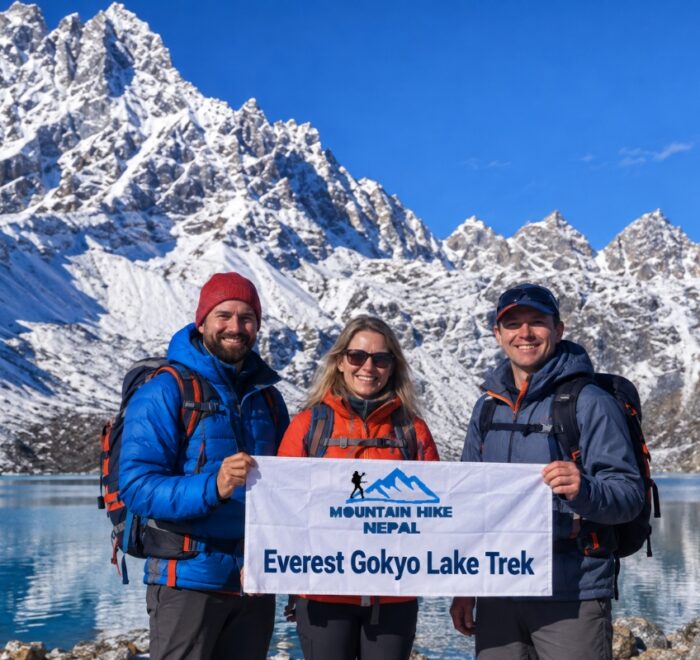
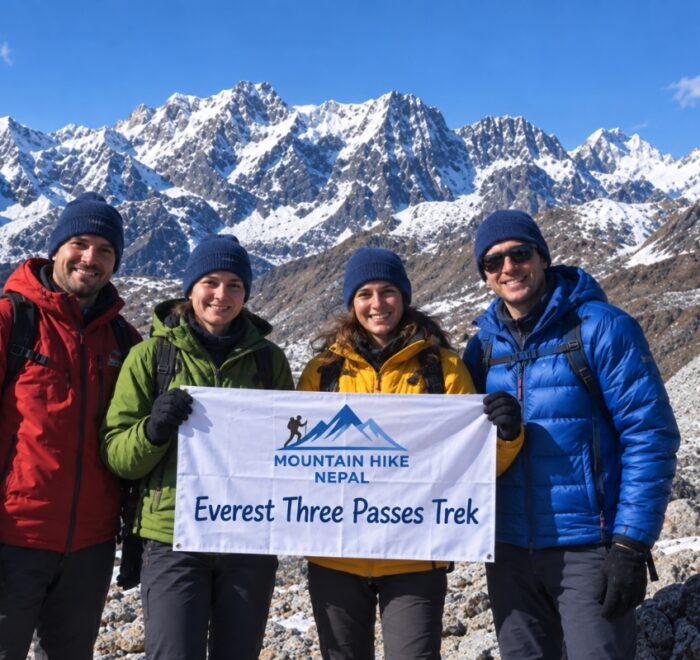
Snow-covered peaks and high mountain valleys in Nepal’s Everest region.
The Everest Region is home to Mount Everest (8,848m) and the classic trails of the Khumbu Valley — Sherpa villages, high-altitude monasteries, and routes that range from a short 5-day introduction to a demanding 16-day high-pass crossing. Whether this is your first Himalayan trek or you’re after a serious altitude challenge, there’s a route here built for it.
Trails pass through Sherpa communities, working monasteries, and landscapes shaped by some of the highest glaciers on earth. Some routes — like Everest Base Camp — are among the most walked trails in the world. Others, like Gokyo Lakes or Pikey Peak, cover the same region with a fraction of the crowds.
Everest Region treks range from 5 to 16 days, starting and ending in Kathmandu. Every trip below is privately guided, with permits, Lukla flights, and logistics handled from arrival to departure.
How to Choose Your Everest Trek
Not sure which route fits? Everest Region treks generally fall into three categories, based on time, fitness, and how much of the Khumbu you want to see.
Short Introduction Treks (5–9 days)
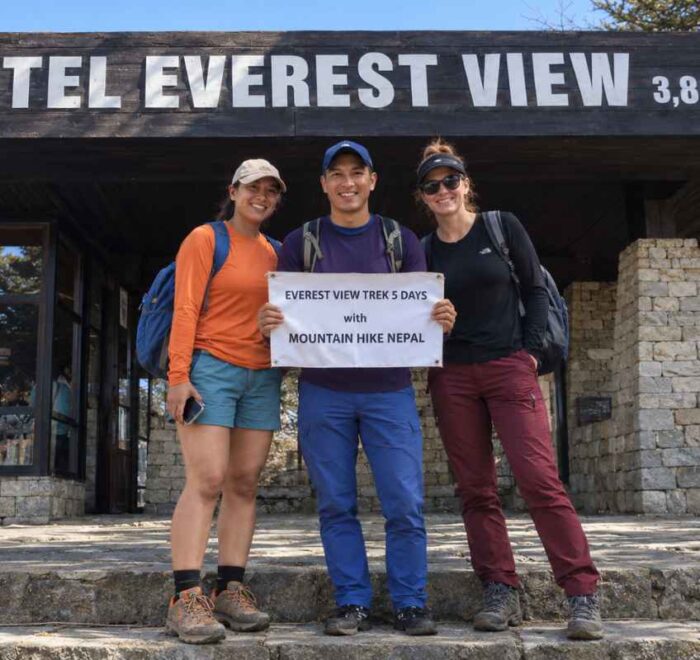
Lower altitude, shorter time commitment, good for a first Himalayan trip or a limited schedule. Everest View Trek (5 days) and Nangkartshang Peak Trek (9 days) both reach genuine Everest panoramas without the full Base Camp itinerary.
Classic Treks (11–12 days)
Everest Base Camp Trek (12 days) is the region’s most recognisable route. Everest Gokyo Lakes Trek (11 days) covers similar altitude and culture through a quieter valley, with turquoise glacial lakes in place of Base Camp itself.
High-Pass and Climbing Treks (15–16 days)
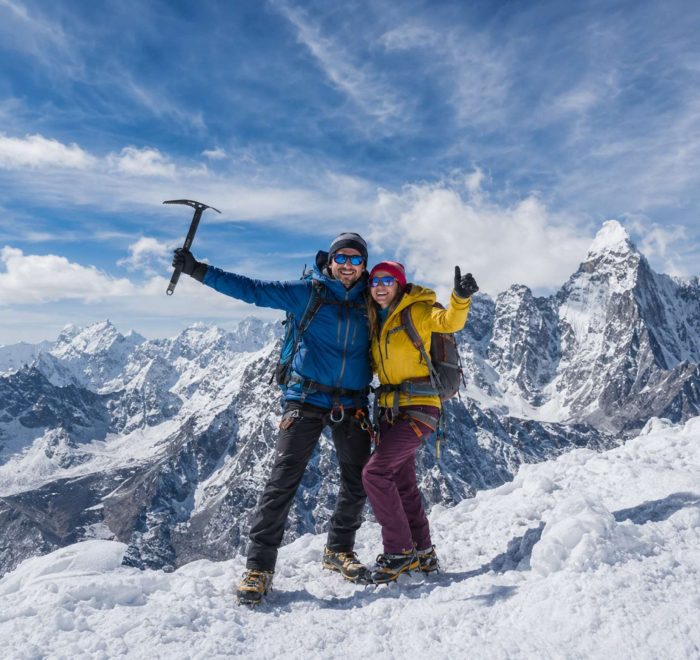
For experienced trekkers wanting more altitude or a technical add-on. Everest Three Passes Trek (16 days) crosses all three of the Khumbu’s high passes. Lobuche Peak and Island Peak Climbing combine the Base Camp route with a trekking-peak summit above 6,000m.
Everest Region Trekking FAQs
What is the best trek in the Everest Region?
The Everest Base Camp Trek is the most popular option, while Gokyo Lakes and the Three Passes Trek offer more scenic and less crowded alternatives. The best choice depends on your time, fitness level, and experience.
How difficult are Everest Region treks?
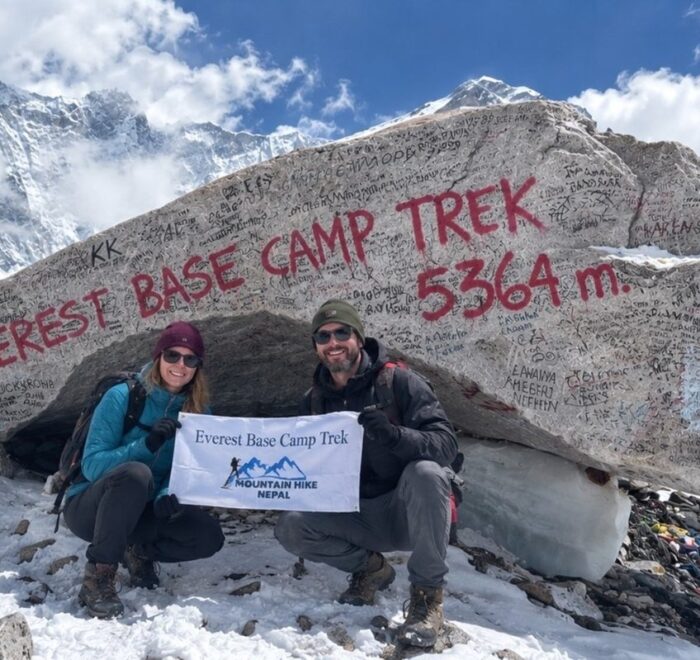
Difficulty varies by route. Short treks like Everest View (5 days) are easy to moderate. Everest Base Camp is moderate to challenging, reaching 5,364 metres. The Three Passes Trek and trekking-peak climbs are the most demanding, crossing multiple 5,000m+ passes or summits above 6,000m.
What permits are needed for Everest Region trekking?
Two permits: the Sagarmatha National Park entry permit and the Khumbu Pasang Lhamu Rural Municipality permit. The TIMS card is not required for the Everest region — it was replaced by the municipality permit in 2018. Mountain Hike Nepal arranges both permits for every trek.
Do I need a guide for the Everest Region?
No, not legally. Unlike Annapurna, Langtang, and Manaslu, the Khumbu Pasang Lhamu Rural Municipality has not adopted Nepal’s mandatory-guide rule. Mountain Hike Nepal includes a licensed guide as standard on every departure regardless, for altitude safety, permits, and logistics.
How high is Everest Base Camp?
Everest Base Camp sits at 5,364 metres. Kala Patthar, the highest point most trekkers reach on the classic route, sits higher at 5,644 metres and offers the best unobstructed view of Everest’s summit.
What is the best time to trek in the Everest Region?
Spring (March to May) and autumn (September to November) offer the most stable weather, clearest mountain views, and most reliable Lukla flights.
When you book with an account, you will be able to track your payment status, track the confirmation and you can also rate the tour after you finished the tour.