Yala Peak Climbing is Nepal’s most accessible genuine Himalayan summit, and it earns that title honestly. At 5,520m in the Langtang Valley, you reach a real technical summit — crampons on, ice axe in hand, Langtang Lirung (7,234m) filling the sky directly above you, and Shishapangma (8,027m) visible across the Tibet border to the north, priced from $899 per person. No Lukla flights. No NMA climbing permit required. All climbing gear included in the package. The approach from Kathmandu is entirely by road.
The four-day Langtang Valley walk to Kyanjin Gompa is genuinely one of the finest mountain approaches in Asia — Tamang villages, yak pastures, the rebuilt community of Langtang Village, and the ancient Kyanjin Monastery waiting at 3,870m. From there the expedition moves to Yala Peak Base Camp at 4,800m and the summit attempt on Day 7.
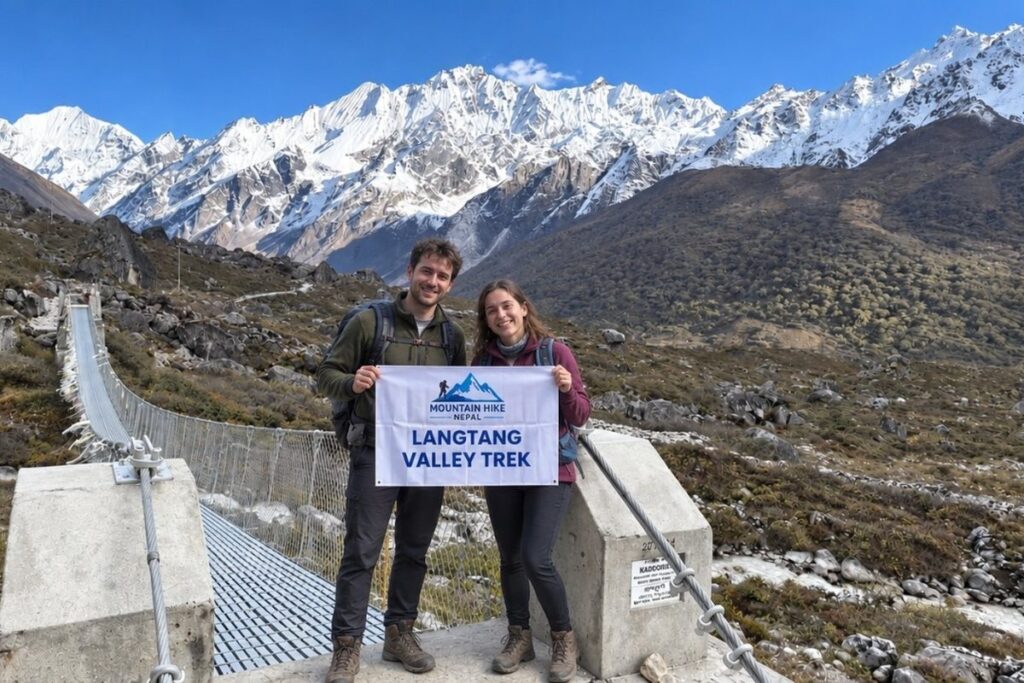
Not ready for a summit yet? The Langtang Valley Trek covers the same trail in 8 days without the climb.
| Trip Details | Information |
|---|---|
| Duration | 10 Days |
| Maximum Altitude | 5,520m — Yala Peak Summit |
| Highest Overnight | 4,800m — Yala Peak Base Camp |
| Approach | Road — Kathmandu to Syabrubesi (no Lukla flights) |
| Trek Start / End | Syabrubesi (1,460m) |
| Difficulty | Moderate — ideal for first-time climbers |
| Technical Grade | PD- — crampons and ice axe, no steep glacier |
| Best Season | October–November and March–May |
| Permits Required | Langtang National Park Entrance Permit, TIMS Card |
| NMA Climbing Permit | Not required — Yala Peak was removed from the NMA permit list, as it falls below the 5,800m threshold |
| Summit Views | Langtang Lirung, Shishapangma (Tibet), Dorje Lakpa, Ganesh Himal |
| Accommodation | Teahouses on trail, tented camp at Yala High Camp |
| Meals Included | Breakfast, Lunch and Dinner every day |
| Region | Langtang, Nepal |
Kathmandu → Syabrubesi → Lama Hotel → Langtang Village → Kyanjin Gompa → Yala Peak Base Camp (4,800m) → Yala Peak Summit (5,520m) → Lama Hotel → Syabrubesi → Kathmandu
Yala Peak Climbing is the most accessible real summit in Nepal — no NMA climbing permit, no prior mountaineering experience required, and a technical grade gentle enough for a first Himalayan climb. What you get in return is a genuine crampons-and-ice-axe summit at 5,520m, not just a high viewpoint.
The approach is the same Langtang Valley Trek most trekkers already know — Tamang villages, yak pastures, Kyanjin Gompa’s monastery and yak cheese factory — so the climb builds on ground that’s already well-documented and well-supported, not an obscure route with unknown logistics. Basic mountaineering training is included before the summit push: crampons, ice axe, and rope technique, taught by your climbing guide at Yala Peak Base Camp (4,800m).
Not sure you’re ready for a summit yet? The standalone Langtang Valley Trek covers the same approach trail in 8 days, without the climb — a good way to test how you handle the altitude before committing to Yala Peak.
This is a genuine mountaineering trip, not a trekking peak in name only. The final push from Base Camp to the summit is technical enough to require crampons, ice axe, and basic rope technique — training is included, but you need real physical fitness and comfort with exposure at altitude. Six to eight weeks of uphill fitness preparation matters here as much as on any trek in this cluster, and prior high-altitude experience — even just the standard Langtang Valley Trek — genuinely helps.
per person
per person
per person
per person
✅ Shared bus or jeep — Kathmandu to Syabrubesi and return (both ways)
✅ All teahouse accommodation on trail, twin-sharing, for 8 nights
✅ Tented camp at Yala Peak Base Camp — sleeping tent, dining tent, toilet tent
✅ All meals — Breakfast, Lunch and Dinner every day on trail and at Base Camp
✅ Licensed English-speaking trekking guide for the full 10 days
✅ Certified climbing guide for Base Camp briefing and summit day
✅ One porter per two climbers (maximum load 15 kg)
✅ All group climbing equipment — crampons, ice axe, fixed ropes, tent, sleeping bag
✅ Trekking poles (provided — or bring your own)
✅ Langtang National Park entry permit
✅ TIMS card
✅ Guide and porter wages, meals, accommodation, and insurance
✅ All applicable government taxes and service charges
❌ International flights to and from Nepal
❌ Nepal entry visa — USD 50 for 30 days, on arrival at Tribhuvan International Airport
❌ Travel and medical insurance — must cover climbing above 5,500m and helicopter evacuation
❌ Personal trekking clothing and boots
❌ Beverages, bar bills, and personal snacks on trail
❌ Hot showers and device charging at teahouses (small fee applies)
❌ Tips for guide, climbing Sherpa, and porter — strongly recommended
❌ Any costs from weather delays or circumstances beyond our control
Drive: 6–7 hrs | Meals: Lunch, Dinner | Stay: Teahouse, Syabrubesi
The shared jeep or bus departs Kathmandu early morning via the Trishuli Valley highway — a scenic 122km drive through Newar towns, river gorges, and Tamang settlements as the road climbs toward the Langtang border region. There are no early morning airport transfers, no mountain flight anxiety, and no weather-dependent departures. Syabrubesi at 1,460m is the starting point — a quiet gateway town with good teahouses, a Langtang National Park checkpoint, and a mountain atmosphere that signals the expedition has genuinely begun.
The afternoon in Syabrubesi is used productively: equipment checks with your guide, crampon and boot compatibility confirmed, porter weights distributed, and the Day 6 summit plan introduced for the first time. Day 1 is not a transit day — it is the start of a 10-day expedition.
Altitude: 2,470m | Trek: 6 hrs | Ascent: +1,010m | Meals: Breakfast, Lunch, Dinner | Stay: Teahouse, Lama Hotel
The trail enters Langtang National Park above Syabrubesi and climbs through subtropical forest and riverside paths along the Langtang Khola gorge. This is the longest approach day — predominantly continuous uphill on a clear forest trail. The forest between Syabrubesi and Lama Hotel is one of the finest sections of the entire trek — bamboo groves, oak and rhododendron canopy, and occasional clearings where the river rushes far below.
Pace Day 2 deliberately and drink water consistently — the body is adjusting to the rhythm of the expedition and the altitude is still modest.
Altitude: 3,430m | Trek: 5–6 hrs | Ascent: +960m | Meals: Breakfast, Lunch, Dinner | Stay: Teahouse, Langtang Village
The trail climbs above the forest into alpine meadow and the Langtang Valley opens dramatically above Ghoda Tabela — yak pastures, stone walls, prayer flags, and the Langtang Lirung (7,234m) north face filling the northern sky for the first time. Langtang Village was completely destroyed in the April 2015 earthquake and rebuilt entirely by the community in the years that followed.
The rebuilt teahouses are well-maintained, and arriving at Langtang Village carries a specific historical weight that distinguishes this valley from any other Nepal trekking route. Take time here in the afternoon — the community’s story is worth understanding before the higher mountain experience ahead.
Altitude: 3,870m | Trek: 3–4 hrs | Ascent: +440m | Meals: Breakfast, Lunch, Dinner | Stay: Teahouse, Kyanjin Gompa
The trail continues up the valley through yak pastures, mani walls, and chortens to Kyanjin Gompa — one of the most atmospheric Himalayan base villages in Nepal. The ancient Kyanjin Monastery, operating since the 17th century, and the yak cheese factory beside it give this village a character that no amount of tourism has yet diluted. The Langtang Lirung north face fills the northern view from the monastery courtyard in a way that makes every trekker stop and photograph the same shot — and the photograph never quite does it justice.
Arrive early, visit the monastery, eat the yak cheese, and rest well. The acclimatisation hike tomorrow is the most important preparation day of the expedition.
High point: 4,773m | Hike: 4–5 hrs | Ascent: +903m | Meals: Breakfast, Lunch, Dinner | Stay: Teahouse, Kyanjin Gompa
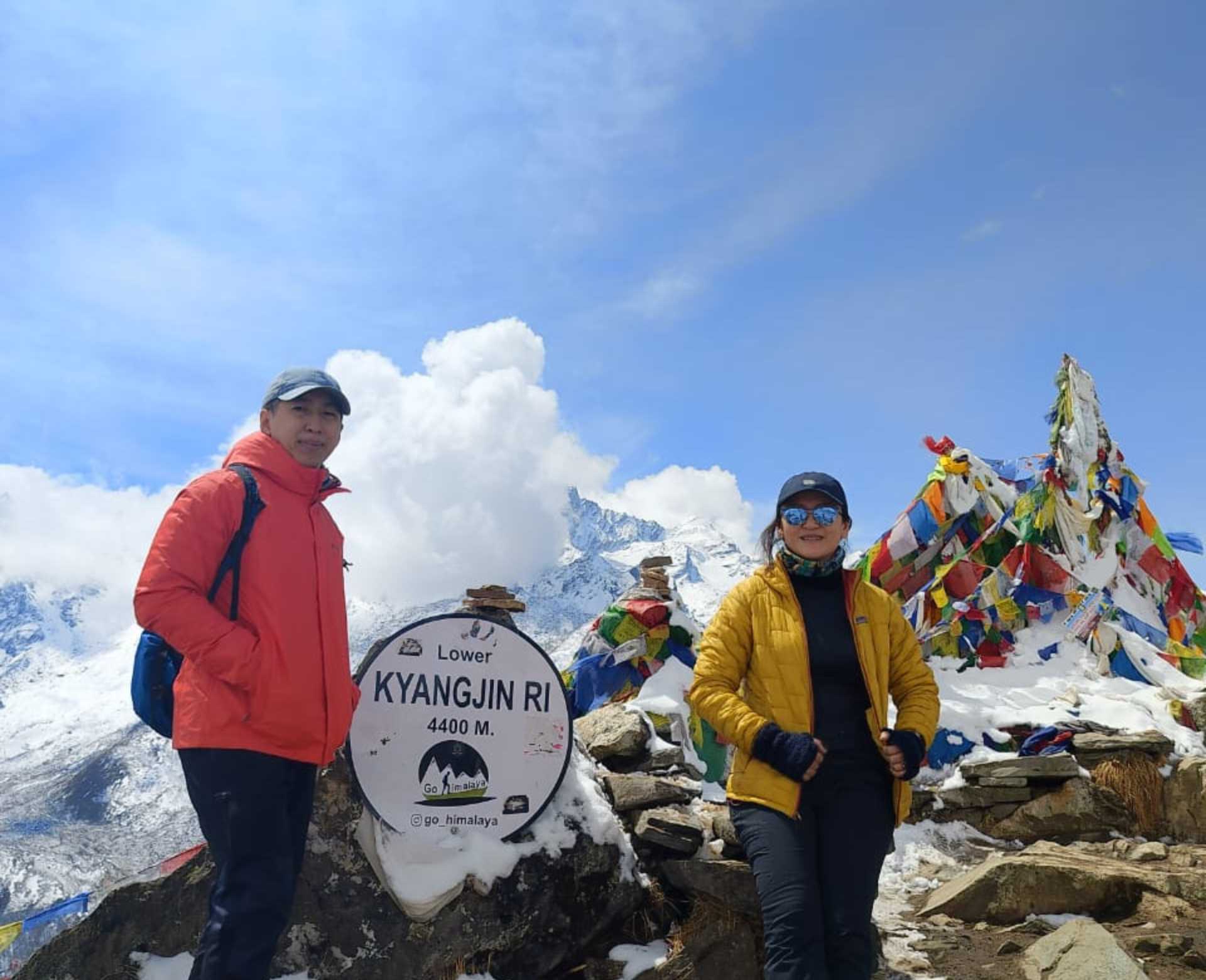
The Kyanjin Ri hike is non-negotiable in the Yala Peak climbing itinerary and never compressed for any team regardless of how strong they feel on Day 4. The ridge above Kyanjin Gompa reaches 4,773m — the highest day hike in the Langtang Valley. Reaching this altitude as a day trip while sleeping at 3,870m implements the “climb high, sleep low” acclimatisation principle that measurably prepares the body for the 4,800m Base Camp overnight and the 5,520m summit.
Pace this hike conservatively, drink 3–4 litres throughout, and return to Kyanjin by early afternoon for a full rest period. The panorama from the Kyanjin Ri ridge — Langtang Lirung, Dorje Lakpa, the Langtang glacier, and the Tibet border peaks — is the finest viewpoint accessible from any Langtang teahouse base.
Altitude: 4,800m | Trek: 4–5 hrs | Meals: Breakfast, Lunch, Dinner | Stay: Tented camp, Yala Peak Base Camp
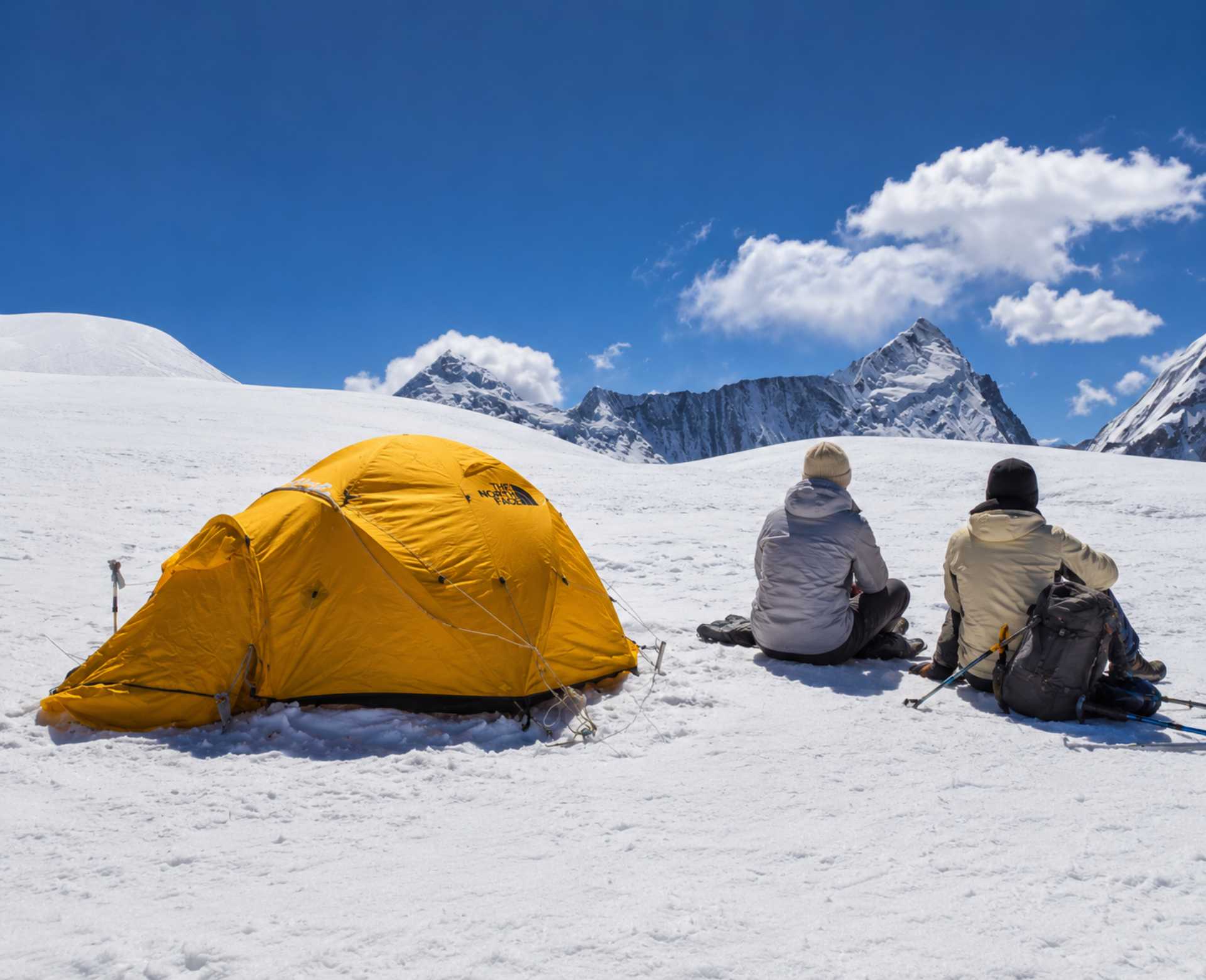
The trail climbs from Kyanjin Gompa through the upper Langtang Valley to Yala Peak Base Camp at 4,800m — a tented camp on the slopes below Yala Peak with the summit face visible directly above. The afternoon at Base Camp is the full equipment briefing: crampon fitting and walking technique on real terrain, ice axe use and self-arrest position, rope management, summit day timing, turn-around time procedures, and AMS protocols.
Mountain Hike Nepal’s certified climbing guide runs this briefing with every team member individually — it is not a group talk and a nod. Treat this session as the summit preparation it genuinely is, ask every question you have, and sleep by 8:00pm. The alarm sounds at 4:00am.
Summit: 5,520m | Total day: 10–12 hrs | Descent: -1,650m | Meals: Breakfast, Lunch, Dinner | Stay: Teahouse, Kyanjin Gompa
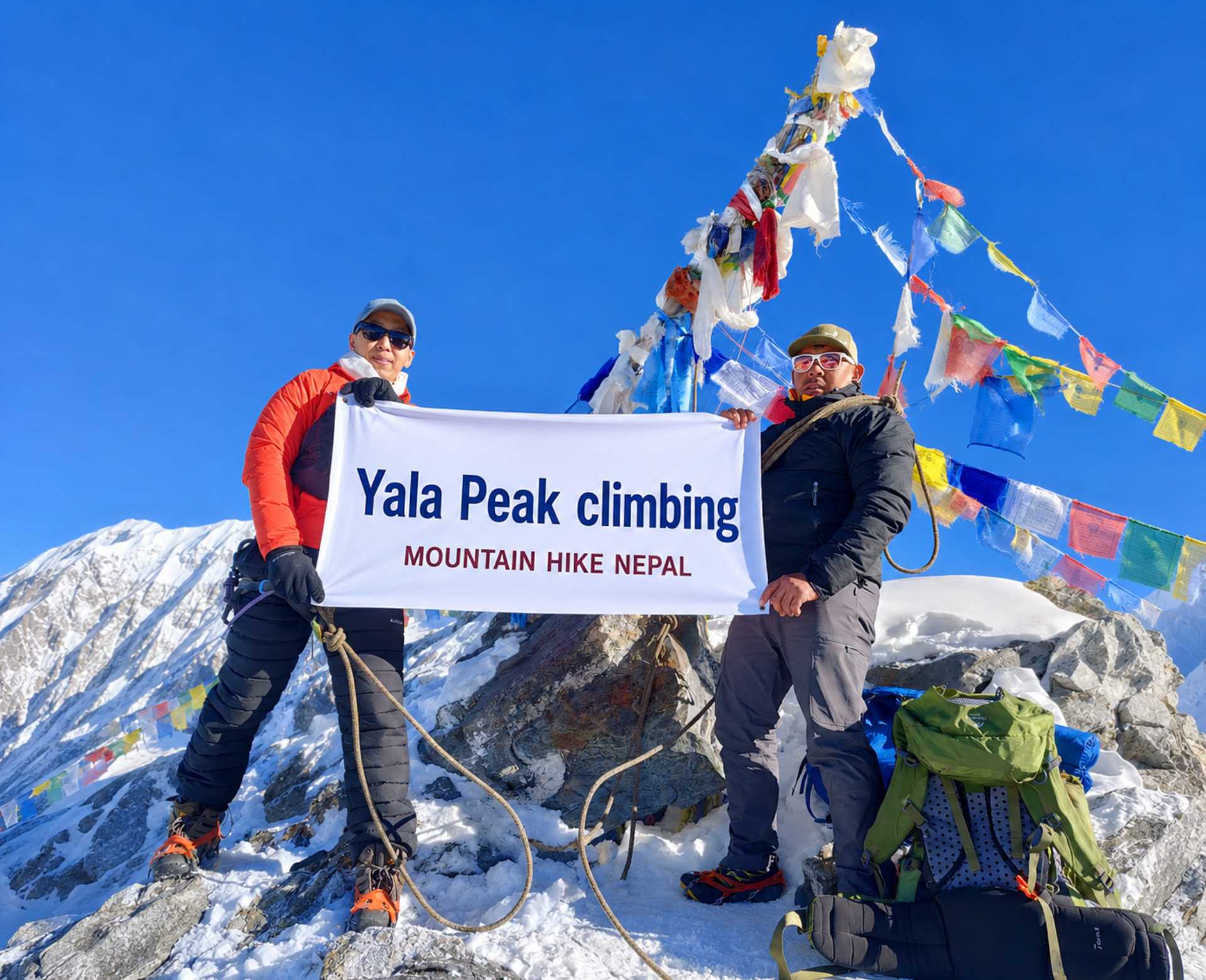
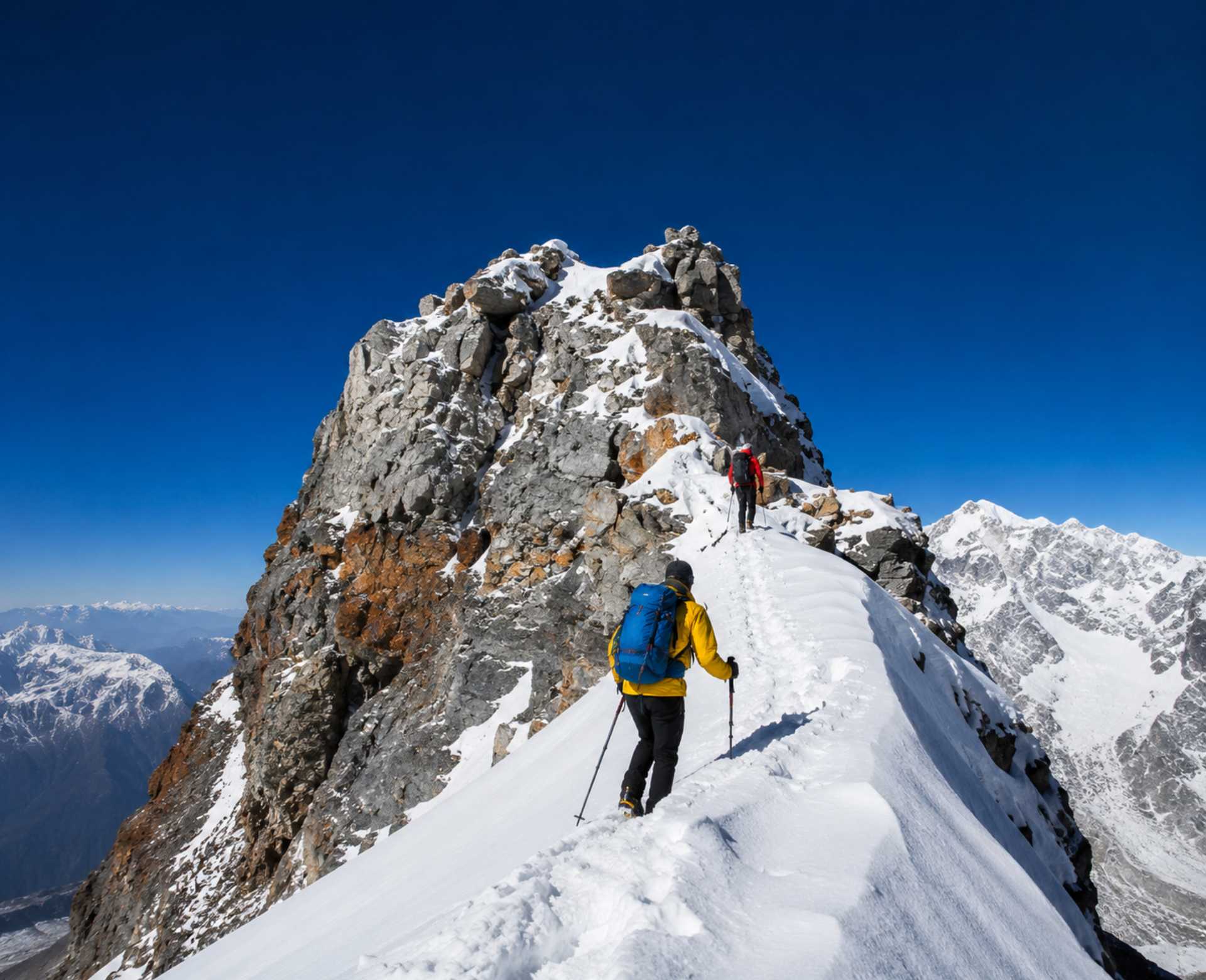
The 4:00am alarm at Yala Peak Base Camp is jarring. The cold is immediate at 4,800m and the headlamp beam shows only snow and rock in the darkness ahead. From Base Camp the trail climbs through snow and consolidated scree toward the summit at 5,520m — crampons on from the snow line, ice axe in hand, guide leading the rope team. The Yala Peak climb is predominantly snow and scree on a moderate angle — the most accessible technical summit terrain of any Nepal trekking peak above 5,000m. There is no steep fixed-rope headwall and no technical glacier crossing. What there is, at the summit, is one of the finest views in Nepal.
Langtang Lirung (7,234m) dominates the northwest at close range — closer and more immediate than from any Langtang Valley viewpoint below. Shishapangma (8,027m) sits across the Tibet border directly north — visible on clear days as the highest peak in Tibet. Dorje Lakpa, Ganesh Himal, and the full Langtang and Jugal Himalaya spread across the eastern and southern horizons in the early morning clarity. After the summit, descend to Base Camp, collect equipment, and continue all the way down to Kyanjin Gompa at 3,870m for the overnight — a total descent of around 1,650m on the same day. Trekking poles are essential for this descent, and pace on the way down matters as much as on the ascent.
Altitude: 3,430m | Trek: 5–6 hrs | Meals: Breakfast, Lunch, Dinner | Stay: Teahouse, Langtang Village
The summit is behind you. The descent from Kyanjin through the Langtang Valley carries a completely different quality from the ascent — the valley opens below, the lungs operate at full capacity at lower altitude, and the perspective on what has been accomplished settles on every hour of the walk down. The return through Langtang Village gives time to appreciate the community rebuilt since 2015, seen now with the clarity of having just come down from 5,520m.
Rest early tonight — Day 9 is the longest trekking day of the expedition.
Altitude: 1,460m | Trek: 7–8 hrs | Meals: Breakfast, Lunch, Dinner | Stay: Teahouse, Syabrubesi
The long descent from Langtang Village through Lama Hotel and the forest trail back to Syabrubesi marks the official end of the trekking phase. This is the longest day by hours — sustained downhill through the full altitude range of the approach.
Tip your guide and climbing Sherpa at Syabrubesi tonight in cash. Celebrate the summit over dinner, confirm the morning departure time to Kathmandu, and sleep early.
Drive: 6–7 hrs | Meals: Breakfast
The shared jeep or bus returns to Kathmandu via the Trishuli Valley road. The Yala Peak Climbing trek ends on arrival in the city — 10 days, the Langtang Valley, Kyanjin Gompa, and a 5,520m summit with Shishapangma visible in Tibet on the horizon.
Yala Peak Climbing is a 10-day guided expedition in Nepal’s Langtang region, combining the standard Langtang Valley Trek approach with a genuine technical summit at 5,520m. It is widely considered the most accessible real Himalayan summit in Nepal.
Yala Peak’s summit sits at 5,520m. Some older sources cite figures between 5,500m and 5,800m, but 5,520m is the most consistently supported figure across current climbing operators and the summit rock’s locally recorded height.
No. Yala Peak was removed from the Nepal Mountaineering Association’s climbing permit list because its elevation falls below the 5,800m threshold. Only the standard Langtang National Park Entry Permit and TIMS Card are required.
Two permits cover the route — the Langtang National Park Entry Permit and the TIMS Card. Both are included in Mountain Hike Nepal’s package price. No separate NMA climbing permit is needed or charged for.
Yala Peak is graded PD- on the alpine scale — non-technical by mountaineering standards, but a genuine climb requiring crampons, ice axe, and basic rope technique. The main challenge is altitude and endurance rather than technical skill.
No. Yala Peak is considered an ideal introduction to Himalayan climbing. Basic mountaineering training — crampon use, ice axe technique, and rope management — is provided at Base Camp before the summit push.
Yala Peak Base Camp sits at 4,800m, on the slopes below the summit. It is a tented camp with sleeping, dining, and toilet tents, used for one night before the summit push. It is the highest overnight of the expedition.
The trek starts from USD 899 per person for groups of 8–12, up to USD 1,190 for solo climbers — guide, climbing equipment, permits, all meals, teahouse and Base Camp accommodation, and ground transport included.
Crampons, ice axe, fixed ropes, and harness are all included as part of the package. Personal clothing, boots, and a sleeping bag rated for high altitude are the climber’s own responsibility.
October–November and March–May offer the most stable weather and safest climbing conditions, with reliable visibility for the summit push.
Porter support is included for groups of 2 or more. Solo climbers can add a porter for an extra cost. One porter carries a maximum load of 15kg, shared between two climbers.
The Langtang Valley Trek follows the same approach trail but ends at Kyanjin Gompa (3,870m) with an optional Tserko Ri summit day, in 8 days. Yala Peak Climbing continues past that point to a genuine technical summit at 5,520m, adding Base Camp and summit days to make a 10-day expedition.
The summit offers close-range views of Langtang Lirung (7,234m), Shishapangma (8,027m) across the Tibet border, Dorje Lakpa, Ganesh Himal, and the wider Langtang and Jugal Himalaya.
Yes. Travel insurance is mandatory and must cover climbing above 5,500m and emergency helicopter evacuation.
Mountain Hike Nepal provides a licensed trekking guide for the full 10 days, plus a certified climbing guide specifically for the Base Camp briefing and summit day.