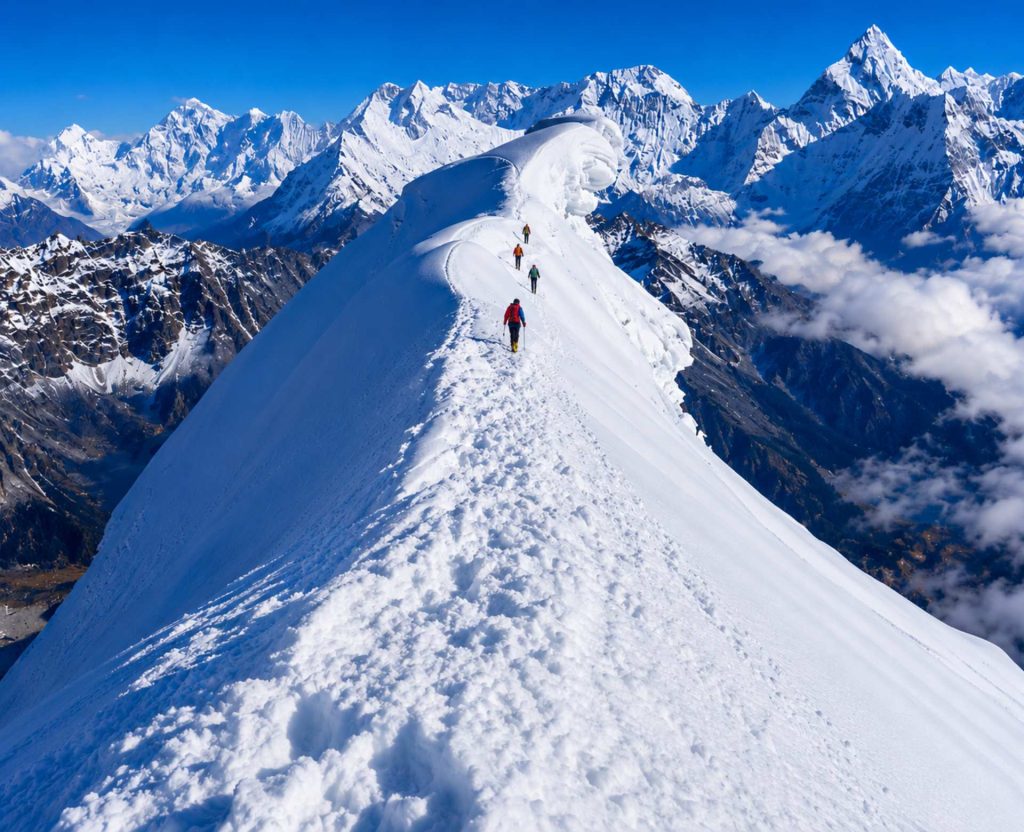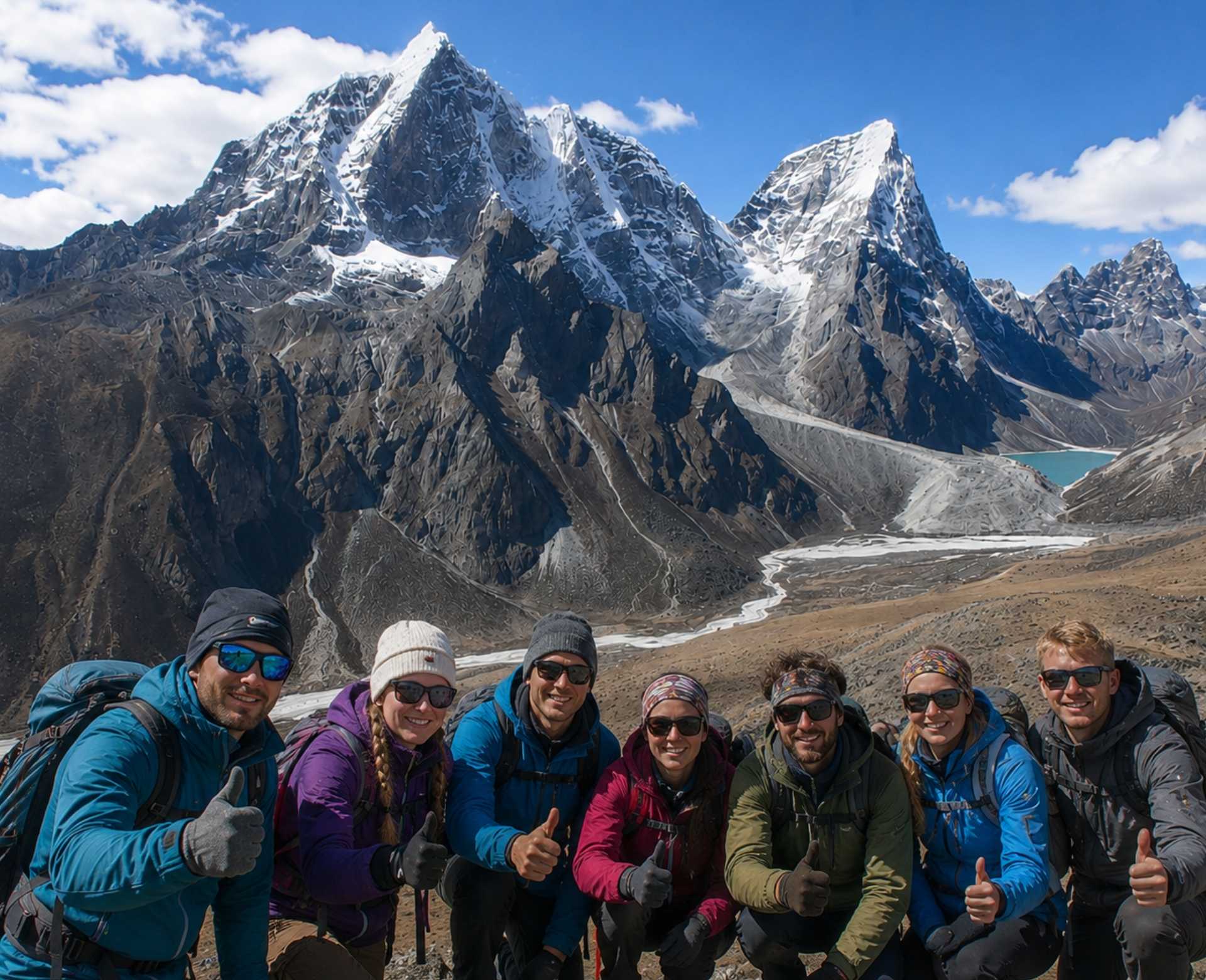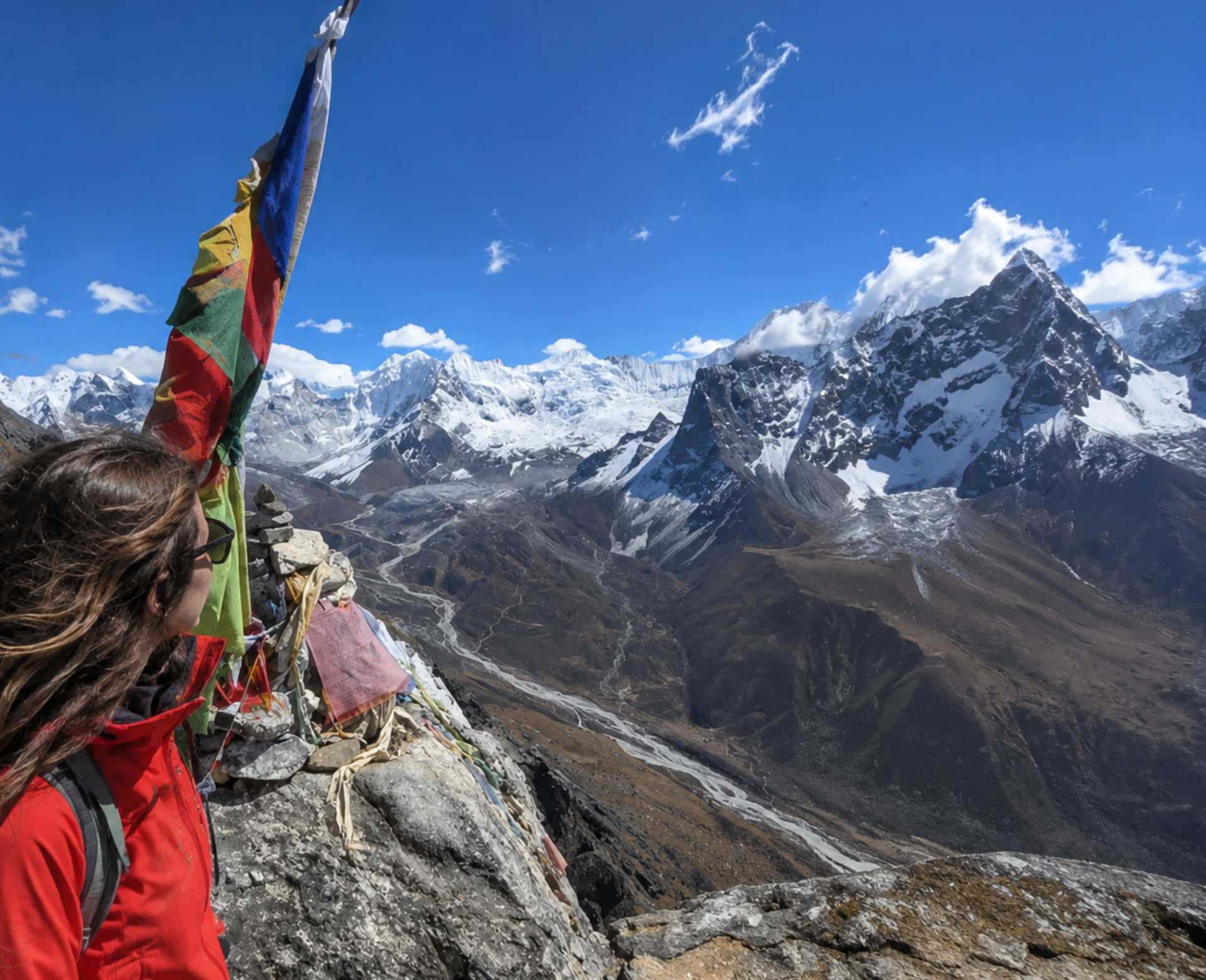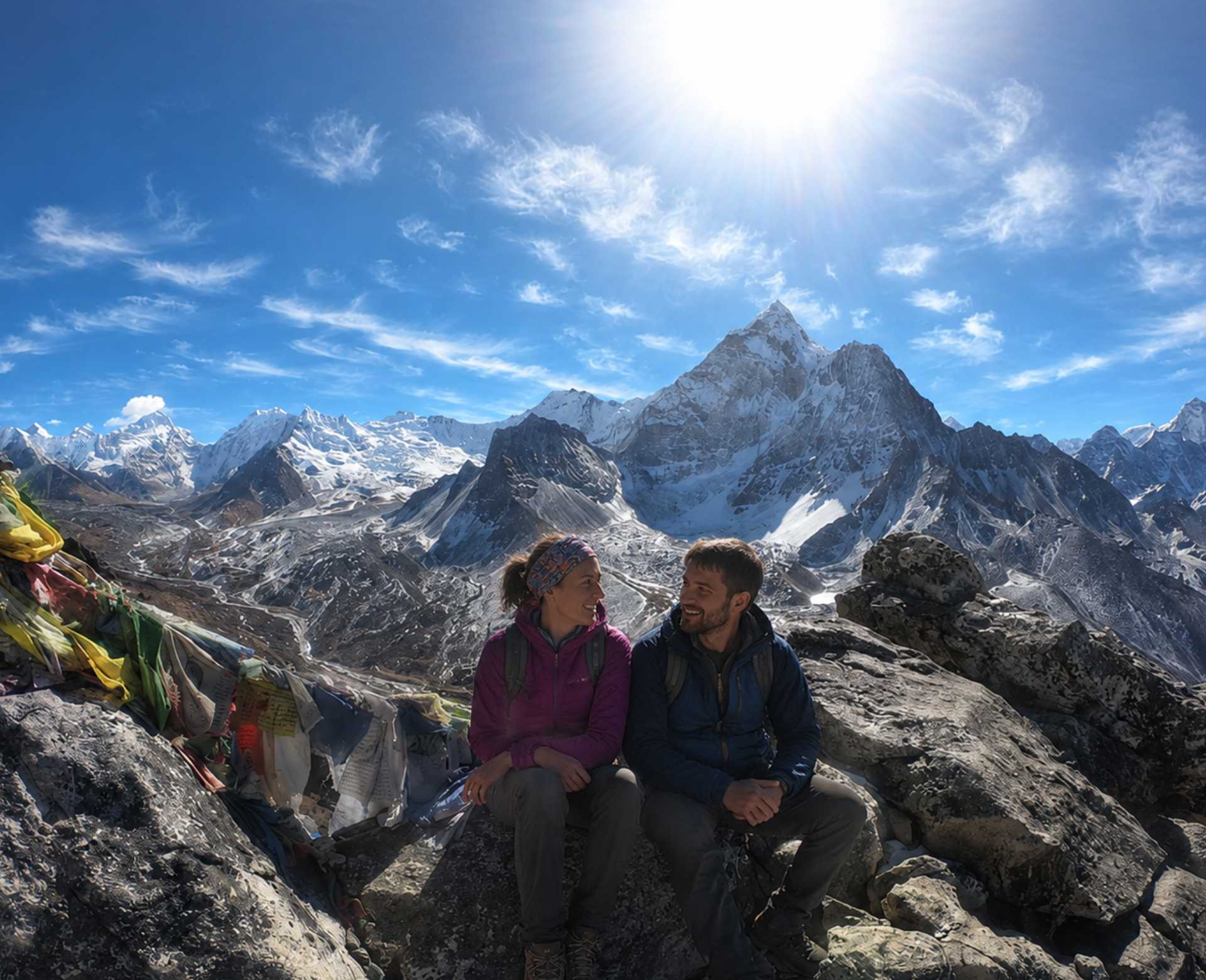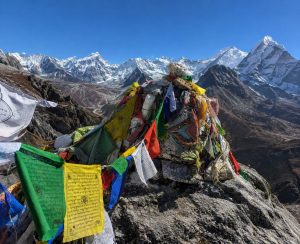
The Nangkartshang Peak Trek is a 9-day trek to a 5,083m summit above Dingboche in the Everest region. Group size sets the price: solo trekkers pay more, larger groups pay as little as $839 per person, up to $1,109 for a solo booking. The route follows the same trail as Everest Base Camp for its first five days. It then branches toward Dingboche and the Nangkartshang ridge instead of continuing up the Khumbu Glacier.
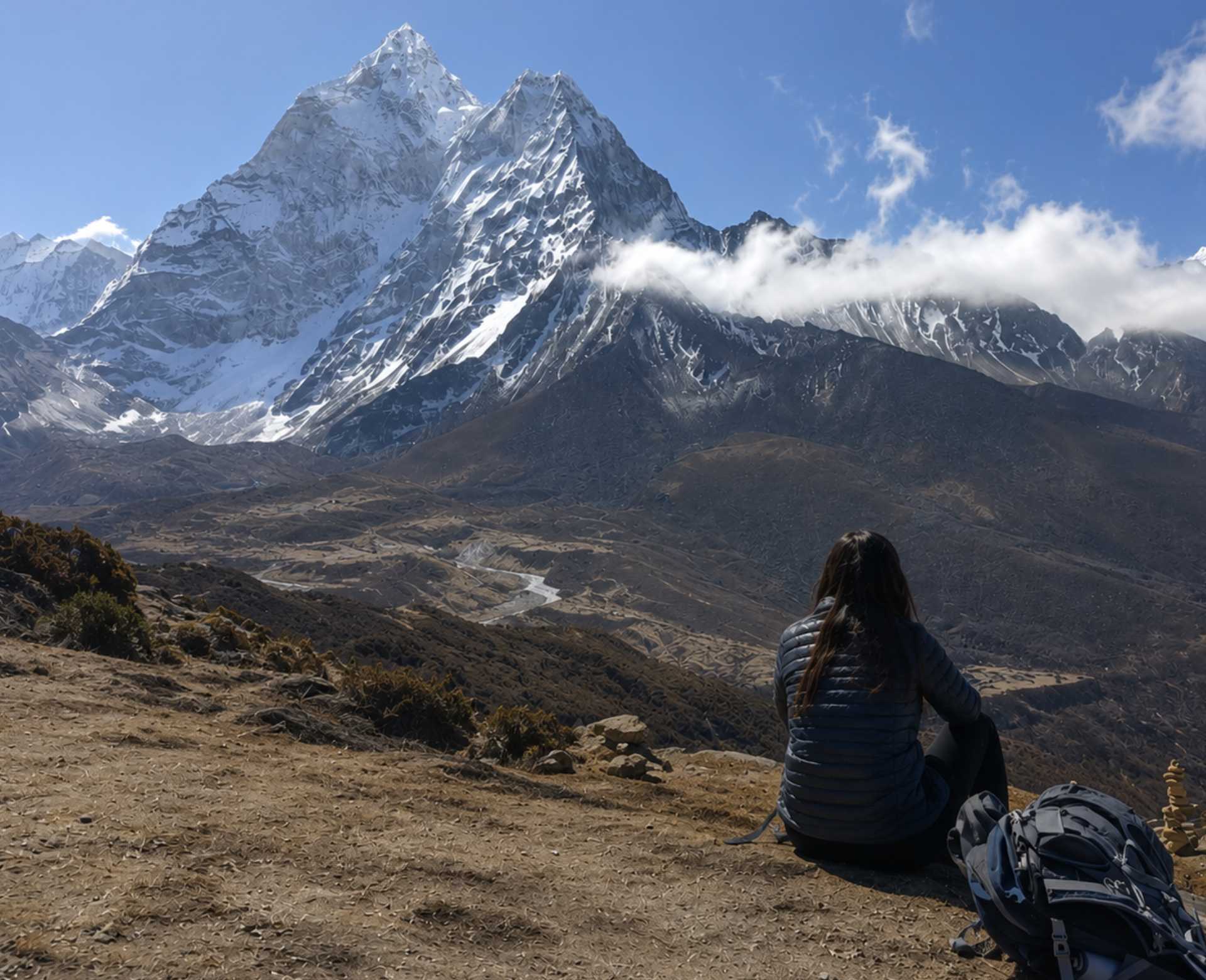
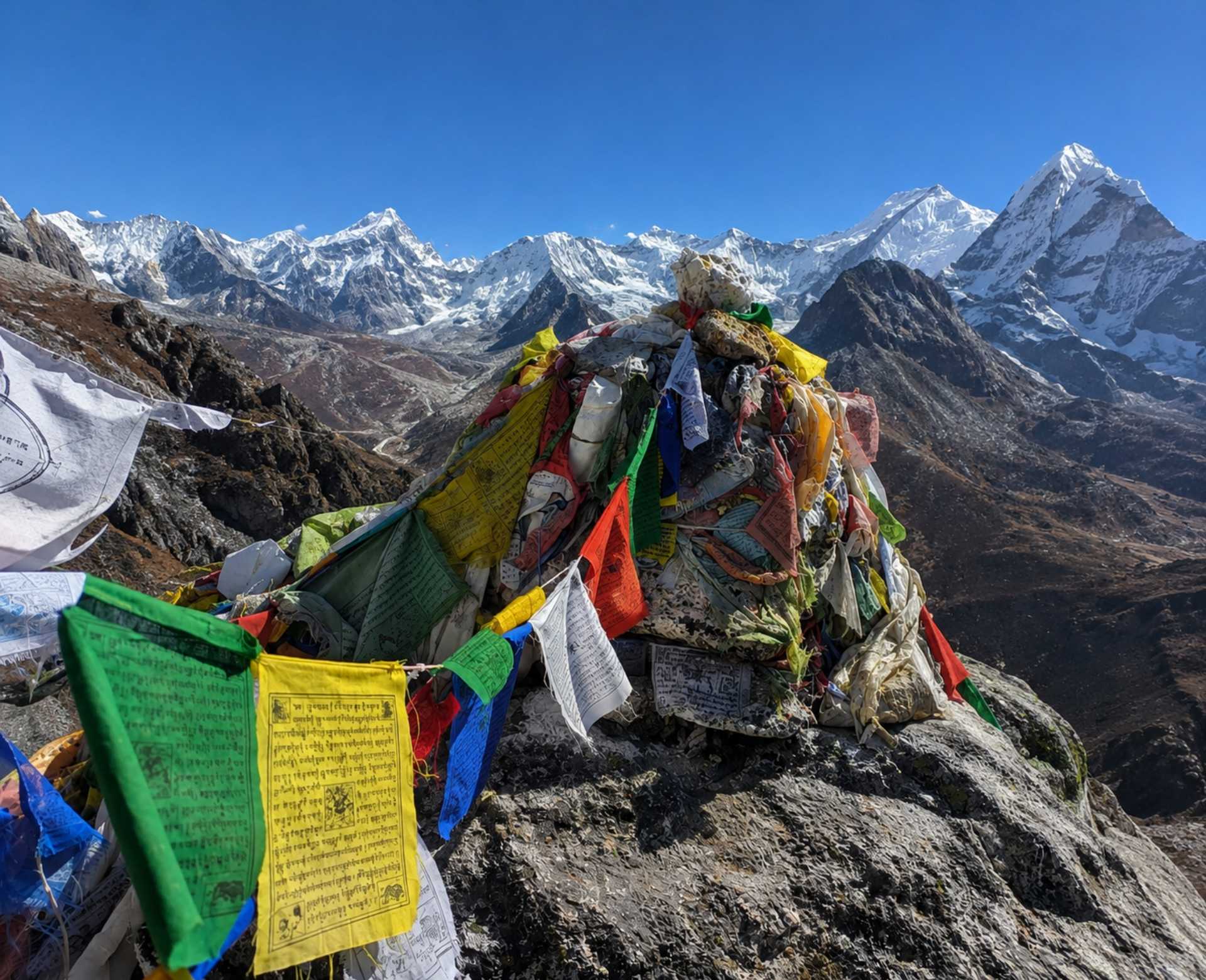
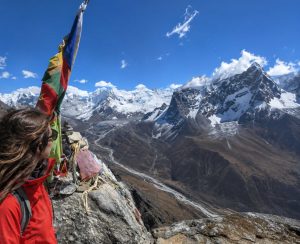
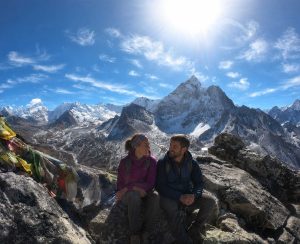
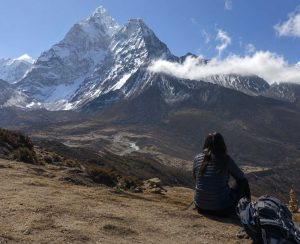
From the summit, Ama Dablam looks close enough to touch. Lhotse, Makalu, Island Peak, Taboche, and Cholatse fill the horizon around it.
No technical gear is needed. It’s steep and the air is thin at 5,083m. With proper acclimatisation, it’s within reach of any reasonably fit trekker.
Want more altitude and time in the Khumbu? See our full Everest Base Camp Trek →
Want shorter and lower? Our Everest View Trek covers similar ground in 5 days, topping out at Everest View Hotel (3,880m).
This trip runs through our Kathmandu office, not a third-party booking desk. Guides are licensed, flights and permits are arranged on your behalf, and nothing gets subcontracted out once you’ve booked. Tell us your travel dates on WhatsApp and we’ll confirm availability.
| Trip Details | Information |
|---|---|
| Trip Name | Nangkartshang Peak Trek |
| Duration | 8 Nights / 9 Days |
| Maximum Altitude | 5,083m — Nangkartshang Peak |
| Major Highlights | Nangkartshang Peak (5,083m), Namche Bazaar, Tengboche Monastery, Dingboche, Ama Dablam viewpoint |
| Trek Difficulty | Moderate to Challenging — High Altitude Trek |
| Trek Start / End Point | Kathmandu ↔ Lukla by flight |
| Best Season | Spring (March–May) and Autumn (September–November) |
| Low Season | Winter — fewer trekkers, colder temperatures, exceptional clarity |
| Not Recommended | Monsoon Season (June–August) |
| Accommodation | Teahouse Lodges |
| Meals Included | Breakfast, Lunch and Dinner |
| Trek Style | Guided High-Altitude Trekking |
| Region | Everest (Khumbu), Nepal |
Lukla → Phakding → Namche Bazaar → Tengboche → Dingboche → Nangkartshang Peak (5,083m) → Namche Bazaar → Lukla
Most trekkers assume they need the full Everest Base Camp itinerary to get real Khumbu scenery. They don’t. Nangkartshang Peak sits on a ridge directly above Dingboche, and the panorama from the top rivals anything you’ll see from Kala Patthar — Ama Dablam is genuinely closer from here than it is from most points on the EBC trail itself.
What you skip is the section beyond Dingboche: the Khumbu Glacier moraine, Lobuche, Gorakshep, and the crowds at Base Camp itself. What you keep is everything that actually makes the Khumbu worth visiting — Sherpa villages, Tengboche Monastery, suspension bridges over the Dudh Koshi, and two full acclimatization stops built into a route that respects how bodies actually adjust to altitude.
This trek is moderate to challenging, not casual. The final push to Nangkartshang crosses above 5,000m, and the summit day itself — climb plus descent to Namche — is a long, demanding day. Trekkers who arrive with 4–6 weeks of uphill fitness preparation handle the route comfortably. The people who struggle most aren’t the least fit — they’re the ones who rush the acclimatization days to “save time,” which defeats the purpose of choosing a shorter itinerary in the first place.
Peak Season (Spring: March–May | Autumn: September–November): Scheduled Lukla flights operate out of Manthali Airport in Ramechhap rather than Kathmandu during these months. A road transfer of roughly 4–5 hours connects Kathmandu to Ramechhap ahead of the short hop to Lukla.
Off-Peak Season (Winter: December–February | Monsoon: June–August): Flights generally run direct out of Kathmandu once the peak-season arrangement lifts, though weather and airline scheduling still apply as usual.
Nepal’s Civil Aviation Authority (CAAN) mandates this seasonal routing to reduce congestion at Tribhuvan International Airport (TIA) during the busiest months of the trekking calendar, and it applies uniformly across the airlines flying this route — Tara Air, Summit Air, and Sita Air among them. The Ramechhap transfer is built into every Nangkartshang Peak Trek package, so nothing extra needs arranging on your end.
Looking for an alternative to the flight altogether? Our full FAQ on Lukla flight alternatives covers the helicopter options in detail.
per person
Recommended
per person
per person
Value Added
per person
Altitude: 2,610m | Flight: 35 min | Trek: 3–4 hrs | Meals: Lunch, Dinner | Stay: Teahouse, Phakding
The flight into Lukla is short but memorable — a cliff-edge runway and an immediate wall of mountains as soon as the doors open. From there the trail drops gently along the Dudh Koshi River through pine forest and small Sherpa settlements to Phakding. It’s a short day on purpose. The body’s already gained real altitude just from the flight, and an easy afternoon is the first step in adjusting to it.
Altitude: 3,440m | Trek: 5–6 hrs | Meals: Breakfast, Lunch, Dinner | Stay: Teahouse, Namche Bazaar
The trail crosses several suspension bridges over the Dudh Koshi, passes through the Sagarmatha National Park checkpoint at Jorsale, and finishes with a steep climb into Namche. Most trekkers get their first glimpse of Everest through a gap in the ridge just before arriving, and it tends to catch people off guard.
Altitude: 3,440m overnight / 3,790m hike | Hike: 3–4 hrs | Meals: Breakfast, Lunch, Dinner | Stay: Teahouse, Namche Bazaar
The acclimatization hike heads up to Khumjung, a quieter Sherpa village above Namche with a monastery that keeps what locals call a yeti scalp on display — a genuine curiosity even if you take the story with a grain of salt. It’s also home to the school Edmund Hillary helped build, which says something about how deep his connection to this valley actually ran. Coming back down to sleep in Namche after the higher walk is the whole point of the day, not an afterthought.
Altitude: 3,867m | Trek: 5–6 hrs | Meals: Breakfast, Lunch, Dinner | Stay: Teahouse, Tengboche
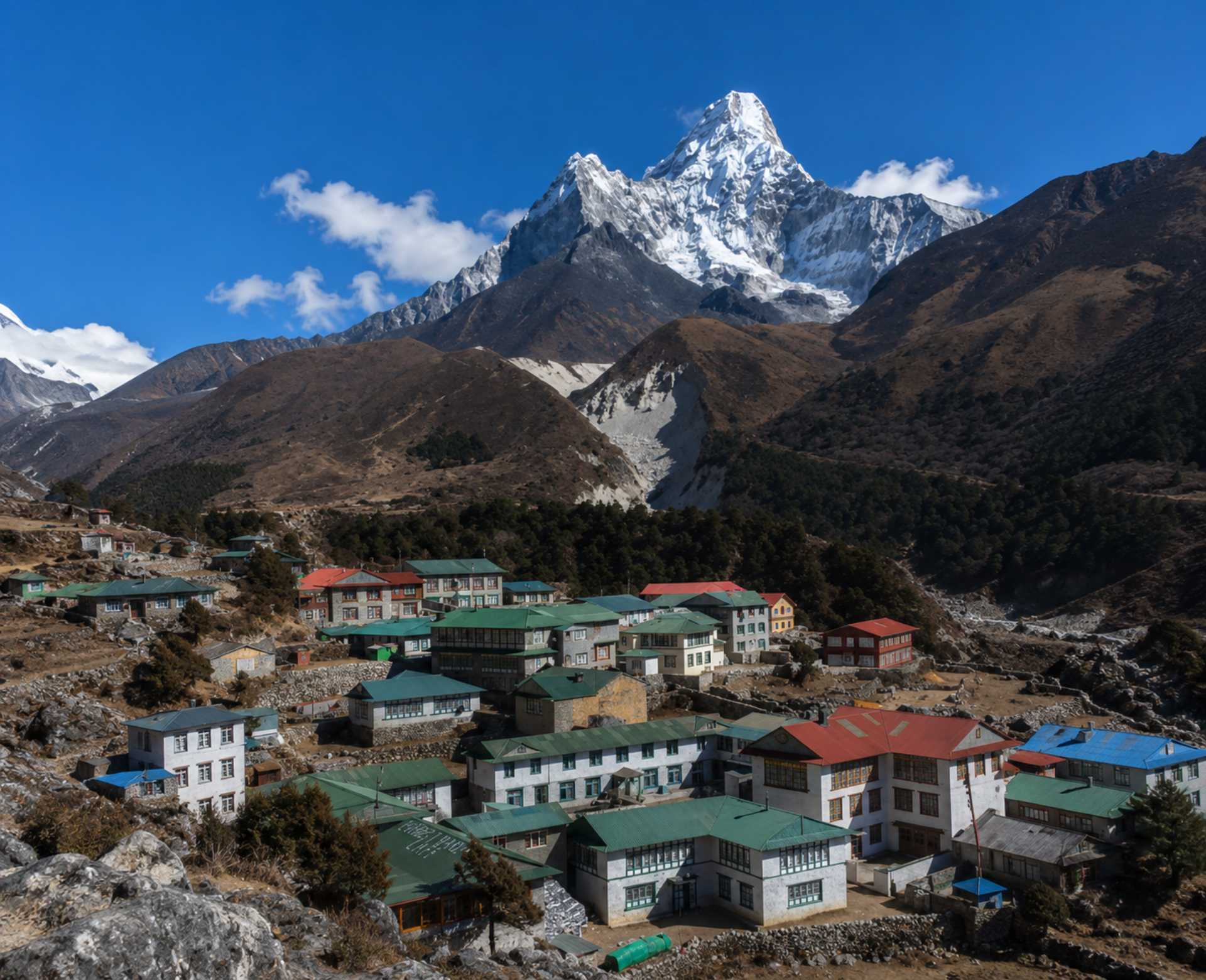
The trail climbs steadily through rhododendron forest to Tengboche, home to the most atmospheric monastery in the Khumbu. Ama Dablam rises directly to the south and Everest is visible to the north on a clear afternoon. Arriving before the clouds build gives you the best chance at that view, and staying overnight right at the monastery is one of the quieter highlights of this route.
Altitude: 4,410m | Trek: 5–6 hrs | Meals: Breakfast, Lunch, Dinner | Stay: Teahouse, Dingboche
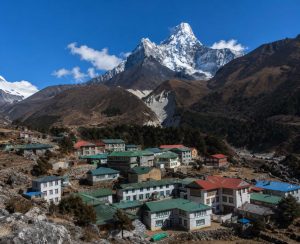
Past Pangboche the forest thins out and the trail opens into proper high-alpine terrain. Dingboche arrives as a wide valley with Ama Dablam, Lhotse, and Island Peak spread across the horizon. This is where the Khumbu starts to feel remote in a way the lower valley doesn’t. Eat well, drink more water than feels necessary, and rest — tomorrow is the reason you booked this trek.
Altitude: 4,410m overnight / 5,083m peak | Hike: 5–6 hrs | Meals: Breakfast, Lunch, Dinner | Stay: Teahouse, Dingboche
An early start gets you onto the Nangkartshang ridge as the light comes up over Ama Dablam, Lhotse, and Makalu. The climb is steep in the final stretch and the air is genuinely thin at 5,083 meters, but nothing about it requires technical skill — just a steady pace and a guide who knows when to hold the group back. You return to Dingboche the same afternoon, which means tonight’s sleep happens at a lower altitude than the peak itself, exactly how good acclimatization is supposed to work.
Altitude: 3,440m | Trek: 7–8 hrs | Meals: Breakfast, Lunch, Dinner | Stay: Teahouse, Namche Bazaar
A long descent day, but a satisfying one — the same trail in reverse feels completely different with the summit already behind you. Breathing gets noticeably easier below 4,000 meters, and Namche’s bakeries and hot showers feel properly earned by the time you arrive.
Altitude: 2,860m | Trek: 6–7 hrs | Meals: Breakfast, Lunch, Dinner | Stay: Teahouse, Lukla
The final trekking day retraces the route back through the lower Dudh Koshi valley to Lukla. Confirm your morning flight time with your guide and have your bag packed within carry-on limits the night before — Lukla mornings move fast when the weather’s good.
Flight: 35 min | Meals: Breakfast
The short flight back to Kathmandu closes out the trek. Nine days, one real Himalayan summit, and Ama Dablam views most EBC trekkers never get quite this close to.
Important: Build 2–3 buffer days into your Kathmandu schedule after this flight. Lukla departures are weather-dependent, and international connections booked too tight are the most common source of trip stress we see.
Moderate to challenging. There’s no technical climbing or rope work anywhere on the route, but you’re crossing above 5,000m on summit day, and the walking days run 5 to 8 hours. Trekkers who show up with 4–6 weeks of real uphill fitness behind them handle it comfortably. The ones who struggle are usually the fittest people in the group who assumed fitness alone would carry them through the altitude.
The route follows the same trail as EBC for the first five days, then turns toward Dingboche and the Nangkartshang ridge instead of continuing up the Khumbu Glacier toward Base Camp. It’s three days shorter than EBC and tops out a little lower — 5,083m versus 5,644m at Kala Patthar — but the Ama Dablam views from Nangkartshang genuinely rival anything on the full EBC trail. Most guides who’ve done both routes will tell you the same thing.
Yes. Round-trip Lukla flights are fully included, and during spring and autumn peak season, most Lukla flights actually operate out of Ramechhap Airport instead of Kathmandu — that’s standard practice across nearly every operator on this route, not something specific to us. We include the shared transfer from your Kathmandu hotel to Ramechhap, which usually means a midnight departure to reach the airport by around 5:00–5:30am for the first flight window. It sounds rough written down, but it’s genuinely just part of how this trek works during the busy months, and we handle every part of the booking so nothing needs arranging on your end.
No. What matters far more than experience is fitness preparation and a willingness to actually follow the acclimatization schedule instead of rushing it. We get first-time high-altitude trekkers on this route every season, and the ones who prepare properly do just fine.
Two — the Sagarmatha National Park entry permit and the Khumbu Pasang Lhamu Rural Municipality permit. These are the same two permits required for the full EBC trek, since the route overlaps for the first five days. Both are included in your package price, and your guide carries the documentation at every checkpoint along the way.
Pricing starts from $839 per person for groups of 8–12 and runs up to $1,109 for solo trekkers, covering round-trip Lukla flights, the Ramechhap transfer, all permits, teahouse accommodation, all meals, and a licensed guide. Your full budget also needs to account for international flights, the Nepal entry visa, travel insurance, and any gear you rent rather than bring — most trekkers land somewhere between $2,200 and $3,200 total from most home countries.
Spring (March–May) and autumn (September–November), for the same reasons those seasons work well for EBC — stable weather and the clearest mountain visibility all year. We don’t recommend attempting this route during the monsoon months of June through August, when trails get slippery and cloud cover blocks most of the views you’re actually trekking for.
Nangkartshang Peak itself, at 5,083m, reached on day 6 as a day hike from Dingboche. You sleep back down at Dingboche (4,410m) that same night, which is exactly how proper acclimatization is supposed to work — climb high, sleep low.
No — unlike Annapurna, Langtang, and Manaslu, this route shares the Sagarmatha National Park and Khumbu Pasang Lhamu Rural Municipality permits with EBC, and shares EBC’s exemption from Nepal’s 2023 guide-mandatory rule too. We include a licensed, English-speaking guide on every departure as standard regardless — for altitude safety, navigation, and permit handling across the full nine days — but it isn’t a legal requirement here the way it is on the Annapurna route.
The essentials are the same as EBC — trekking boots broken in well before you arrive, a sleeping bag rated to at least -15°C, and a proper down jacket for the cold at Dingboche and above. All three are rentable in Thamel if you’d rather not travel with them. No technical climbing gear is needed anywhere on this route.
Follow the acclimatization schedule as it’s written — the Namche rest day and the two nights at Dingboche aren’t there to pad the itinerary, they’re doing real work. Drink more water than feels necessary from Namche onward, walk at a pace where you can still hold a conversation, and tell your guide about every headache the moment it shows up, not after it’s gotten worse.
Yes, for beginners who prepare properly. This route has no technical sections, a well-established teahouse network the whole way, and a logical acclimatization structure built into the schedule. The deciding factor is 4–6 weeks of genuine uphill fitness work before you arrive, not whether you’ve trekked at altitude before.
Yes, and it’s a route we recommend for exactly that reason. Several of our trekkers do Nangkartshang first as a shorter, lower-stakes introduction to Khumbu altitude, then come back for the full EBC route once they know how their own body actually handles being up there.
Yes, we require proof of insurance before confirming any booking. It needs to explicitly cover trekking above 5,000 metres and helicopter evacuation from the Khumbu region — standard policies capped at 4,000 metres won’t cut it, so confirm the altitude limit with your insurer in writing before you buy. Rescue without proper coverage from this altitude can run into the thousands of dollars out of pocket.
It happens, and it’s genuinely the most common source of stress on this route, not the altitude. We always recommend building 2–3 buffer days into your Kathmandu schedule after the trek for exactly this reason. If flights back up badly, a helicopter alternative is usually available at an additional cost, and we’ll walk you through that option in real time if it comes to it rather than leaving you to sort it out from a Lukla teahouse.
It’s the B.P. Highway, running east through Bhaktapur, Sanga, and Dhulikhel before reaching Manthali in Ramechhap district. Parts of the drive wind through hill terrain with tight bends, so we only use drivers experienced on this specific overnight route.
It comes down from Nepal’s Civil Aviation Authority, not any individual airline or agency — during the peak trekking months, CAAN reroutes Lukla-bound flights through Manthali Airport in Ramechhap to take pressure off Tribhuvan International Airport in Kathmandu.
You could, yes — head to Manthali in the afternoon and stay overnight there rather than making the drive at midnight. In practice, most trekkers still choose the overnight transfer, since it means an extra night in Kathmandu rather than a guesthouse in Ramechhap.
That’s down to the airline and the weather, not something we control directly. When it happens, we work with the airline to get you rebooked on the next available flight, and if the delay drags on, we’ll talk through a helicopter option with you rather than leaving you stuck.
The Nangkartshang Peak Trek has one detailed companion guide covering its history, culture, and an honest comparison against the EBC Trek. See our complete Nangkartshang Peak Trek guide →