The Langtang Gosaikunda Trek is a 12-day guided trek from Syabrubesi through Kyanjin Gompa (3,870m) to Gosaikunda Lake (4,380m), with an optional summit to Tserko Ri (4,984m), priced from $698 per person.
This is the full Langtang region in one trip — the glacial valley and monastery culture of Langtang Valley, followed by the high alpine lake circuit of Gosaikunda, without crossing a technical pass. Both ends of the route sit by road at Syabrubesi, roughly 122km from Kathmandu — no domestic flight anywhere on this trek.
Rhododendron and oak forest lead the way up through the first five days, following the standard Langtang Valley Trek route to Kyanjin Gompa (3,870m). An optional summit day adds Tserko Ri (4,984m) or Kyanjin Ri (4,773m) before the trail turns east instead of heading back to Syabrubesi. From Lama Hotel, the route descends to Thulo Syabru and climbs through Shin Gompa toward the sacred lake. A dedicated acclimatisation night at Lauribinayak (3,910m) comes before the final push to Gosaikunda Lake (4,380m), then a long descent to Dhunche and the drive back to Kathmandu.Customise your itinerary here.
| Item | Information |
|---|---|
| Trip Name | Langtang Gosaikunda Trek |
| Duration | 11 Nights / 12 Days |
| Maximum Altitude | 4,984m — Tserko Ri Summit (optional) |
| Highest Overnight | 4,380m — Gosaikunda Lake |
| Major Highlights | Kyanjin Gompa, Tserko Ri, Kyanjin Ri, Langtang Village, Gosaikunda Lake, Lauribinayak |
| Trek Difficulty | Moderate to Challenging |
| Trek Start / End | Syabrubesi / Dhunche |
| Best Season | Spring (March–May) and Autumn (September–November) |
| Low Season | Winter — cold nights, clear mountain views, very few trekkers |
| Avoid | Monsoon — June, July, August |
| Accommodation | Teahouse lodges throughout |
| Meals Included | Breakfast, Lunch and Dinner (all trekking days) |
| Permits Required | Langtang National Park Entrance Permit, TIMS Card |
| Region | Langtang National Park, Nepal |
Kathmandu → Syabrubesi → Lama Hotel → Langtang Village → Kyanjin Gompa → Tserko Ri / Kyanjin Ri (optional) → Lama Hotel → Thulo Syabru → Shin Gompa → Lauribinayak → Gosaikunda Lake → Dhunche → Kathmandu
Most trekkers who love Langtang Valley wonder what’s over the next ridge. This trek answers that without asking you to book two separate trips. The first five days deliver the full Langtang Valley experience — glacial valley, monastery, optional Tserko Ri summit. The last seven take you east over new ground entirely, through Thulo Syabru and Shin Gompa to a dedicated acclimatisation night at Lauribinayak before the alpine lake basin at Gosaikunda, without a technical pass crossing anywhere on the route.
Permits are the same two required for the standalone Langtang Valley Trek — no ACAP, no separate Gosaikunda-region fee. One guide, one porter, one set of paperwork collected before you leave Kathmandu, for a trip 50% longer than the standard route.
Short on time or budget? The standalone Langtang Valley Trek covers the first half of this route in 8 days. Want more than a lake — a full crossing into the Helambu region? See the Langtang Helambu Circuit Trek instead.
Tserko Ri at 4,984m — optional summit, the same panoramic high point as the standalone Langtang Valley Trek
Kyanjin Ri at 4,773m — paired with Tserko Ri on the same optional hike day from Kyanjin Gompa
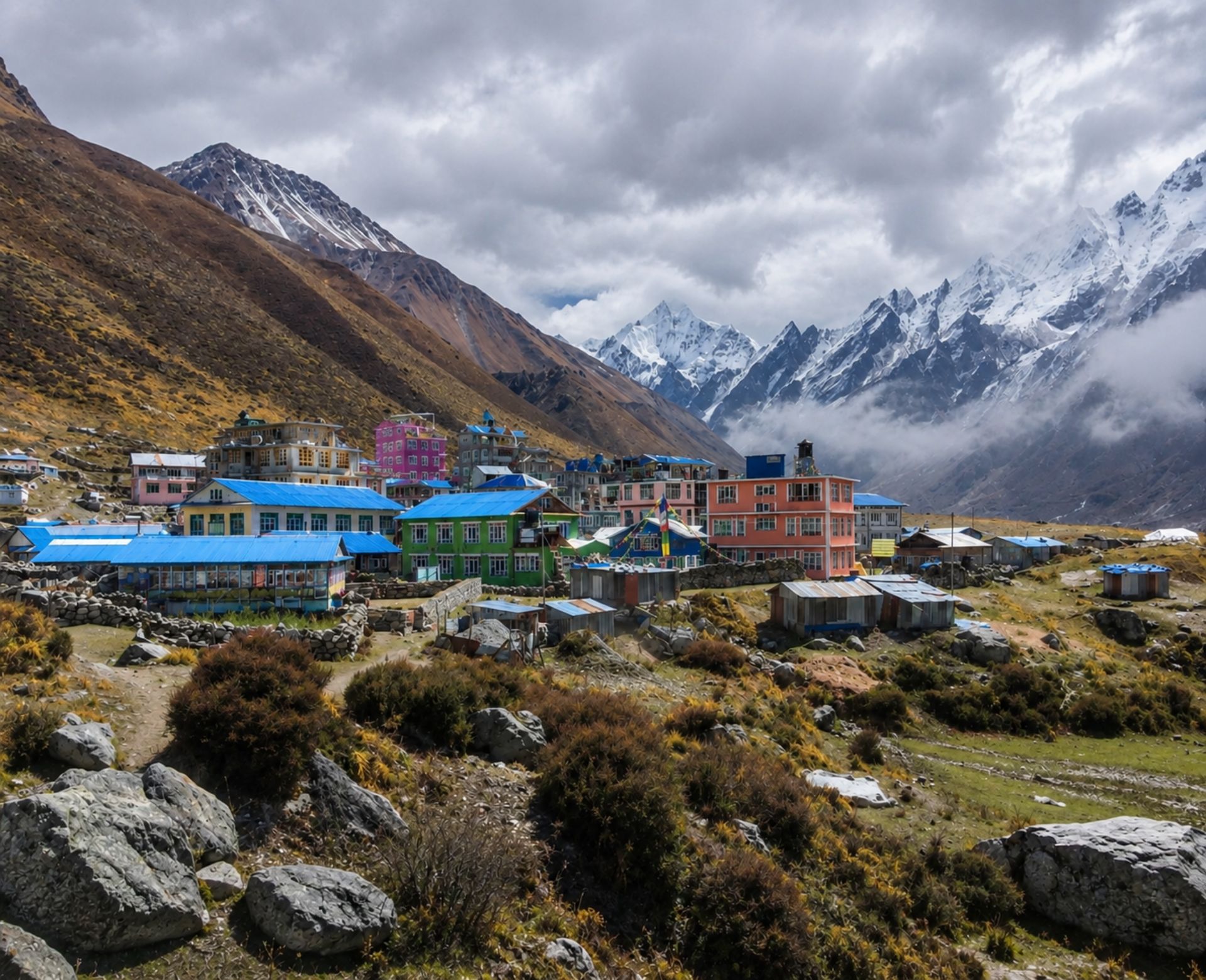
Kyanjin Gompa at 3,870m — monastery, yak cheese factory, two-night base before the descent
Langtang Village — the earthquake memorial and rebuilt Tamang community that came back after 2015
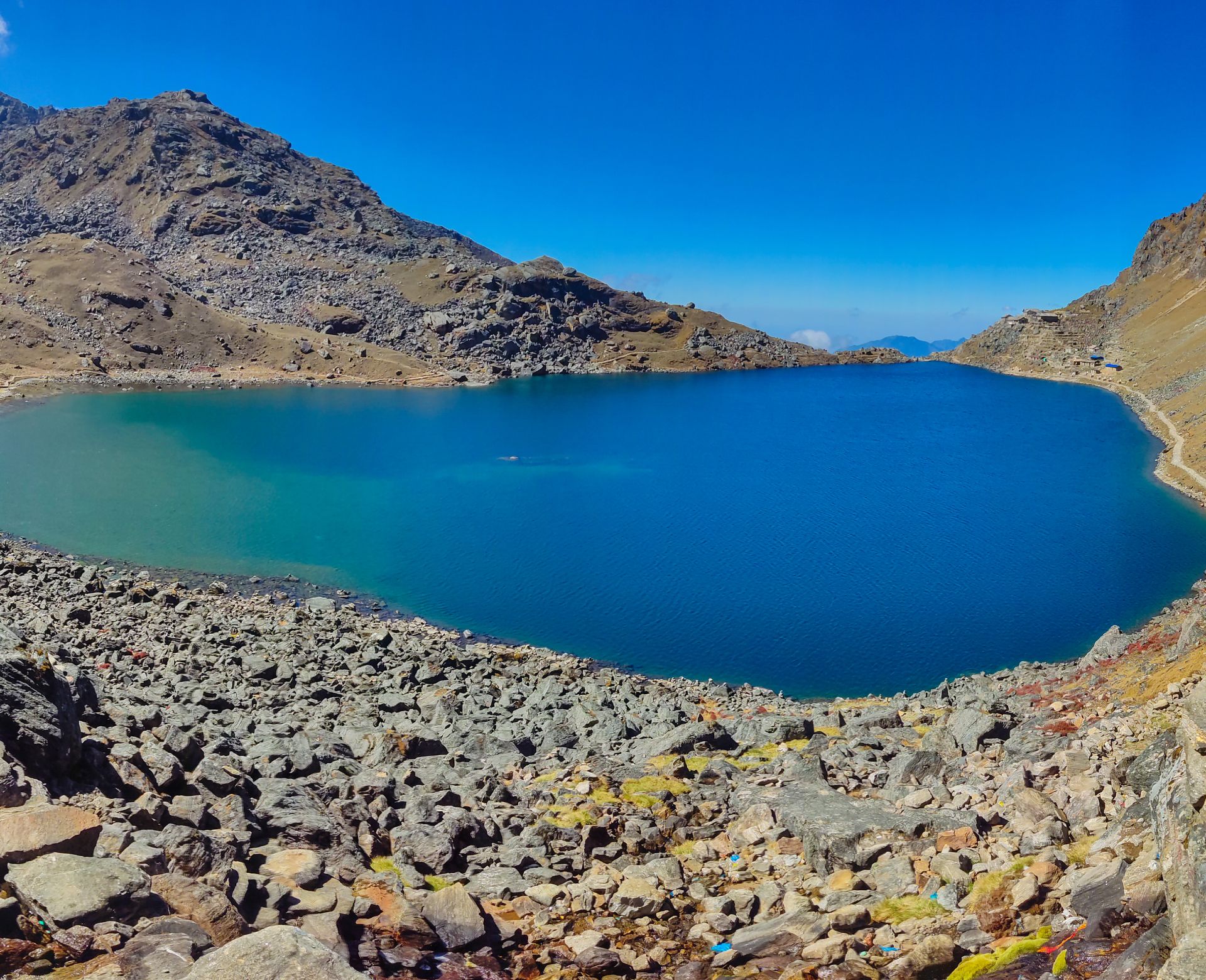
Gosaikunda Lake at 4,380m — sacred alpine lake, and the highest overnight of the entire trek
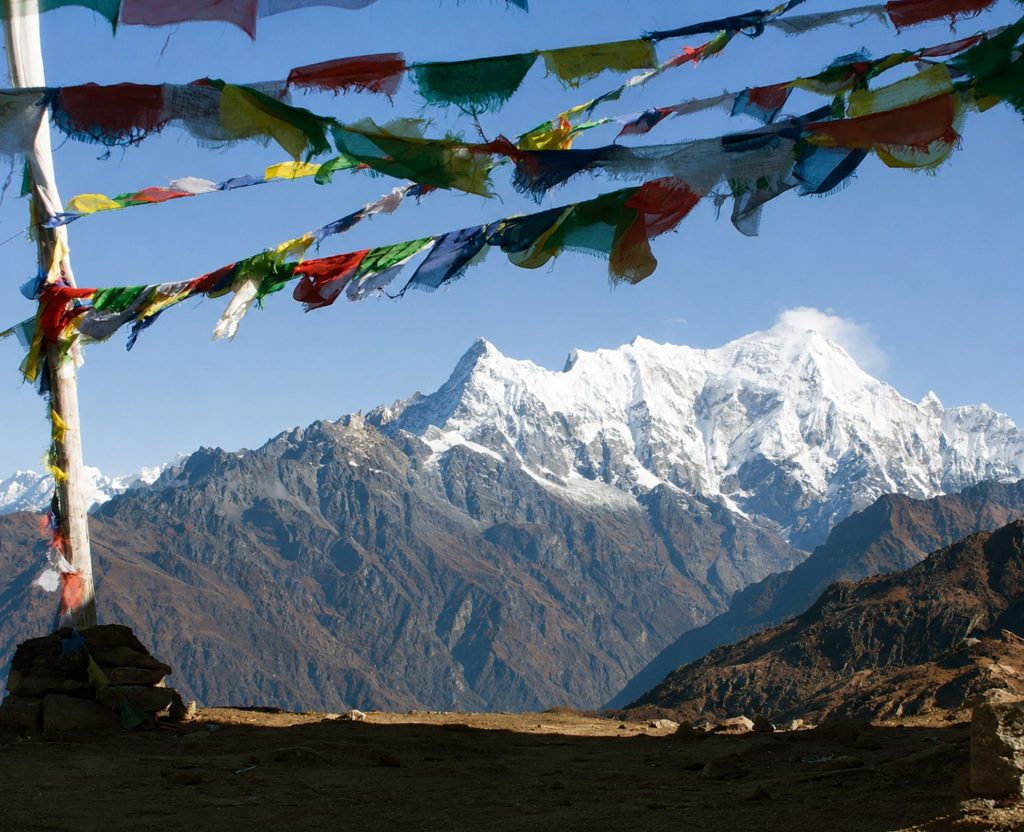
Lauribinayak — the ridge viewpoint on the final approach to Gosaikunda, Langtang and Ganesh Himal both visible
Two regions in one trip — Langtang Valley’s glacial scenery and Gosaikunda’s alpine lake circuit, without booking two separate treks
This trek is longer and more demanding than the standard Langtang Valley Trek, not less. The Day 2 gorge ascent and the optional Tserko Ri summit day both carry over unchanged from the 8-day route. The final approach to Gosaikunda is then split across two days — Shin Gompa to Lauribinayak (3,910m), then Lauribinayak to Gosaikunda Lake (4,380m) — keeping the daily altitude gain within safe limits on the way to the highest sleeping altitude of the entire trek.
per person
per person
per person
per person
✅ All ground transportation as per the itinerary (Kathmandu–Syabrubesi and Dhunche–Kathmandu) by local vehicle
✅ All trekking accommodation in local teahouse lodges (shared basis)
✅ All meals during the trek (Breakfast, Lunch & Dinner), including tea or coffee in the early morning
✅ Licensed, experienced English-speaking trekking guide
✅ One strong, experienced local porter (1 porter for 2 trekkers, maximum load 15 kg)
✅ All required trekking permits for the Langtang region (Langtang National Park Entry Permit and TIMS Card)
✅ Guide and porter wages, meals, accommodation, insurance, and local transport
✅ Necessary staff equipment and logistical support
✅ Acclimatization planning and route management
✅ All applicable government taxes and service charges
❌ International airfare to and from Nepal
❌ Nepal entry visa fee
❌ Travel and medical insurance (must cover high-altitude trekking and emergency helicopter evacuation)
❌ Personal trekking gear and equipment, including personal medications
❌ Meals and accommodation in Kathmandu (unless specified in the itinerary)
❌ Hot showers, Wi-Fi, and charging of electronic devices during the trek
❌ Alcoholic beverages, bottled drinks, snacks, and other personal expenses
❌ Tips for guide and porter
❌ Additional accommodation or meals due to early arrival, late departure, or itinerary changes
❌ Costs arising from delays, landslides, road closures, or circumstances beyond our control
Altitude: 1,460m | Drive: 7–8 hours | Accommodation: Teahouse, Syabrubesi | Meals: Lunch, Dinner
The Langtang Gosaikunda Trek begins with the drive north from Kathmandu — through Trishuli Bazaar and Dhunche into the Langtang National Park corridor. The first permit checkpoint sits at Dhunche. Your guide handles all documentation here while you stay in the vehicle.
Syabrubesi has everything tonight that disappears above it — reliable electricity, hot showers, Wi-Fi, and mobile signal. Charge every device. The trail starts at the suspension bridge tomorrow morning and does not look back.
Altitude: 2,470m | Trek: 6–7 hours | Ascent: +1,010m | Accommodation: Teahouse | Meals: Breakfast, Lunch, Dinner
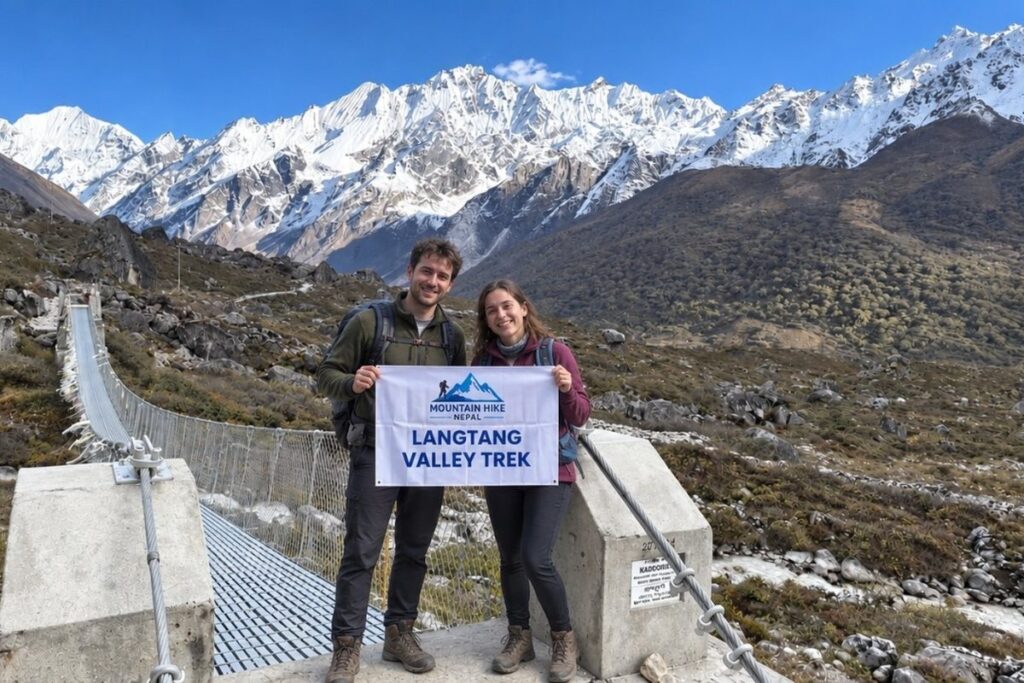
This is the steepest day on the entire trek — and it starts immediately. The trail crosses the Langtang Khola suspension bridge and climbs through dense rhododendron and oak forest. There are no flat sections. The gorge trail goes up and keeps going up.
What makes it bearable is the forest. Rhododendron trees grow to cathedral scale here. Langur monkeys move through the upper branches. Pace from the first step. Lama Hotel is a cluster of teahouses at 2,470m — the last reliable charging point before Kyanjin Gompa.
Altitude: 3,430m | Trek: 5–6 hours | Ascent: +960m | Accommodation: Teahouse | Meals: Breakfast, Lunch, Dinner
The forest begins to change above Lama Hotel. The trail climbs north through Ghoda Tabela at 3,000m — a former military post now used as a rest stop — where the valley opens and the high Langtang ridgeline appears ahead for the first time.
Langtang Village carries history every trekker should know before arriving. On 25 April 2015, the Nepal earthquake triggered a massive avalanche from Langtang Lirung that buried the original village. The rebuilt settlement stands on the same ground today. Drink 3–4 litres of water today — mild altitude effects are normal at 3,430m.
Altitude: 3,870m | Trek: 3–4 hours | Ascent: +440m | Accommodation: Teahouse | Meals: Breakfast, Lunch, Dinner
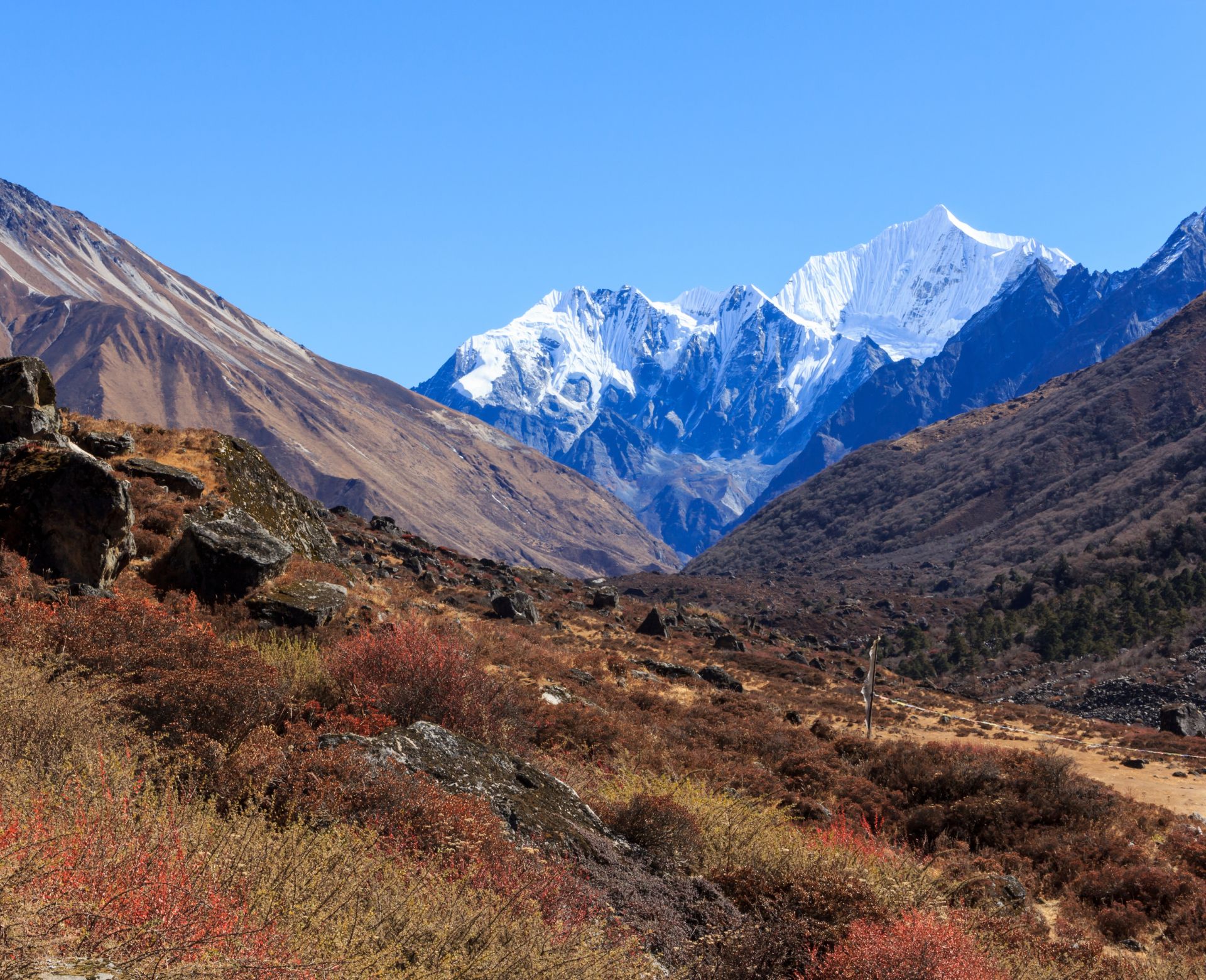
The shortest trekking day on the ascent — and one of the finest. The trail follows the valley floor upstream through open yak pasture. Langtang Lirung’s north face fills the northern horizon and grows larger with every hour.
Kyanjin Gompa arrives below the glacier at 3,870m — a monastery, a yak cheese factory, and a cluster of teahouses that serves as the base for the next two nights. Take a short walk above the village this afternoon to begin acclimatisation.
Altitude: 4,984m high point — return overnight to 3,870m | Trek: 6–8 hours | Accommodation: Teahouse | Meals: Breakfast, Lunch, Dinner
The alarm goes off at 4:30am. The trail climbs from Kyanjin Gompa to Kyanjin Ri (4,773m) first — a 2–3 hour ascent with a 360-degree panorama of Langtang Lirung, Kimshung, Yansa Tsenji, and Dorje Lakpa.
Trekkers who feel strong continue to Tserko Ri (4,984m), the highest point of the trip so far — a further 211m on steep, unmaintained scree. No technical sections, no fixed ropes; the difficulty is altitude and gradient, not skill.
Both summits are optional. Attempt them only if you feel strong after Day 4, have no AMS symptoms this morning, and slept well. Trekking poles are non-negotiable on the descent. Return to Kyanjin Gompa by early afternoon.
Altitude: 2,470m | Trek: 6–7 hours | Descent: -1,400m | Accommodation: Teahouse | Meals: Breakfast, Lunch, Dinner
The descent begins. Nearly 1,400m of altitude loss through the full length of the Langtang valley. Depart Kyanjin Gompa by 7am. Trekking poles carry the cumulative knee load better than any other equipment on this day.
This is the last night on the standard Langtang Valley route. From tomorrow, the trail turns east toward Gosaikunda instead of retracing the way back to Syabrubesi.
Altitude: 2,210m | Trek: 5–6 hours | Accommodation: Teahouse | Meals: Breakfast, Lunch, Dinner
The trail diverts off the Langtang Valley route here, dropping and climbing along a ridge trail rather than retracing the gorge back to Syabrubesi. Thulo Syabru is a Tamang village strung along a forested ridge, with views back toward the Langtang range and Ganesh Himal.
This is a genuine change of terrain — you leave the glacial valley behind and enter the country the Gosaikunda extension is built around. Basic supplies are available here, though at a premium compared to Kathmandu.
Altitude: 3,330m | Trek: 5–6 hours | Ascent: +1,120m | Accommodation: Teahouse | Meals: Breakfast, Lunch, Dinner
A steady climb through rhododendron, oak, and hemlock forest back above 3,000m. Shin Gompa, also called Chandanbari, is known for its small monastery and a local yak cheese factory — a smaller, quieter version of what you saw at Kyanjin Gompa a few days ago.
This is a real climbing day after Day 7’s gentler ridge walk. Keep the pace steady — you’re heading back above 3,000m after two nights below it, and the next two days take you to the highest sleeping altitude of the entire trek.
Altitude: 3,910m | Trek: 3–4 hours | Ascent: +580m | Accommodation: Teahouse | Meals: Breakfast, Lunch, Dinner
A shorter day by design. The trail leaves the forest and climbs the open ridge above Shin Gompa, with wide views back to the Langtang and Ganesh Himal ranges opening up as you gain height.
Lauribinayak is a handful of small guesthouses rather than a village — book early in peak season. This overnight exists specifically to break up the climb to Gosaikunda into two safer days instead of one large push; do not skip it even if you feel strong.
Altitude: 4,380m | Trek: 3–4 hours | Ascent: +470m | Accommodation: Teahouse | Meals: Breakfast, Lunch, Dinner
A short, steady climb along the open ridge to the sacred lake basin of Gosaikunda. This is the highest sleeping altitude of the entire trek — higher than the Kyanjin Gompa nights earlier in the trip.
Gosaikunda is one of several glacial lakes in the basin, held sacred in both Hindu and Buddhist tradition. Lodges here are basic and cold, with shared bathrooms and limited heating — dress for a genuinely cold night regardless of the daytime weather. Move slowly this afternoon; you’re sleeping higher than anywhere else on this trip.
Altitude: 2,030m | Trek: 7–8 hours | Descent: -2,350m | Accommodation: Teahouse, Dhunche | Meals: Breakfast, Lunch, Dinner
The longest single day of the entire trek. The trail descends steadily through Shin Gompa and Chandanbari, dropping over 2,000m back to Dhunche in one push. Breathing gets noticeably easier with every hour below 4,000m, and energy returns fast.
Trekking poles matter as much here as on any climb — a descent this long is hard on the knees. Dhunche is the district headquarters, with real hotels rather than basic teahouses. Hot showers and a proper meal are well earned tonight.
Drive: 6–7 hours | Meals: Breakfast, Lunch
The drive back to Kathmandu follows the same road as Day 1, through Trishuli Bazaar. The mountains are visible behind you on clear mornings leaving the valley. Arrive in Kathmandu by afternoon or early evening.
The Langtang Gosaikunda Trek ends on arrival in Kathmandu — twelve days, two regions, one trip.
The Langtang Gosaikunda Trek is a 12-day guided trek from Syabrubesi through Kyanjin Gompa (3,870m) to Gosaikunda Lake (4,380m), with an optional summit to Tserko Ri (4,984m). The trek starts at Syabrubesi and ends at Dhunche, covering both the Langtang Valley and the Gosaikunda lake basin in one trip.
Moderate to challenging. The trek includes the same steep Day 2 gorge ascent and optional near-5,000m Tserko Ri summit as the standard Langtang Valley Trek, plus a second high-altitude push to Gosaikunda Lake (4,380m) later in the trip — the highest sleeping altitude of the entire trek. The approach to Gosaikunda is split across two days via Lauribinayak to keep the daily altitude gain safe.
Yes — Langtang National Park’s guide-mandatory rule, effective February 17, 2025, requires all trekkers in the region to trek with a licensed guide or registered agency. This applies to the entire route, including the Gosaikunda extension.
Two permits cover the full route — the Langtang National Park Entry Permit and the TIMS Card. Both are included in Mountain Hike Nepal’s package price. No additional permit is required for the Gosaikunda section.
The Langtang Valley Trek is 8 days and turns back at Kyanjin Gompa. The Langtang Gosaikunda Trek continues for 4 more days east from Lama Hotel, via Thulo Syabru and Shin Gompa, to reach Gosaikunda Lake (4,380m) before descending to Dhunche — a longer trip covering two distinct regions.
This trek ends at Gosaikunda Lake and descends back to Dhunche. The Langtang Helambu Circuit Trek continues past Gosaikunda over the Laurebina Pass (4,610m) into the Helambu region — a longer trip that adds a technical pass crossing this trek does not include.
4,984m at the optional Tserko Ri summit on Day 5. The highest overnight is Gosaikunda Lake at 4,380m on Day 10 — higher than the Kyanjin Gompa overnight earlier in the trip.
The climb from Shin Gompa to Gosaikunda Lake gains over 1,000m in a single stretch. Splitting it across two days — an overnight at Lauribinayak (3,910m), then a shorter final climb to Gosaikunda (4,380m) — keeps the daily altitude gain within safe limits on the way to the highest sleeping altitude of the entire trek.
October and November are the finest months — post-monsoon clarity and stable weather. April is the best spring month, with rhododendron forests in bloom on the lower trail. Avoid June, July, and August — monsoon rain makes the trail slippery and obscures mountain views.
The trek starts from USD 698 per person for groups of 8–12, up to USD 899 for solo trekkers — guide, permits, all meals, teahouse accommodation, and ground transport included.
Yes — the standalone Langtang Valley Trek covers the first half of this route in 8 days, without the Gosaikunda extension.
Porter support is included for groups of 2 or more. Solo trekkers can add a porter for an extra cost. One porter carries a maximum load of 15kg, shared between two trekkers.
Gosaikunda is a sacred alpine lake at 4,380m, revered in both Hindu and Buddhist tradition, and one of several glacial lakes in the Gosaikunda basin inside Langtang National Park.