Trip Overview
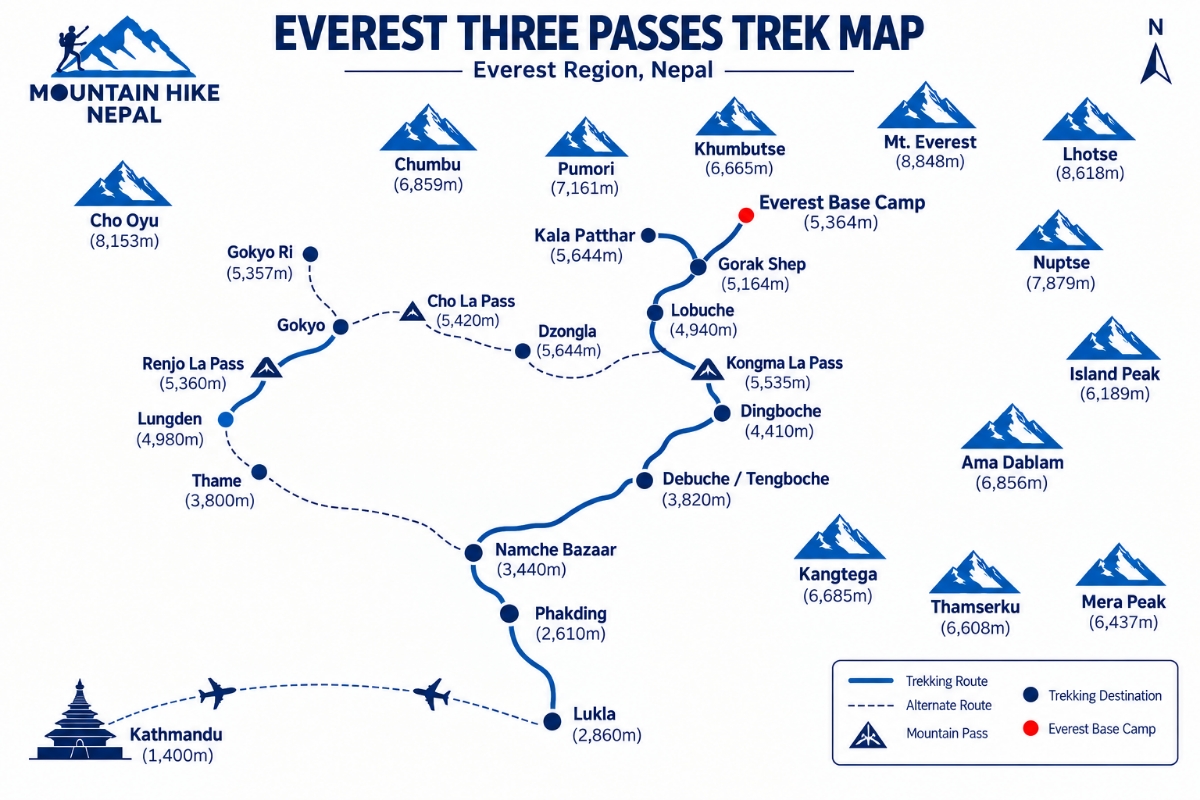
The Everest Three Passes Trek is a 16-day guided circuit through the Khumbu, priced from $1,499 to $1,899 per person. It crosses Kongma La (5,535m), Cho La (5,420m) and Renjo La (5,360m). Along the way it reaches Everest Base Camp and Gokyo Ri (5,357m).
This is a walking route, not a climb. Cho La is the one exception, with a short glacier crossing where microspikes are often needed. Each pass is above 5,300m, and pass days are long.
It is not a first Himalayan trek. Read our guide to acclimatization in Nepal trekking or see how it compares in our Three Passes vs EBC guide.
Not ready for this circuit? Start with our Everest Base Camp Trek, or check the cost breakdown. When you know your travel month, message us on WhatsApp. We typically reply within 12 hours.
Route for Everest Three Passes Trek
Why Choose This Everest Three Passes Trek Package?
The standard EBC Trek takes you to Base Camp and back on the same trail. The Everest Three Passes Trek circles the entire Khumbu massif instead, crossing three high passes that connect valleys most trekkers never see.
The Khumbu from Kongma La looks nothing like the Khumbu from Renjo La. The Gokyo Valley, reached from Cho La, is a high-altitude valley beside the Ngozumpa Glacier. It has six sacred turquoise lakes, Nepal’s longest glacier below Gokyo Ri, and far fewer trekkers than the main EBC trail above Tengboche. This circuit shows a side of the Khumbu the standard route doesn’t reach.
The acclimatization structure is also one of the most thorough on a standard Nepal trek. Altitude builds gradually across three valleys over 15 nights, with the final Renjo La crossing coming last, on the descent. Trekkers finish having covered far more of the Khumbu than the standard EBC trail allows.
For trekkers considering options in the Khumbu, read our Everest Three Passes Trek vs EBC comparison →
Everest Three Passes Trek Highlights
Who Is This Everest Three Passes Trek For?
Why Trek With Mountain Hike Nepal?
Lukla Flight Information
Peak Season (Spring: March–May | Autumn: September–November): Lukla flights operate from Manthali Airport in Ramechhap during these busiest months, not Kathmandu. Expect an early-morning 4–5-hour overland drive from Kathmandu to Ramechhap before the short flight to Lukla.
Off-Peak Season (Winter: December–February | Monsoon: June–August): Lukla flights generally operate directly between Kathmandu and Lukla in these months, subject to airline schedules and weather.
The Civil Aviation Authority of Nepal (CAAN) runs this seasonal arrangement to reduce congestion at Tribhuvan International Airport during peak season. It applies to every airline flying scheduled Lukla routes, including Tara Air, Summit Air, and Sita Air. We include the Ramechhap transfer in every package for this reason.
Prefer to skip a flight leg entirely? A helicopter upgrade is available on request. A shared seat currently runs roughly $650–700 per person one way. Heli pricing moves with fuel costs and passenger numbers, so treat this as a current rate, not a locked-in figure. We can also arrange a return pickup from Gorakshep, Dingboche, or Namche instead of walking back to Lukla. See our full FAQ on Lukla flight alternatives for the breakdown.
Everest Three Passes Trek Cost and Group Pricing
Solo Trekker
$1,899per person- Licensed expert trekking local Sherpa guide
- All permits included
- Roundtrip Lukla flight with round-trip airport transfer
- Complimentary international roundtrip airport transfer
- Teahouse accommodation
- All meals during the trek with tea/coffee every morning
- Full logistical support
- Local porter available on request (extra cost)
- Guide/porter service (Lukla–Lukla)
2–4 Trekkers
$1,678per person · save $221 each- Licensed expert trekking local Sherpa guide
- All permits included
- Porter support included
- Roundtrip Lukla flight with round-trip airport transfer
- Complimentary international roundtrip airport transfer
- Teahouse accommodation
- All meals during the trek with tea/coffee every morning
- Full logistical support
- Guide/porter service (Lukla–Lukla)
5–7 Trekkers
$1,559per person · save $340 each- Licensed expert trekking local Sherpa guide
- All permits included
- Porter support included
- Roundtrip Lukla flight with round-trip airport transfer
- Complimentary international roundtrip airport transfer
- Teahouse accommodation
- All meals during the trek with tea/coffee every morning
- Full logistical support
- Guide/porter service (Lukla–Lukla)
8–12 Trekkers
$1,499per person · save $400 each- Licensed expert trekking local Sherpa guide
- All permits included
- Porter support included
- One assistant guide included for groups larger than 8
- Roundtrip Lukla flight with round-trip airport transfer
- Complimentary international roundtrip airport transfer
- Teahouse accommodation
- All meals during the trek with tea/coffee every morning
- Full logistical support
- Guide/porter service (Lukla–Lukla)
Per person. Visa, insurance, gear, hotel and tips are extra. See every cost.
Everest Three Passes Trek Price Includes
- Complimentary international airport transfer — pickup on arrival, drop-off on departure
- Round-trip domestic flights — to/from Lukla
- Round-trip domestic airport transfer
- 15 nights’ teahouse accommodation on trail (twin-sharing, Lukla to Lukla)
- All meals — breakfast, lunch and dinner every day on trail, plus tea or coffee every morning during your Everest Three Passes Trek
- Licensed English-speaking local Sherpa trekking guide
- One local porter per two trekkers (maximum load 15 kg)
- One assistant guide added for groups larger than 8 trekkers
- All permits — Sagarmatha National Park entry and Khumbu Pasang Lhamu Rural Municipality
- Guide and porter wages, meals, accommodation, insurance, and local transport
- All applicable government taxes and service charges
Everest Three Passes Trek Price Excludes
- International airfare to and from Nepal
- Nepal entry visa — USD 50 for 30 days, on arrival at Tribhuvan International Airport
- Travel and medical insurance — must cover trekking above 5,600m and helicopter evacuation
- Personal trekking gear — boots, sleeping bag, down jacket (rentable in Kathmandu)
- Hot showers, Wi-Fi, and device charging on trail — small fee at teahouses
- Bottled drinks, snacks, alcohol, and personal trail expenses
- Tips for guide and porter
- Any costs from weather delays, Lukla flight cancellations, or circumstances beyond our control
Day-by-Day Everest Three Passes Trek Itinerary
Day 01 — Kathmandu to Lukla to Phakding: The Circuit Begins (2,610m)
We drive you to the domestic airport, in Kathmandu or Ramechhap depending on the season, for the flight to Lukla. Your Sherpa guide is waiting at Lukla, and breakfast there is included. After a gear check, the long loop begins with an easy walk through Cheplung.
You follow the Dudh Koshi through Thado Koshi and Ghat and cross the first suspension bridges before you reach Phakding. It is a short day on purpose. Sixteen days at altitude start gently.
Day 02 — Phakding to Namche Bazaar: First Acclimatization Stop (3,440m)
The trail runs upstream from Phakding through Toktok and Benkar, with several suspension bridges along the river. At Chumoa and Monjo you pass teahouses and mani walls, and your guide handles the Sagarmatha National Park checkpoint at Monjo.
After Jorsale you cross the Hillary Bridge and climb steeply to Namche Bazaar. This is the first big altitude gain of the trek, so we go slowly. You stay in Namche for two nights.
Day 03 — Namche Bazaar Acclimatization Day (3,880m hike / 3,440m overnight)
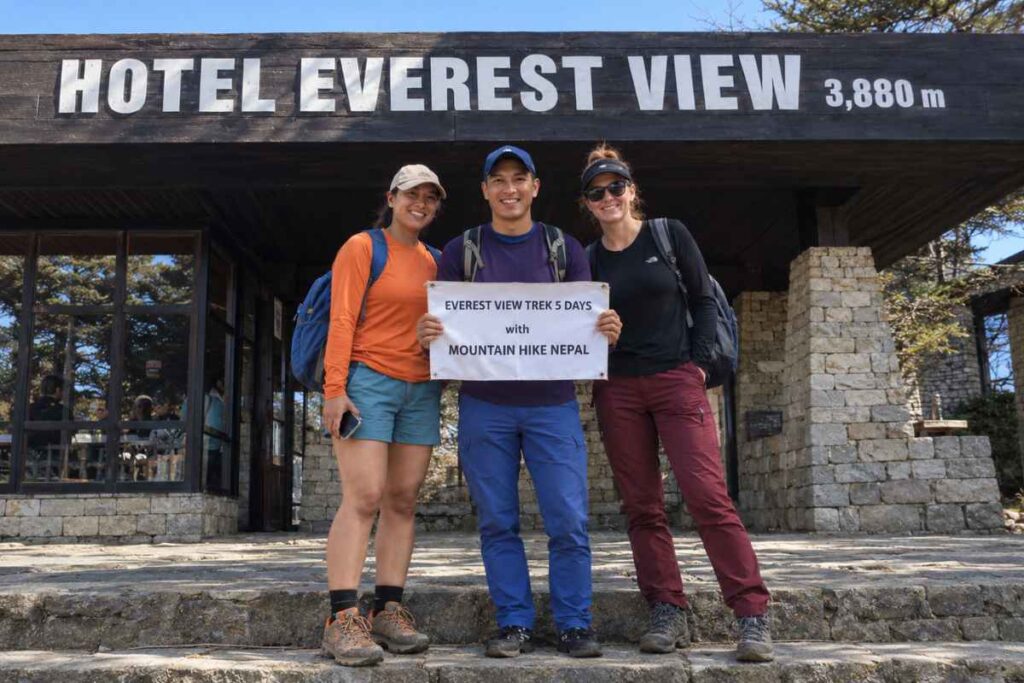
A day for the body to catch up. You walk up out of Namche Bazaar to Syangboche and the Hotel Everest View terrace at 3,880m, where Everest, Lhotse and Ama Dablam appear above the valley.
You can return through Khumjung if you want to see more of the village. In the afternoon, rest, drink plenty of water and sort your gear for the high passes. The night is in Namche again.
Day 04 — Namche Bazaar to Tengboche and Debuche (3,820m)
From Namche Bazaar the trail contours high above the Dudh Koshi through Kyanjuma and Sanasa, where it joins the main Everest trail. It then drops through forest to Phunki Tenga at the river.
A steep climb through pines and rhododendron leads to Tengboche and its monastery, with Ama Dablam in front of you. A short walk down brings you to Debuche for the night.
Day 05 — Debuche to Dingboche: Into High Alpine Country (4,410m)
Debuche to Pangboche is a gentle walk, with a monastery worth a short stop. Beyond it the forest ends, and the path crosses open yak pastures past Shomare and Orsho.
You arrive in Dingboche by early afternoon, in a wide, treeless valley with stone-walled fields. From here on, the trek is alpine.
Day 06 — Dingboche Acclimatization Day: Nagarjun Hill (5,000m hike / 4,410m overnight)
Climb the ridge behind Dingboche to Nagarjun Hill, at about 5,000m. Ama Dablam, Lhotse, Makalu and Baruntse line the horizon.
Come back down to sleep at 4,410m. Tomorrow is the first pass, so rest, eat well and check your layers with your guide this evening.
Day 07 — Cross Kongma La and Descend to Lobuche: The First and Highest Pass (5,535m)
This is the hardest day of the trek. From Dingboche the trail climbs the Imja valley to Chukhung, then turns toward the Kongma La (5,535m), the highest of the three passes.
From the top you see the Khumbu Glacier, Nuptse and Pumori. The descent crosses loose moraine to Lobuche. It is a long day, and we take it slowly, with a guide setting the pace.
Day 08 — Lobuche to Gorakshep and Everest Base Camp (5,364m)
From Lobuche the trail follows the moraine of the Khumbu Glacier to Gorak Shep, the highest night of the trek at 5,164m. After lunch we leave the daypacks and walk about two hours to Everest Base Camp.
It is a working expedition camp below the Khumbu Icefall, not a viewpoint. In the spring season you may see expedition tents. You come back to Gorak Shep for dinner.
Day 09 — Kala Patthar Sunrise and On to Dzongla (5,644m)
Before dawn we climb Kala Patthar (5,644m) and watch the sun rise on Everest, Nuptse, Lhotse and Pumori. After breakfast in Gorak Shep we head back down the moraine.
Below Lobuche the trail leaves the Base Camp route and turns west toward Dzongla, a small settlement at the foot of the Cho La. You sleep at 4,830m, much lower than last night.
Day 10 — Cross Cho La and Descend to Gokyo: The Technical Pass (5,420m)
The second pass is steep and rocky. From Dzongla the trail climbs to the Cho La (5,420m), crosses a short glacier section where your guide may rope up the group, and descends to Dragnag (also called Thangnak).
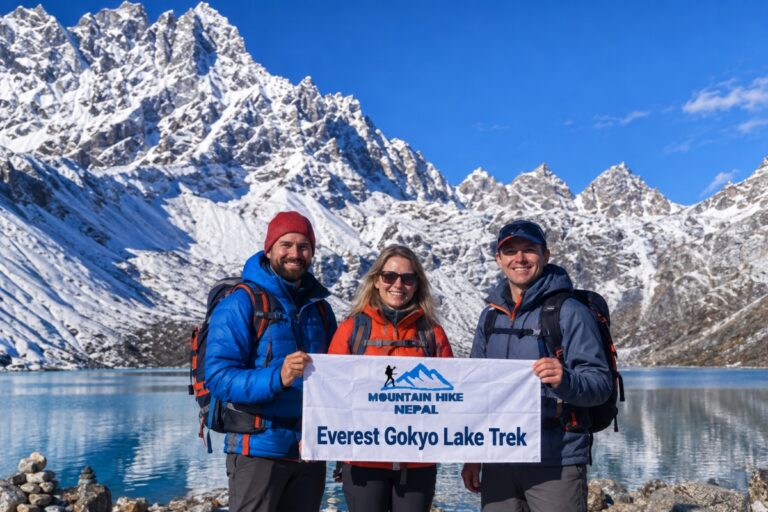
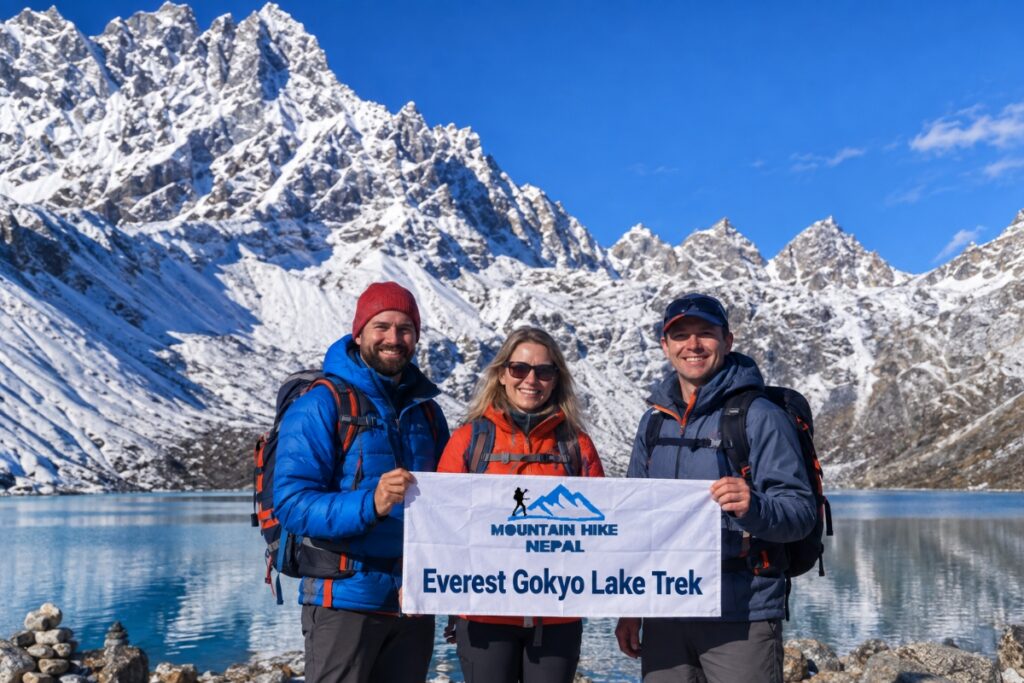
From Dragnag the trail crosses the Ngozumpa Glacier, the longest in Nepal, and ends beside the lake at Gokyo. It is a demanding day with a view to match.
Day 11 — Gokyo Rest Day: Gokyo Ri (5,357m)
We climb Gokyo Ri (5,357m) before dawn. From the top you see Everest, Lhotse, Makalu and Cho Oyu, and the Ngozumpa Glacier below.
The rest of the day is free at 4,750m, to rest and walk along the lakeshore. The next days follow the quieter side of the valley.
Day 12 — Cross Renjo La and Descend to Lungden: The Third Pass (5,360m)
The day starts early from Gokyo, beside the third lake. The trail climbs steadily above the village to Renjo La (5,360m), the third and last of the passes. From the top you look east to Everest and Lhotse and down on the Gokyo lakes.
The descent is steep and rocky, and it leads down the western side to Lungden (also called Lumde or Marlung), a small cluster of lodges. It is a long day, so we leave early and keep a steady pace.
Day 13 — Lungden to Thame: Back to the Sherpa Villages (3,820m)
From Lungden the trail follows the valley down to Thame, and the first trees and fields appear again. After three passes, the walking is gentle and the air is much thicker.
Thame is a quiet village with a monastery on the hillside above it. Tomorrow the circuit finishes with the walk down to Namche Bazaar.
Day 14 — Thame to Namche Bazaar: Back to the Sherpa Capital (3,440m)
From Thame the trail follows the Bhote Koshi downstream through Samde and Thamo, with mani walls and small monasteries on the hillside. It passes Phurte before the last climb into Namche Bazaar.
This is a short day on a different path from the Everest trail. You arrive in Namche in time for a shower, a bakery and a long afternoon.
Day 15 — Namche Bazaar to Lukla: Last Trekking Day (2,860m)
The trek ends on the main valley trail. From Namche Bazaar you drop to the Hillary Bridge and walk through Jorsale and Monjo, leaving the national park. The path passes Chumoa, Benkar and Toktok and reaches Phakding.
From there Ghat, Thado Koshi and Cheplung lead up to Lukla. You will feel how much thicker the air is.
Day 16 — Fly Lukla to Kathmandu: Everest Three Passes Trek Ends
The morning flight returns to Kathmandu. Three passes, two valleys, Everest Base Camp, Gokyo Lakes, Kala Patthar at dawn — sixteen days, done.
Important: Always build 2–3 buffer days in Kathmandu after this flight. Lukla departures are weather-dependent, and delays are common enough to plan around.
How to Book
Send your dates and group size
Message us on WhatsApp. We reply with the exact price and the flight plan for your month.
Confirm with a 25% deposit
The deposit holds your trek. We start the arrangements.
Pay the rest in Kathmandu
Pay the balance on arrival, in cash or by card payment link.
Plan Your Everest Three Passes Trek – Complete Guides
Each guide below covers one part of the trip in detail, so you can go straight to the question you have.
Everest Three Passes Trek – Frequently Asked Questions
How difficult is the Everest Three Passes Trek?
The Three Passes Trek is rated challenging, significantly more demanding than the standard EBC route. The three pass crossings above 5,300m require sustained uphill endurance, sure footing on rocky and occasionally snowy terrain, and tolerance for early pre-dawn starts on pass days. Prior experience on at least one high-altitude trek above 4,500m is strongly recommended before attempting this circuit. For the full difficulty breakdown read: Everest Three Passes Trek difficulty guide →
Are Lukla flights and domestic airport transfer included?
Yes — round-trip domestic flights Kathmandu to Lukla and return are included in Mountain Hike Nepal’s package price. The round-trip sharing transfer from your Kathmandu hotel to Ramechhap Airport is also included — midnight departure, arriving 5:00–5:30am for the first morning flight window. Mountain Hike Nepal coordinates all flight logistics, so you don’t organize the Ramechhap transfer independently. Always build 2–3 buffer days in Kathmandu after the trek return.
What permits are required for the Three Passes Trek?
Two permits cover the full circuit — the Sagarmatha National Park entry permit and the Khumbu Pasang Lhamu Rural Municipality permit. Both are included in Mountain Hike Nepal’s package price, with no independent purchase needed. Your guide handles all documentation at every checkpoint from Jorsale onward.
How much does the Everest Three Passes Trek cost?
The Mountain Hike Nepal package starts from USD 1,499 for groups of 8–12 and USD 1,899 for solo trekkers — covering round-trip Lukla flights, Ramechhap transfer, all permits, all accommodation, all meals, and a licensed guide. For the complete cost breakdown read: Everest Three Passes Trek cost guide →
What is the best time for the Everest Three Passes Trek?
October is the clearest month — post-monsoon clarity and the most reliable conditions on all three passes. April is the best spring month — strong conditions before the pre-monsoon haze, with rhododendron forests in bloom on the lower approach. Avoid June, July, and August — the Cho La glacier and Kongma La can be dangerous in monsoon conditions. For the full season guide read: Best time for Everest Three Passes Trek →
Do I need crampons for the Three Passes Trek?
Microspikes or light crampons are strongly recommended for the Cho La glacier section, and occasionally for Kongma La in early spring or late autumn. Conditions vary by season, so always confirm current pass conditions with Mountain Hike Nepal at the time of booking, and rent microspikes in Kathmandu if advised. Trekking poles are non-negotiable for all three pass crossings regardless of season.
How does the Three Passes Trek compare to the standard EBC Trek?
The EBC Trek is 12 days and reaches 5,644m at Kala Patthar, a linear out-and-back on the main Khumbu trail. The Three Passes Trek crosses three passes above 5,300m while visiting EBC, Gokyo Lakes, and Gokyo Ri in a full circuit that never repeats a major trail section. The Three Passes circuit is significantly more demanding but delivers a complete Khumbu experience the standard EBC route cannot provide. For the full comparison read: Everest Three Passes vs EBC Trek →
What is the highest point of the Three Passes Trek?
The highest pass is Kongma La at 5,535m, crossed on Day 7. The highest overall point of the circuit is Kala Patthar at 5,644m, reached before dawn for the Everest sunrise. Three of the circuit’s nights are spent above 4,700m — Gorakshep (5,164m), Dzongla (4,830m), and Gokyo (4,750m) — making this one of the most sustained high-altitude overnight schedules of any standard Nepal trekking circuit.
Is the Three Passes Trek suitable for beginners?
Not recommended for complete beginners. The three pass crossings and the technical Cho La glacier section demand a level of preparation and prior altitude experience that first-time Himalayan trekkers usually don’t have yet. The standard Everest Base Camp Trek is the recommended first Khumbu experience before attempting the Three Passes circuit.
Is travel insurance mandatory?
Yes — travel insurance is required before Mountain Hike Nepal confirms any booking. The policy must explicitly cover trekking at this circuit’s highest point, Kala Patthar (5,644m), and helicopter evacuation from the Khumbu region. A policy capped at 5,000m or 5,500m will not cover you at Kala Patthar — most trekkers buy the next round band up, typically 6,000m, to clear it with margin. Confirm the altitude limit in writing with your insurer before departure.
Do you offer free airport pickup and drop-off to/from Tribhuvan International Airport?
Yes. We provide a complimentary roundtrip transfer to and from Tribhuvan International Airport for every Everest Three Passes Trek booking — pickup from the airport straight to your hotel in Thamel on arrival, and drop-off back to the airport on your departure day. This applies regardless of when you book relative to your arrival in Nepal.
What’s the alternative to Lukla flights on the Three Passes circuit?
Helicopter. A shared seat currently runs roughly $650–700 per person one way — heli pricing moves with fuel costs and passenger numbers, so treat this as a current rate, not a locked-in figure. For the return leg, we can arrange a pickup from Gorakshep, Dingboche, or Namche depending on how much of the circuit’s final descent you want to walk. Talk to us before you book and we’ll build the right option into your itinerary.
How do we get from Kathmandu to the Ramechhap airstrip?
By road, on the B.P. Highway — the route runs east through Bhaktapur and Dhulikhel before reaching Manthali in Ramechhap district. Expect sharp bends and winding stretches for parts of the drive, which is why we use experienced drivers for this specific route, especially on the overnight run.
Why don’t Lukla flights leave from Kathmandu anymore?
They still can, off-season — but during peak trekking months, Nepal’s Civil Aviation Authority reroutes scheduled Lukla flights through Manthali Airport in Ramechhap instead of Tribhuvan International Airport. It’s a congestion-management decision on CAAN’s part, not a change specific to any one airline or agency.
Is it possible to skip the midnight drive and sleep in Ramechhap instead?
Yes — you can head to Manthali the day before your flight and stay there overnight rather than making the drive at midnight. It’s a valid option, though most of our clients still prefer the overnight transfer since it means one extra night in Kathmandu instead of a Ramechhap guesthouse.
What if our flight out of Ramechhap gets delayed?
Weather and airline scheduling decide this, not us — Lukla flights are affected by both. If it happens, we work with the airline to get you on the next available seat, and we’ll talk through a helicopter option with you if the delay runs long enough to threaten your itinerary.
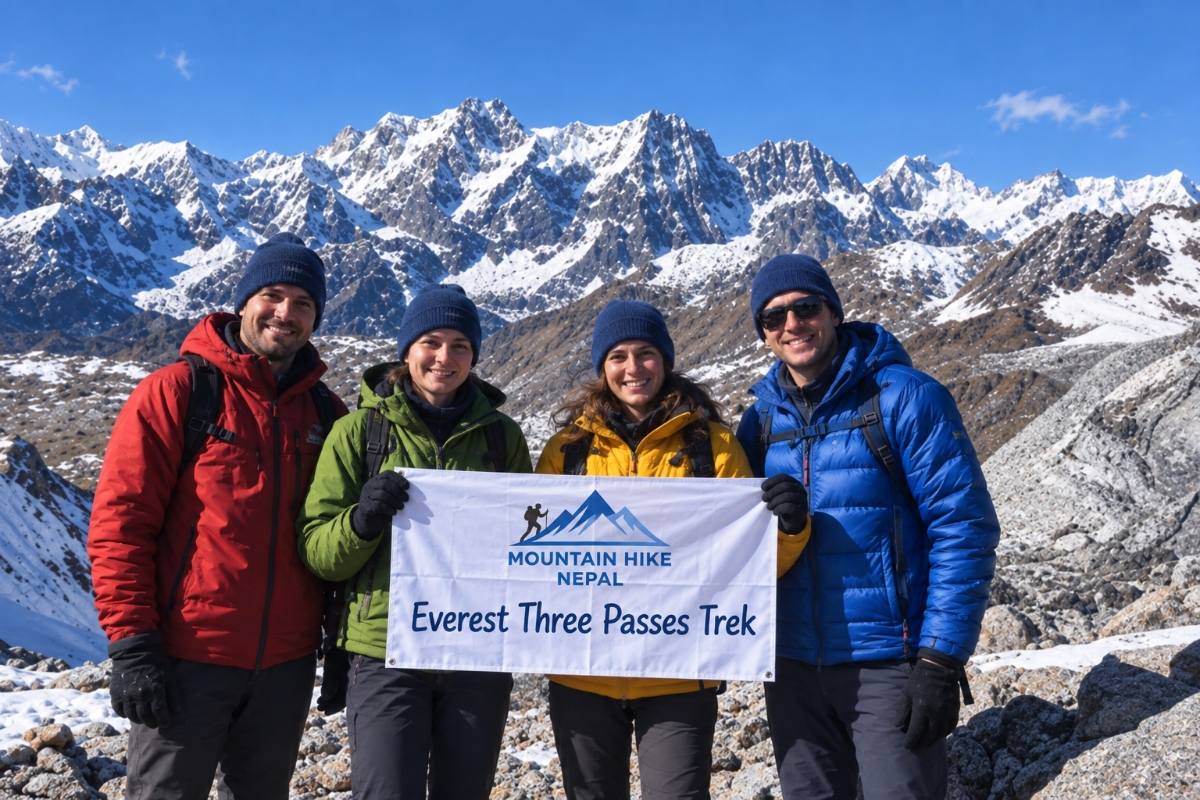
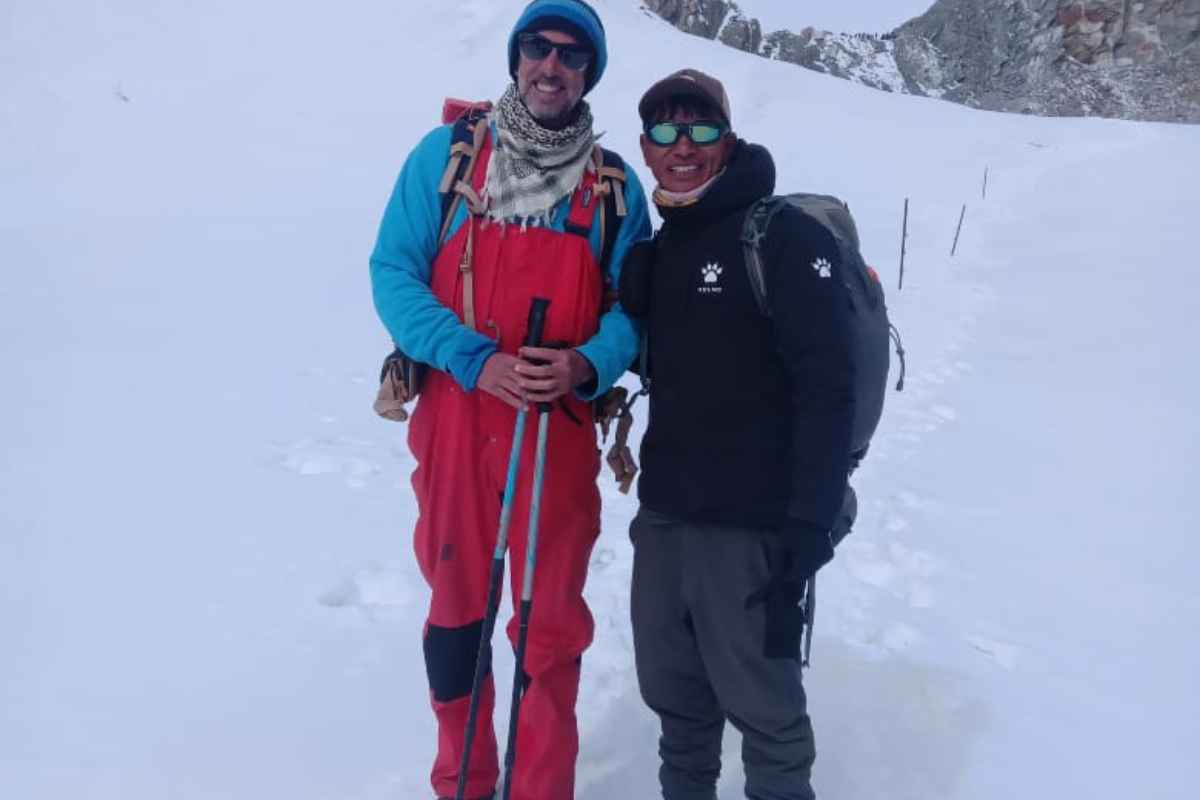
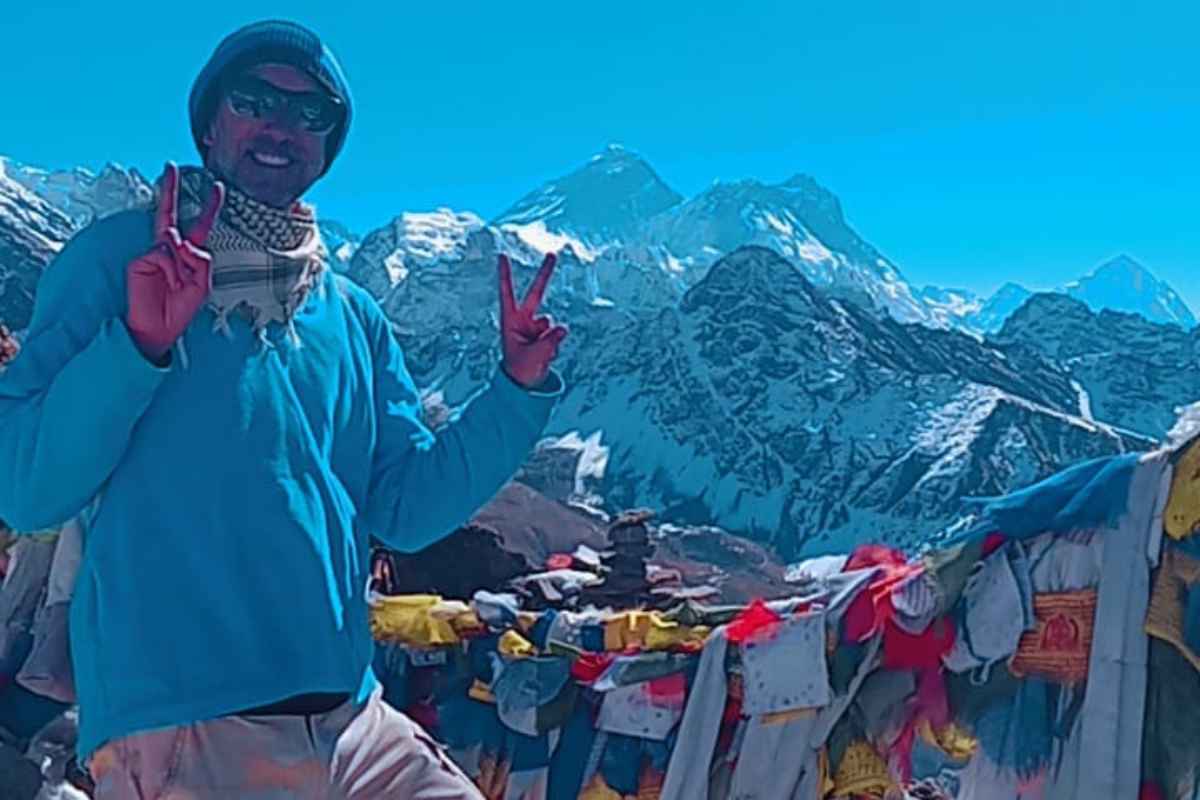
Photos of Everest Three Passes Trek
Ready to plan your Everest Three Passes Trek?
Tell us your group size and month. We reply with an exact price and the flight plan, usually within 16 hours between 7 am and 11 pm Nepal time.
Message us on WhatsApp